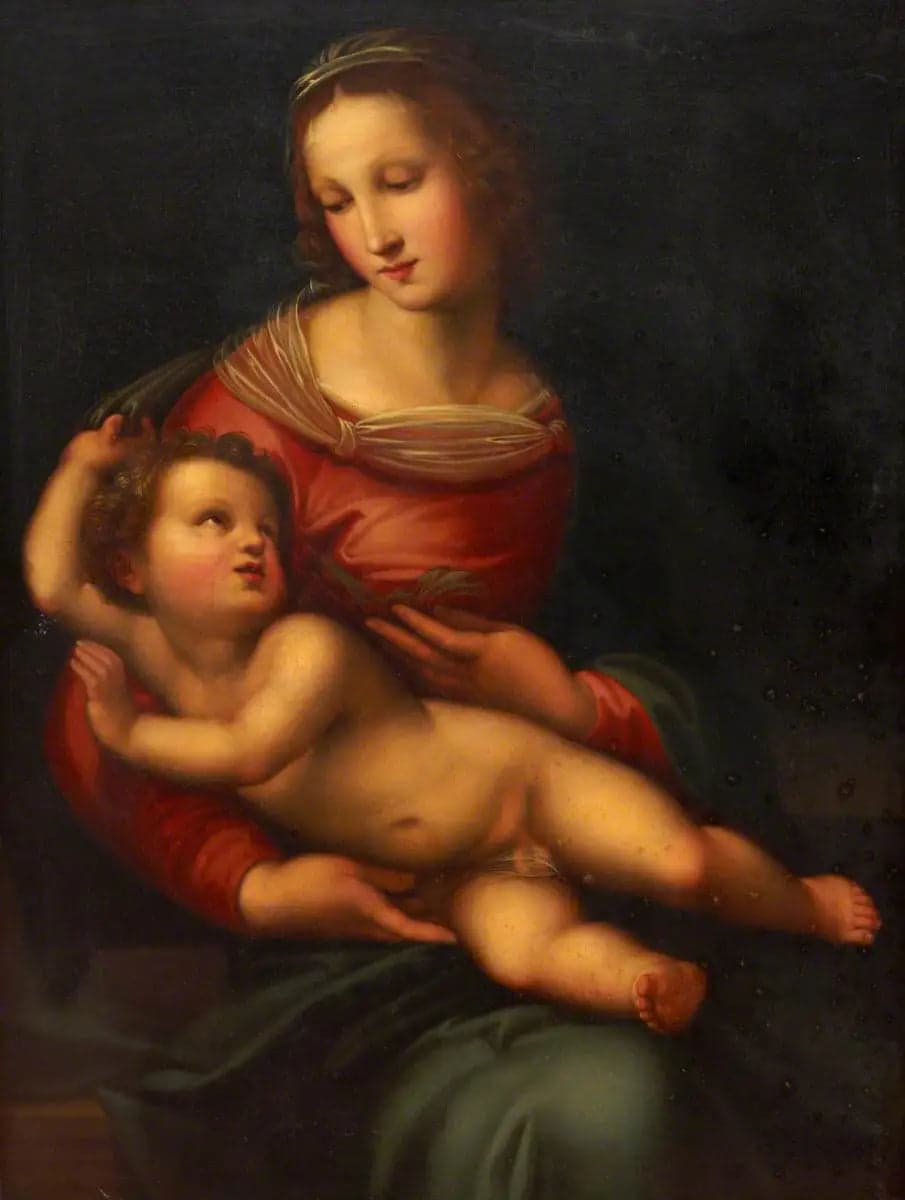
Bridgewater Madonna
- Original dimensions
- 56 x 74 cm
- Museum
- museum of the order of Saint John
Scene depicted
The painting "Madone de Bridgewater" depicts the Virgin Mary holding the Child Jesus. The composition, perfectly balanced, evokes infinite tenderness. The characters are enveloped in an aura of spiritual calm, while a pastoral landscape gently extends in the background, symbolizing the peace and harmony that faith can bring. This painting is not only a religious representation but also a celebration of maternal love.
Historical context
Created in the early 16th century in Rome, during the high Renaissance , the painting "Madone de Bridgewater" by Raphael is a striking testimony of a time of artistic renewal. This pictorial work, now preserved in the museum of the order of Saint John in Valletta, embodies an aesthetic that merges technical perfection and spirituality. Its size, 56 x 74 cm, makes it a canvas that is both majestic and intimate.
Place in the artist's career
This painting asserts the peak of Raphael's career, capturing the essence of his mature style. Compared to other works such as "The Sistine Madonna" and "The Madonna of Foligno," this painting reveals the evolution of his work, both technically and emotionally, highlighting his unmatched mastery of chiaroscuro and human expression.
Anecdote
Raphael once declared: "Art is a silent conversation between the soul of the artist and the gaze of the spectator." It was on a bright spring morning, as he observed a face imbued with serenity in the streets of Rome, that the inspiration for this masterpiece was born. Each brushstroke in the painting seems to capture this gentle light, creating a deep connection between the observer and the sacred scene.