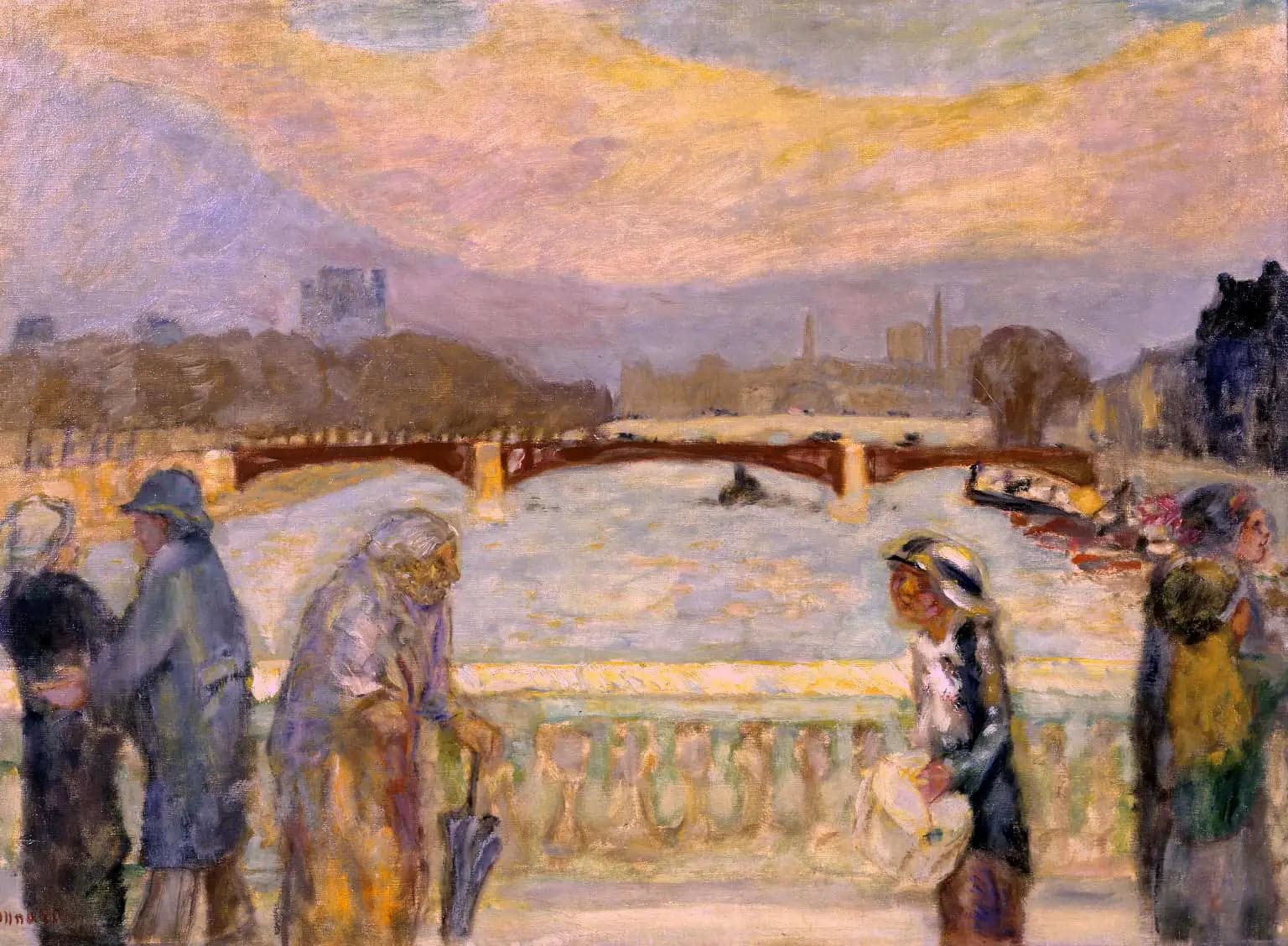
Bridge of the Concorde
- Original dimensions
- 60 x 83.2 cm
- Museum
- Tate
- Year
- 1913
Scene depicted
The canvas “Pont de la Concorde” showcases the imposing structure of the bridge while capturing the effervescence of Parisian life. The characters along the river add a human dimension to this painting , symbolizing the passage of time and the ephemeral beauty of everyday life. Through delicate brush strokes, Bonnard transports us to the center of his colorful universe, where every detail tells a story.
Historical context
Created in 1913, this painting embodies the Paris of a vibrant era, where Art Nouveau meets the dawn of modernism. The canvas is situated at the convergence of artistic movements, characterized by the quest for light and vibrant colors. Currently exhibited at the Tate in London, this pictorial work unfolds its dimensions (60 x 83.2 cm) like an open window onto a nostalgic vision of the city.
Place in the artist's career
This painting stands as a crucial milestone in Bonnard's career, revealing his mature style and mastery of pictorial techniques. In parallel with works such as “Le Déjeuner” and “Les Grands Jardins,” this canvas testifies to a marked evolution towards a rich palette and luminous compositions.
Anecdote
“The canvas dances, it whispers the secrets of light.” This is how Pierre Bonnard described the creation of his masterpiece . Imagine a spring morning, where the sun's reflections dance on the water, the soft sound of oars in the background, and the scent of flowers emerging from the surrounding gardens, inspiring a composition as vibrant as the canvas itself.