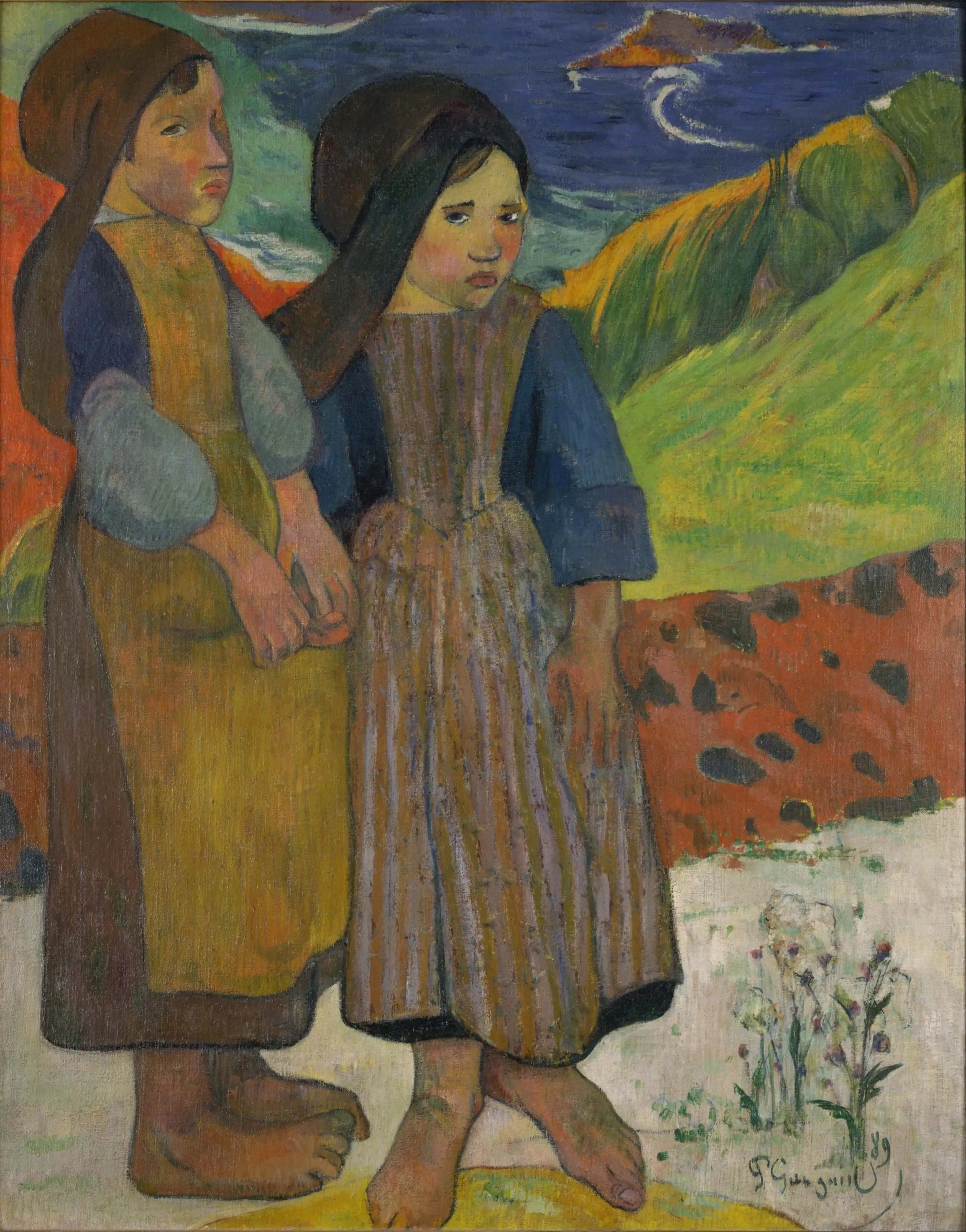
Breton Women by the Sea
- Original dimensions
- 73.6 x 92.5 cm
- Museum
- National Museum of Western Art
- Year
- 1889
Scene depicted
The painting "Bretonnes près de la mer" depicts two Breton women, dressed in traditional costumes, walking on the beach. The calm sea in the background and the sky of a bright blue envelop this composition, creating an atmosphere of serenity. This painting not only depicts the daily life of the village women but also pays tribute to the wild beauty that Brittany offers, a true haven of tranquility.
Historical context
Created in 1889, this painting is located in Pont-Aven, a charming village in Brittany that was the crucible of post-impressionist painting. Paul Gauguin drew inspiration from a raw and wild nature, while exploring bright colors and simple forms within this artistic movement that represents a break from traditional realism . Currently, the painting is preserved at the National Museum of Western Art , thus revealing the importance of this canvas in the history of modern art.
Place in the artist's career
This painting is situated at a decisive turning point in Gauguin's career, marking his transition from an impressionist style to a more synthetic and symbolic approach. Compared to other paintings like "Vision after the Sermon" and "The Yellow Christ," "Bretonnes près de la mer" highlights the evolution of his work through the bold use of colors and a more expressive treatment of forms.
Anecdote
In recalling the creation of this masterpiece , Gauguin once stated: "Nature spoke to me, and I tried to capture its message in my painting." It was on a sunny morning, facing the sea, that he felt this deep connection with the Breton women, both rooted in the land and turned towards the horizon. This pictorial work is the fruit of that magical moment, a vibrant testimony to the duality between man and nature.