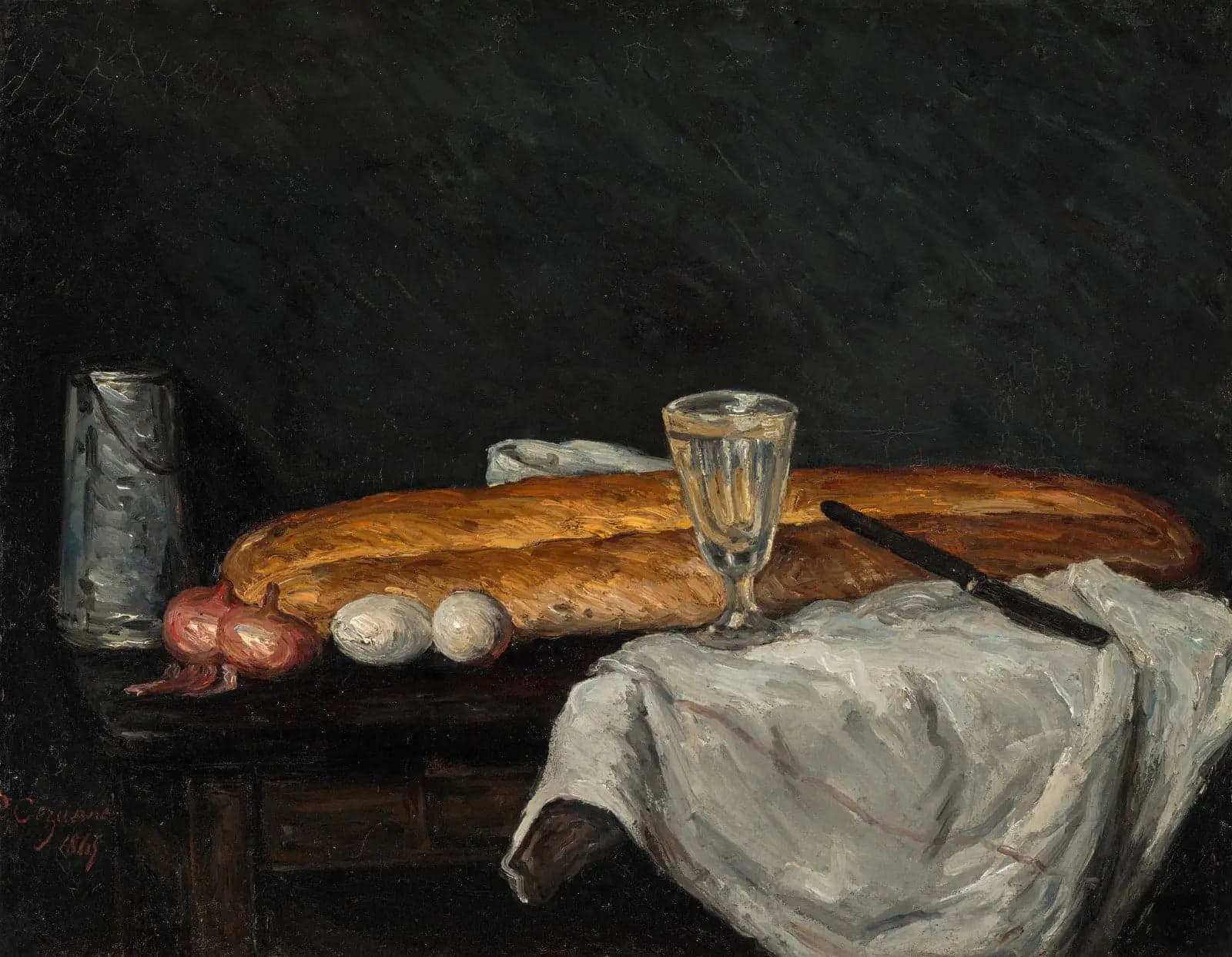
Bread and Eggs
- Original dimensions
- 76.2 x 59.1 cm
- Museum
- Cincinnati Art Museum
- Year
- 1865
Scene depicted
This iconic painting represents a simple and everyday moment: a crusty bread and shiny eggs, recreating an atmosphere of conviviality. The choice of ordinary objects reveals a symbolic depth, rooted in domestic life. The skillful arrangement of these foods at the center of the composition communicates a serene harmony, making each glance a journey towards contemplating the simple pleasures of life.
Historical context
Painted in 1865, in Aix-en-Provence, this canvas is part of a major turning point in the Impressionist movement. The artistic context of the time, where light and color begin to redefine painting, provides The Bread and the Eggs with a conducive setting for the emergence of innovative visions. Currently exhibited at the Cincinnati Art Museum , this painting of 76.2 x 59.1 cm is a perfect illustration of Cézanne's genius and his influence on modern art.
Place in the artist's career
The Bread and the Eggs stands as a pivotal step in Cézanne's career, marking his transition from academic imitation to an exploration of volume and color. A parallel with works like The Mont Sainte-Victoire and Still Life with Apples reveals his evolution towards a controlled abstraction, each painting becoming a foundational stone of his artistic legacy.
Anecdote
"Nature must pass through me," said Cézanne, resonating with the spirit of this masterpiece . Inspired by tranquil mornings where the aromas of warm bread intertwined with the song of birds, it was in a small kitchen that he captured this scene rich in meaning. The link between the craftsmanship of daily meals and the magic of The Bread and the Eggs vibrates through this painting .