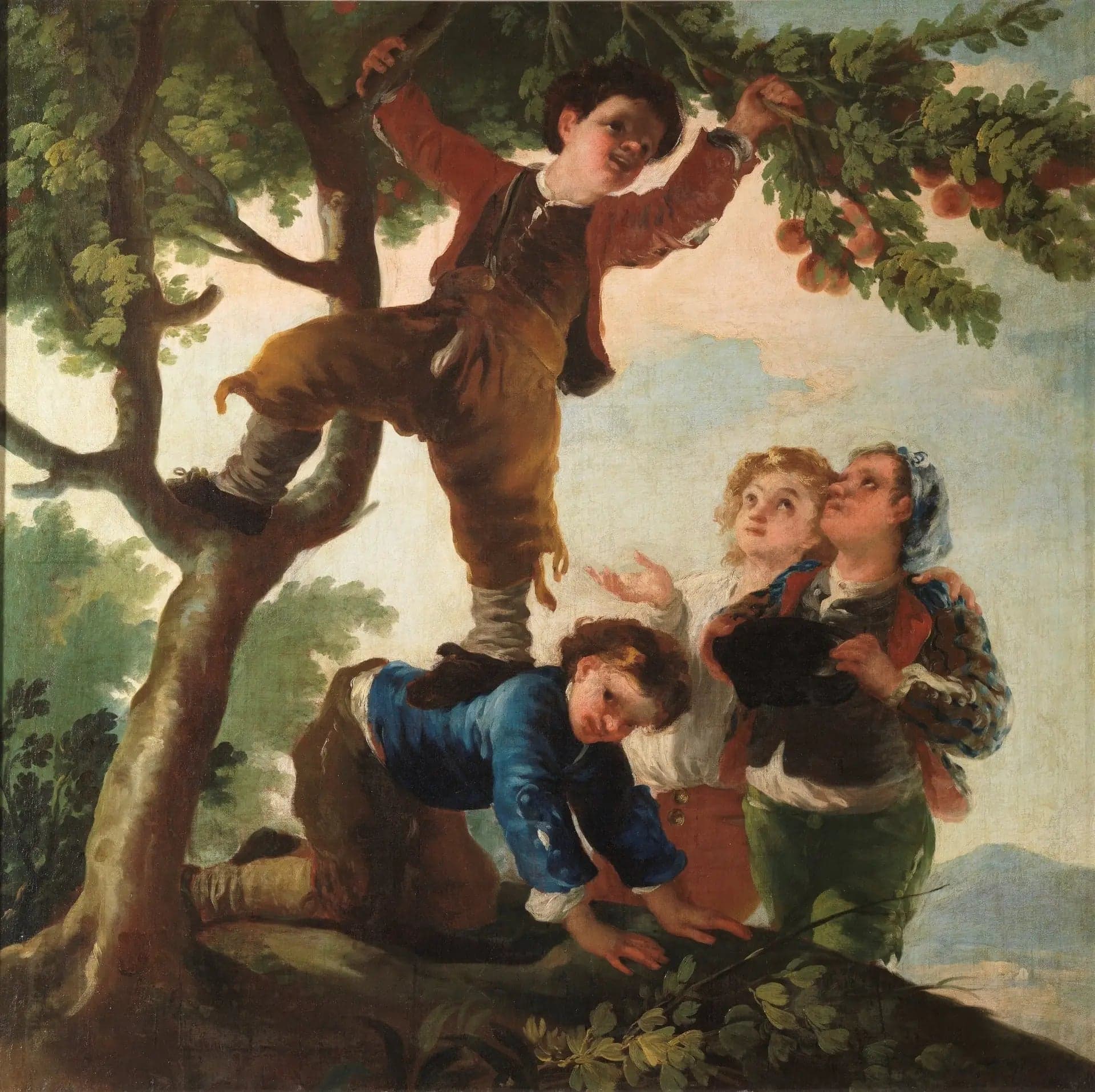
Boys Picking Fruits
- Original dimensions
- 122 x 119 cm
- Museum
- Prado Museum
- Year
- 1778
Scene depicted
At the heart of this painting , the observer discovers a bucolic scene where children, symbols of innocence, engage in the picking of fruits in a bright and serene atmosphere. The work evokes not only the joy of life's simple pleasures but also the intrinsic connection between man and nature. Every gesture, every smile, is a tribute to the freshness of childhood, carefree of adult concerns.
Historical context
Created in 1778, the painting "Boys Picking Fruits" is set against the vibrant backdrop of late 18th century Madrid. Francisco de Goya , an iconic figure of the Spanish romantic movement, immerses us in a scene of innocent serenity. Currently on display at the Prado Museum, this canvas reflects the Enlightenment era, where the values of nature and rural life are fully realized.
Place in the artist's career
"Boys Picking Fruits" stands out in Goya's career as a reflection of his transition to romantic painting, marking a period of deep personal reflection. Alongside his essential works such as "The Naked Maja" and "The Disasters of War," this canvas illustrates an evolution towards a more complex emotional representation and an increased appreciation for the simplicity of everyday life.
Anecdote
It is said that during a morning walk in the countryside, Goya declared: "Each fruit picked evokes a sweet memory, a promise of life." This quote resonates deeply in his masterpiece , where the innocence of young boys picking fruits transforms into an ode to nature, an imprint of freshness and simplicity that captivates the viewer.