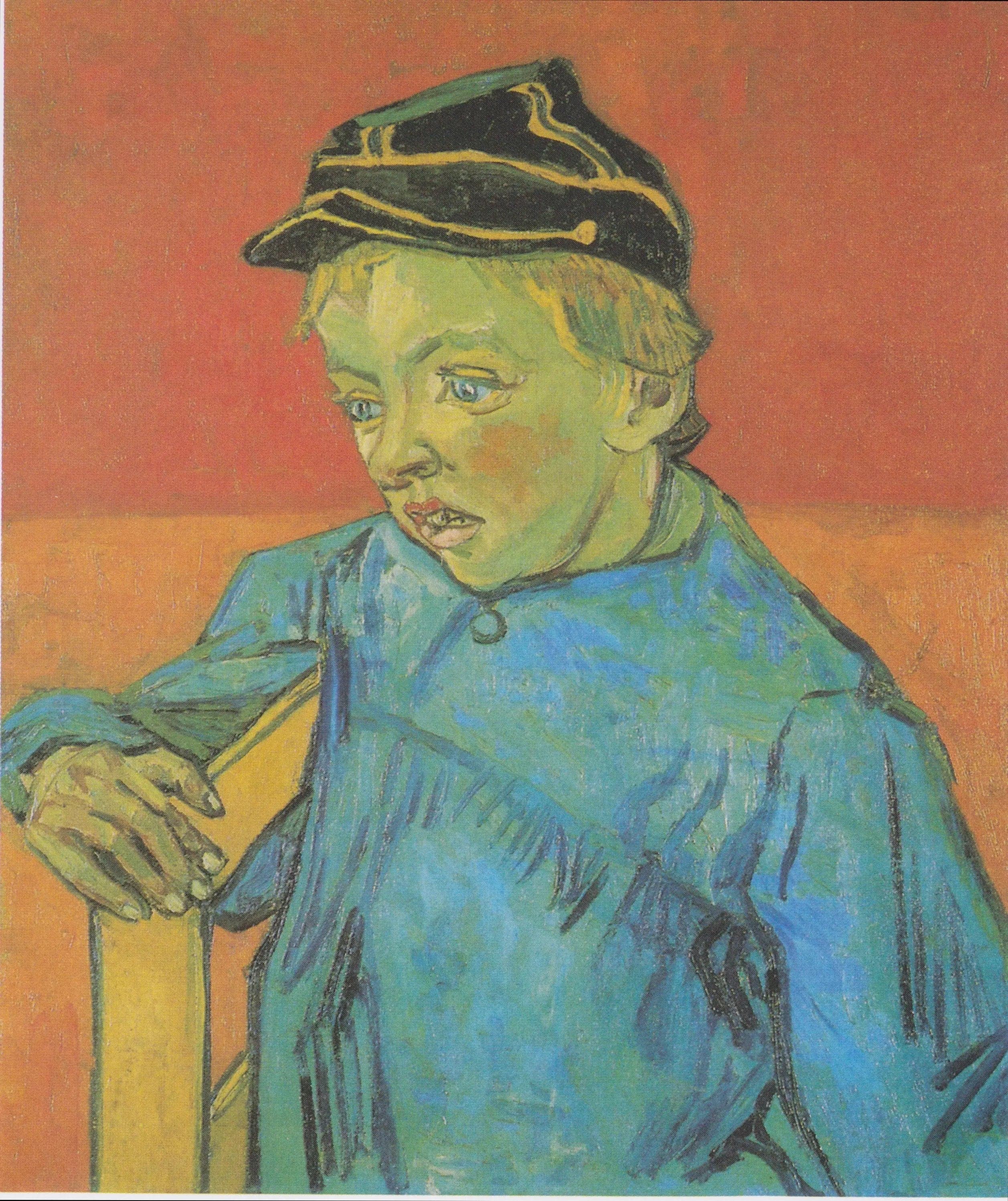
Boy with a Kepi
Scene depicted
In this masterpiece , a young boy, proud of his cap, comes to life under Van Gogh's brush. His expression, both serious and dreamy, invites the viewer to share a silent conversation, to discover the dreams of a child. This canvas captures not only a moment but also a universal emotion: childhood.
Historical context
Created in 1888, in the charming city of Arles , this painting is part of the post-impressionist movement. Vincent van Gogh captured the essence of daily life at that time, in a setting where art and light blend into a magical dance. The painting is now displayed at the São Paulo Museum of Art and measures 54 x 63.5 cm.
Place in the artist's career
Boy with Cap fits into a crucial phase of Van Gogh's career, a period when his style evolved towards unparalleled expressiveness. Alongside other paintings such as The Starry Night and The Sunflowers , Boy with Cap illustrates the artist's growing mastery and his taste for personal and intimate subjects.
Anecdote
In his journal, Van Gogh expressed: "I see beauty even where it seems there is none." This thought sprouted one spring morning when his gaze met the tranquil face of a young boy in a cap. The painting that resulted is an ode to innocence, vibrant with life and emotion.