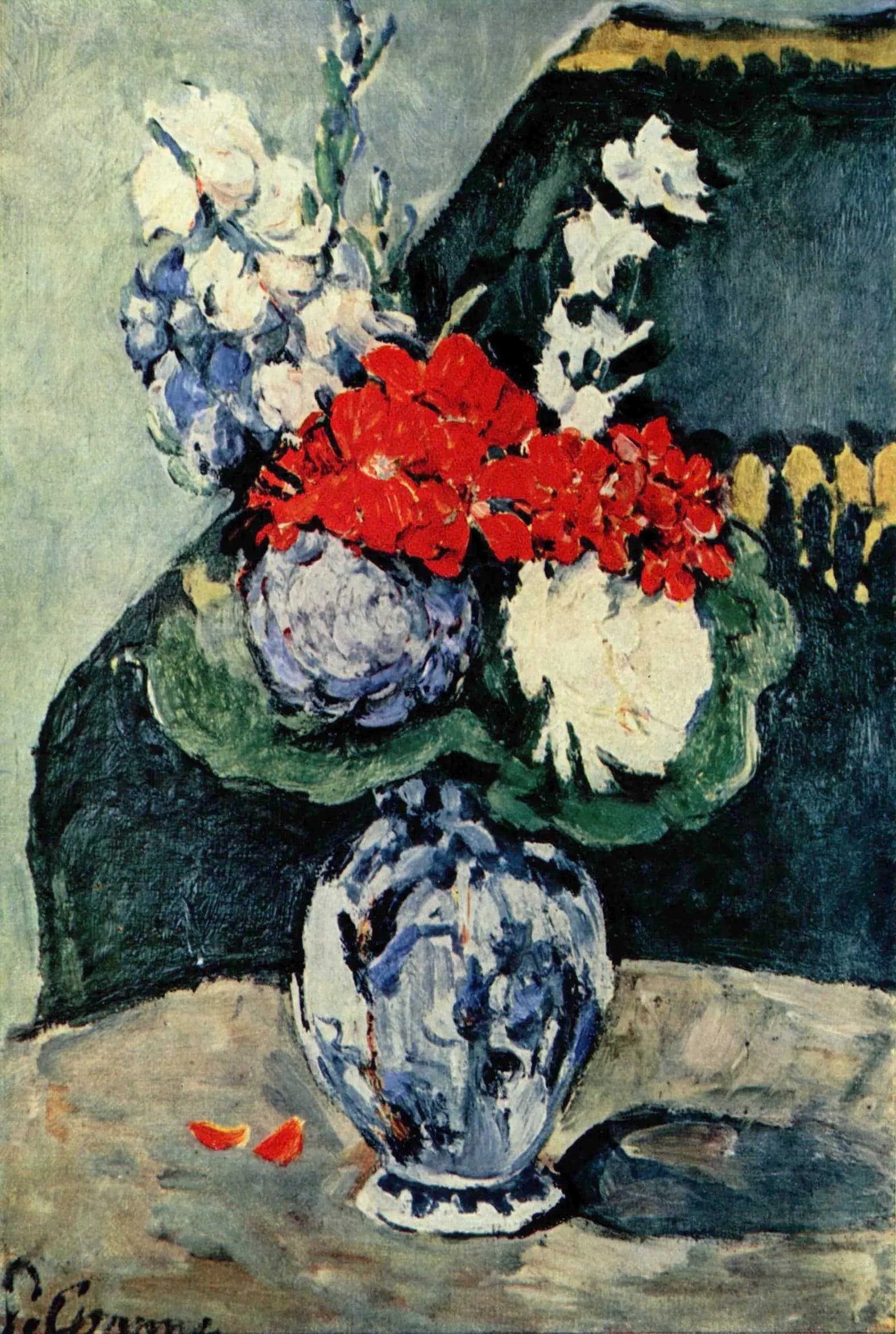
Bouquet at the Little Delft
- Original dimensions
- 27 x 41 cm
- Museum
- musée d'Orsay
- Year
- 1873
Scene depicted
The canvas , “Bouquet au petit Delft,” presents a delicate composition where flowers harmoniously blend in a porcelain vase. Cézanne's energetic strokes testify to his exploration of light and shadows, both illusory and tangible. Each flower, each gesture, translates into a dance of colors, almost poetic, playing with the reflections and intentions of the painter.
Historical context
This painting came to life in 1873, in Paris, the cradle of impressionism and a vibrant cultural hub. Paul Cézanne , a major figure of the post-impressionist movement, infused it with his colorful and delicate universe. As modernity emerged, the canvas , now preserved at the musée d'Orsay , evokes a timeless elegance. With its dimensions of 27 x 41 cm, this fragile canvas immerses us in a frozen moment, nourished by the vibrant energy of the city.
Place in the artist's career
“Bouquet au petit Delft” is a milestone in Cézanne's artistic evolution. This painting reflects a pivotal moment in his career, navigating between realism and abstraction. In parallel with “La Maison des Pignons” and “Les Grandes Baigneuses,” one feels the innovation of his style, marking both a bold maturity and an unceasing quest for emotion.
Anecdote
“Art is an intermediary between nature and the spirit,” said Cézanne. The genesis of this masterpiece may have originated in the heart of a secret garden, one spring morning when the aroma of freshly bloomed flowers filled the air. This ephemeral moment given to the painting still resonates through the lightness and freshness of Bouquet au petit Delft.