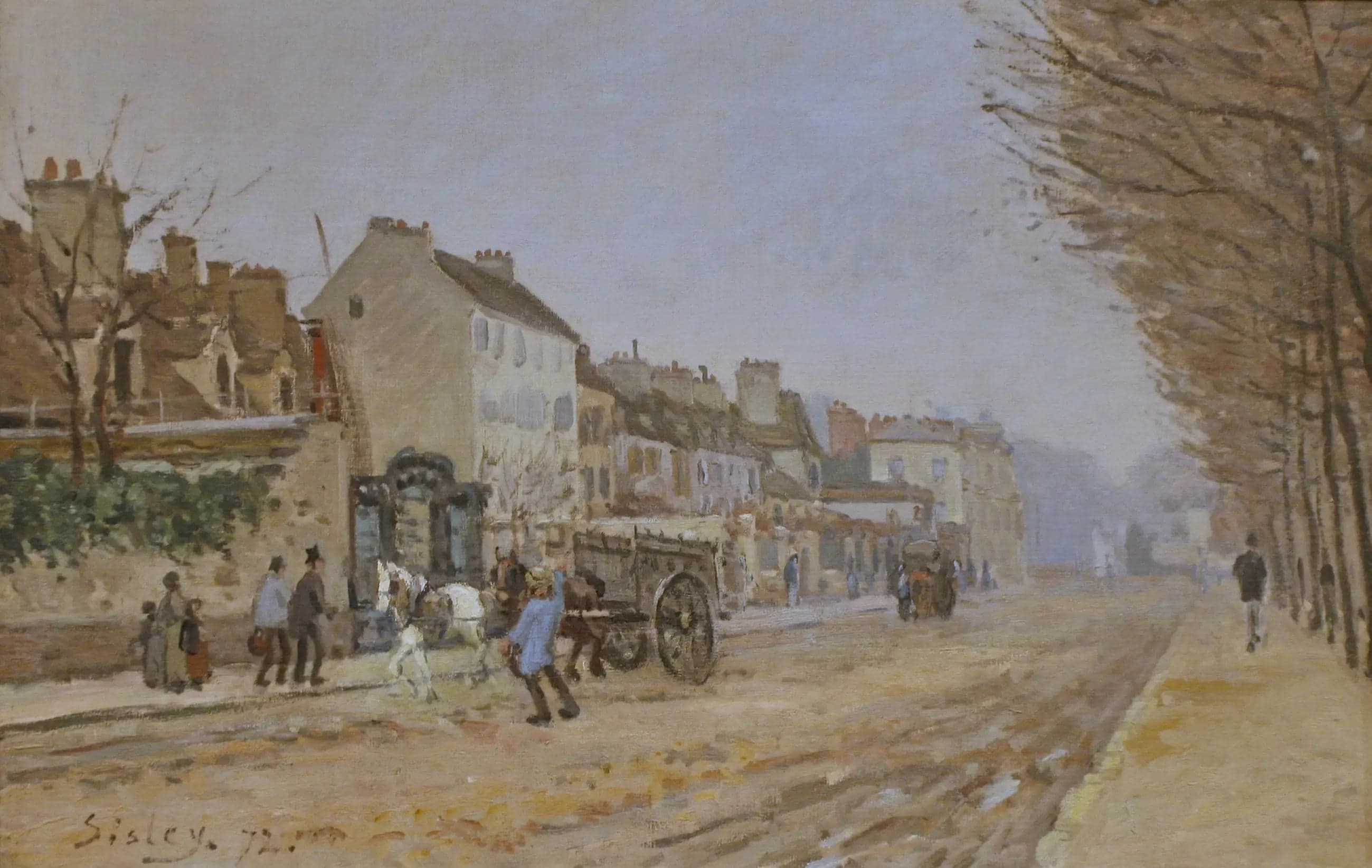
Boulevard Héloïse, Argenteuil
- Original dimensions
- 59.6 x 39.5 cm
- Museum
- National Gallery of Art
- Year
- 1872
Scene depicted
In this painting , Sisley invites us to stroll along the flower-lined boulevards of Argenteuil. The scene depicts human figures mingling with nature, creating a visual symphony full of life. The lush trees carry a youthful freshness, inviting the viewer to feel the gentle breeze and the song of birds, testifying to a moment suspended in time.
Historical context
Created in 1872, this painting is set in the vibrant context of the Impressionist movement. Alfred Sisley , master of urban landscapes, captures here the essence of Argenteuil, a city in full swing, where light and atmosphere blend harmoniously. Currently, this canvas is preserved at the National Gallery of Art , a showcase for this work that still resonates with the soul of nature and daily life.
Place in the artist's career
“Boulevard Héloïse, Argenteuil” represents a turning point in Sisley's career, a period when his style acquires remarkable maturity. Alongside works such as Monet's “Impression, Sunrise” and Renoir's “The Seine at Argenteuil,” this composition demonstrates a technical and emotional evolution, affirming his unique voice in the Impressionist landscape.
Anecdote
“Light is my muse, it dances in every color, and I simply interpret it,” could have said Alfred Sisley when evoking the beauty of spring that inspires his work time and again. That morning, by the Seine, his eyes fell upon this alley, where the light caresses the trees like sweet memories. Thus, the canvas “Boulevard Héloïse, Argenteuil” becomes the witness of a fleeting emotion, captured irrevocably.