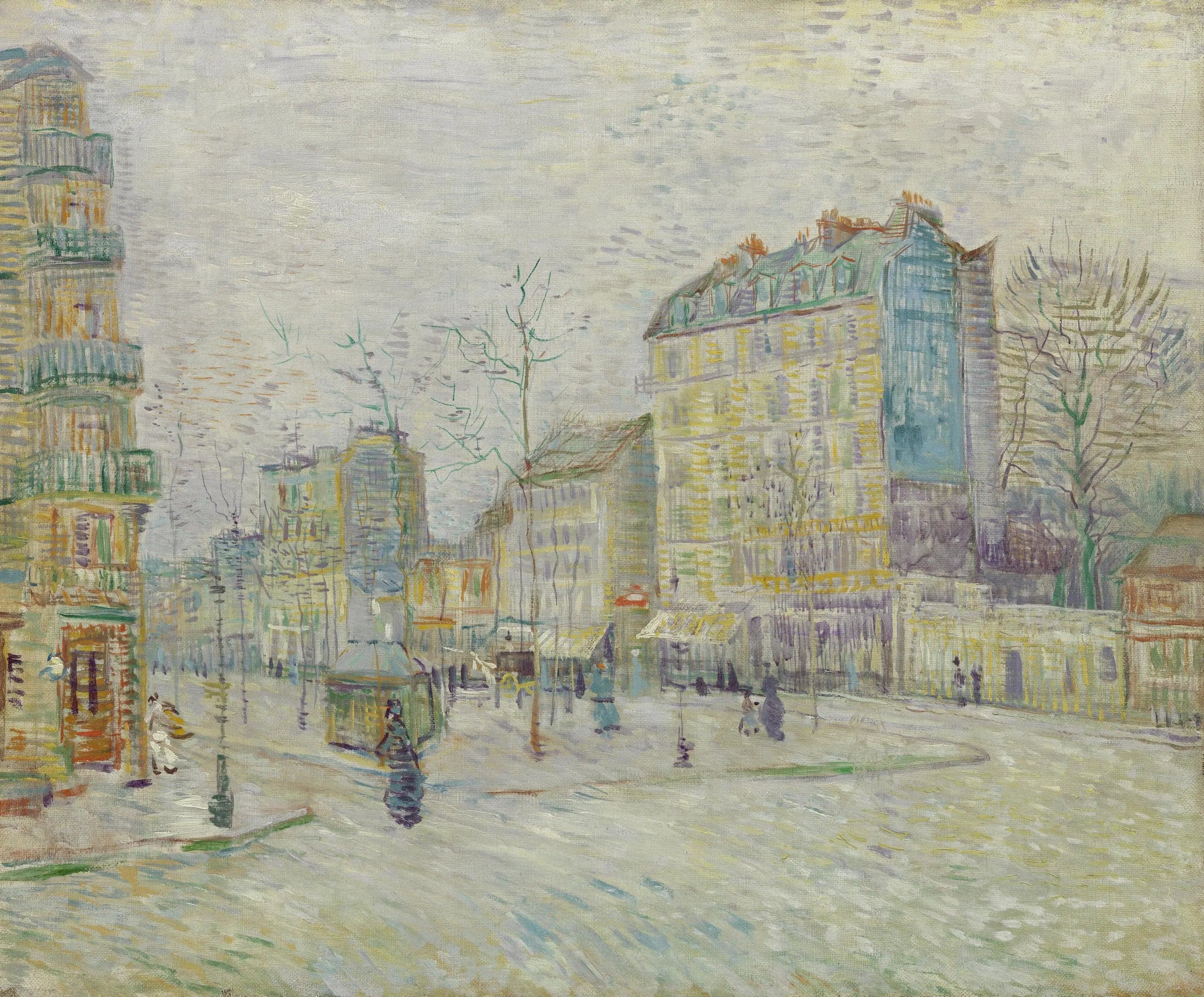
Boulevard de Clichy
- Original dimensions
- 55 x 45.5 cm
- Museum
- Van Gogh Museum
- Year
- 1887
Scene depicted
In this painting , Van Gogh offers us a window into Parisian life, where joyful figures stand out against a backdrop of ancient buildings. The animation of passersby, perhaps absorbed in their conversations or dreams, recalls the essence of modernity. This painting echoes the artistic frenzy of the time, magnifying the fleeting beauty of everyday moments.
Historical context
Created in 1887, during a Parisian stay that marked a turning point in the career of Vincent van Gogh , this iconic painting represents the vibrant neighborhood of Montmartre, a symbol of the Impressionist era. At that time, Paris became the heart of the artistic movement, and this canvas stands out in the tumultuous world of 19th-century artists. Today, the painting is displayed at the Van Gogh Museum , a true sanctuary dedicated to the work of this genius, where it attracts admirers from around the world.
Place in the artist's career
This canvas is part of a crucial period in Van Gogh's career, at a time when he explores bold techniques in Paris . Compared to other iconic paintings like * The Sunflowers * and * The Starry Night *, the Boulevard de Clichy illustrates his transition to a more vibrant palette and more expressive brushstrokes, heralding the maturity of his unique style.
Anecdote
Vincent van Gogh , known for his burning passion for painting, once declared: “The true life of the artist lies in the light and color that clash.” It was in the bustling streets of Paris , one spring morning, that Vincent found his inspiration for this masterpiece . The laughter of young people mingles with the aromas of freshly ground coffee, and the canvas becomes a reflection of a vibrant life, capturing every moment of this street corner.