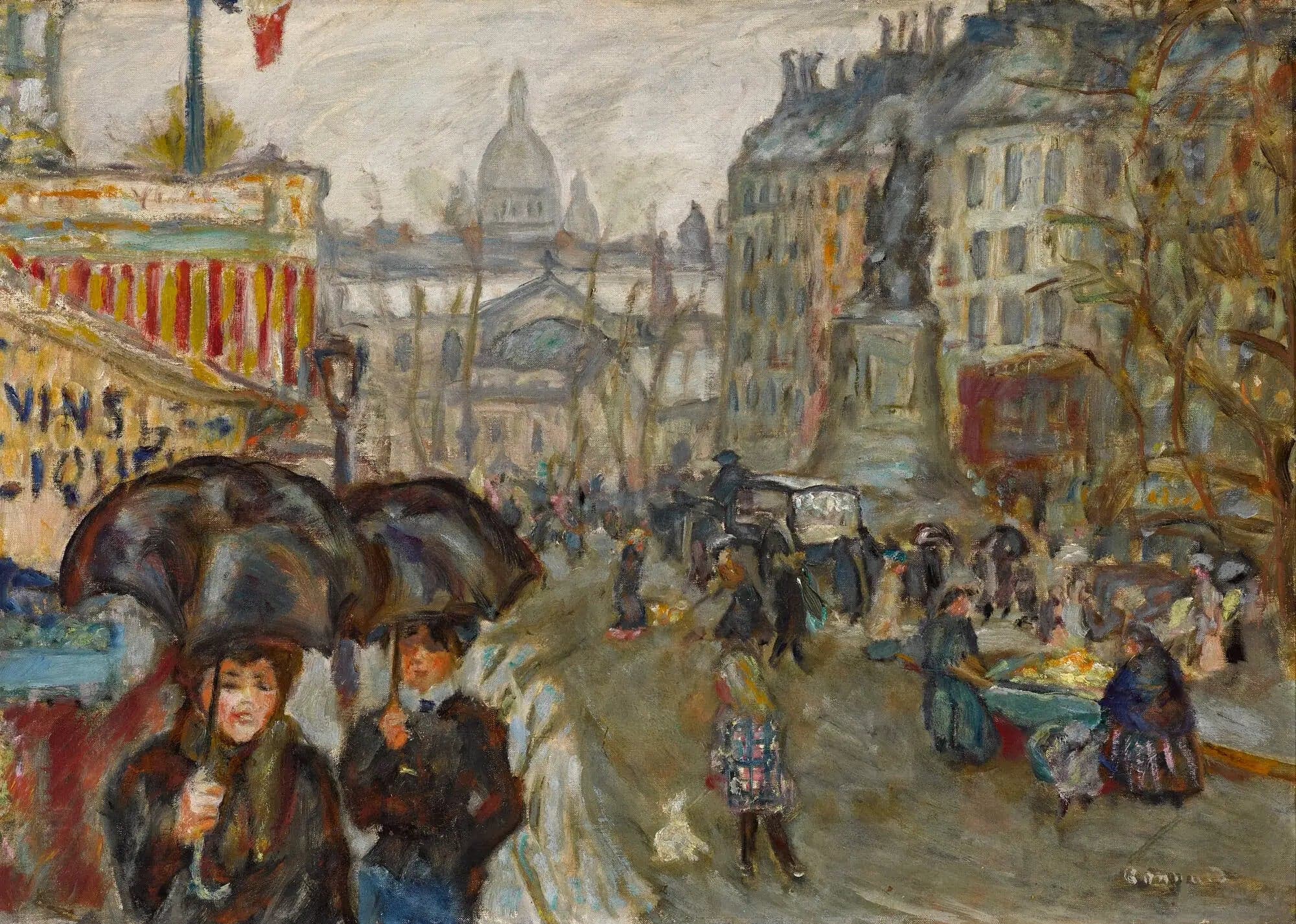
Boulevard de Clichy
- Original dimensions
- 69 x 50 cm
- Museum
- Hugh Lane Municipal Gallery
- Year
- 1911
Scene depicted
In this pictorial work , Boulevard de Clichy unfolds into a rich composition where light and shadow dance like a sweet melody, evoking Parisian life at its peak. Passersby, cafés, and shadows blend into an atmosphere that is both lively and contemplative, making this painting a true reflection of the society of the time.
Historical context
Created in 1911, this fascinating painting is rooted in the vibrant neighborhood of Clichy, in Paris, an iconic city, the artistic heart of the modern era. This masterpiece belongs to the movement of Nabi s, which emerged at the end of the 19th century, seeking to redefine the senses of painting through color and emotion. Today, the canvas is preserved at the Hugh Lane Municipal Gallery, a sanctuary for art and culture lovers.
Place in the artist's career
The painting “Boulevard de Clichy” represents a significant milestone in Bonnard's career, marking the maturation of his style. While he had emerged with works such as “The Garden” and “The Terrace,” this painting constitutes a stylistic peak, a fusion of vibrant tonality and contemplative observation that distinguishes him from other pioneers of his time.
Anecdote
“I paint what I feel above all; light is my muse.” These words from Bonnard resonate deeply when imagining the inspiration suddenly revealed on a bright spring morning, as he strolls along Boulevard de Clichy, captivated by the sparkling play of light reflections on the cobblestones. Through this painting, he captures not only the scene but the vibrant emotion of the life surrounding him.