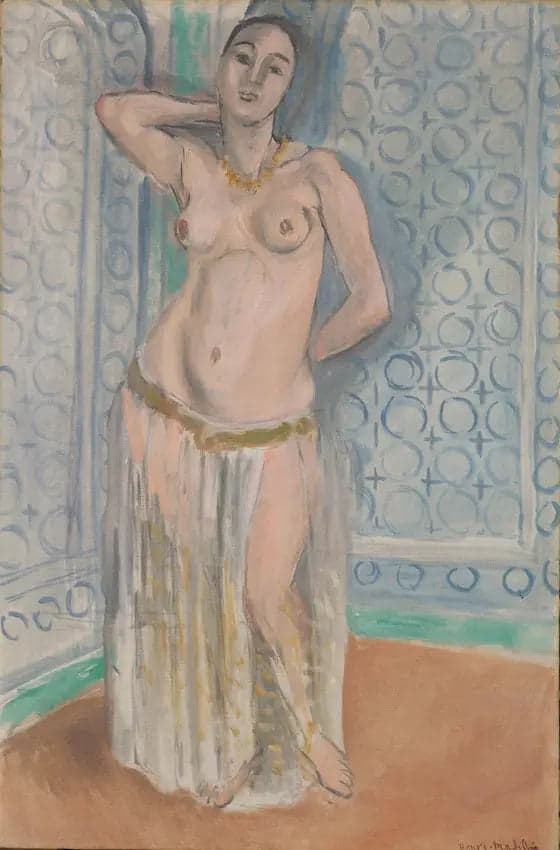
Blue Odalisque
- Original dimensions
- 54 x 82 cm
- Museum
- Orangerie Museum
- Year
- 1921
Scene depicted
This pictorial work depicts an odalisque, a symbol of dreams and Eastern wishes, seated in a richly decorated interior. The painting evokes an atmosphere of serenity, merging the inner and outer worlds through vibrant color and bold strokes that blend the art of living with contemplation.
Historical context
Created in 1921, this painting alone summarizes the artistic effervescence of Paris, then the center of the Fauvist movement. Evoking bright colors and the simplification of forms, it is the result of a time when Matisse sought to express deep emotions through color. The canvas, currently exhibited at the Orangerie Museum , is a masterpiece that questions the conventions of art and invites contemplation.
Place in the artist's career
Blue Odalisque is part of a pivotal period in Matisse's career, reflecting artistic maturity. This painting rivals other iconic works such as "The Woman with Flowers" and "The Serf," all three illustrating his evolution towards a bolder and more expressive style. Each painting bears witness to a constant search for beauty and harmony while playing with perceptions.
Anecdote
Henri Matisse often said: "Color is my alphabet." That sunny morning, scented by the nearby amber flowers, a completely different inspiration struck him. The softness of the light, the movement of the cotton sails floating in the wind, gave birth to the soul of this masterpiece , a painting where every nuance matters and tells a story.