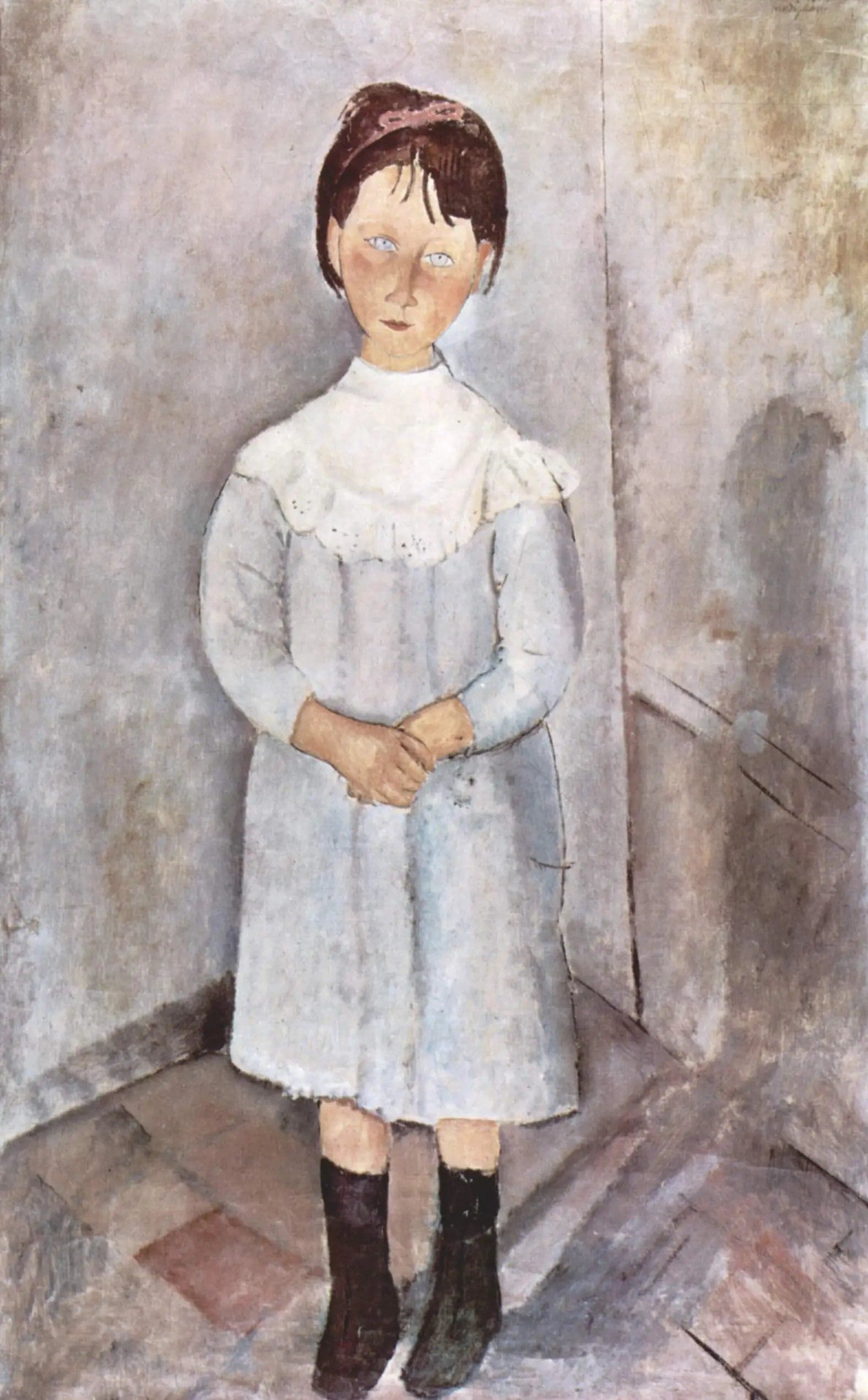
Blue Net
- Original dimensions
- 73 x 116 cm
- Museum
- Not specified
- Year
- 1918
Scene depicted
In "Filet en bleu," the gaze rests on a female figure that seems to float above the turmoil of the world. The elongated features and graceful posture recall Modigliani's unique aesthetic, where sensuality and melancholy coexist. This canvas , with its enveloping blue, evokes both the tranquility of deep waters and the nostalgia of eternal thought, echoing the quest for beauty and authenticity.
Historical context
Created at the end of World War I, the painting "Filet en bleu" is the result of a moment of artistic experimentation that emerges in Paris, the cradle of modernism . Modigliani, embedded in the figurative movement, captures the essence of a pivotal time, imbued with emotional challenges. This canvas , now absent from institutions, remains an emblematic piece of his legacy, with dimensions that speak of intimacy.
Place in the artist's career
"Filet en bleu" embodies a moment of maturity in Modigliani's career. Born from a period of intense creation, this painting proudly stands alongside his majestic works such as "Nu couché" and "Femme avec collier," showing an evolution towards a bold synthesis between classical portraiture and vibrant modernity.
Anecdote
"Beauty often hides where one least expects it," said Modigliani, observing the naked soul of a Parisian woman. On a gentle morning, near a light winter breeze, he captured the presence of a woman whose appearance evoked unexplored depths. This inspiration infused the painting "Filet en bleu" with an emotional power that transcends the gaze.