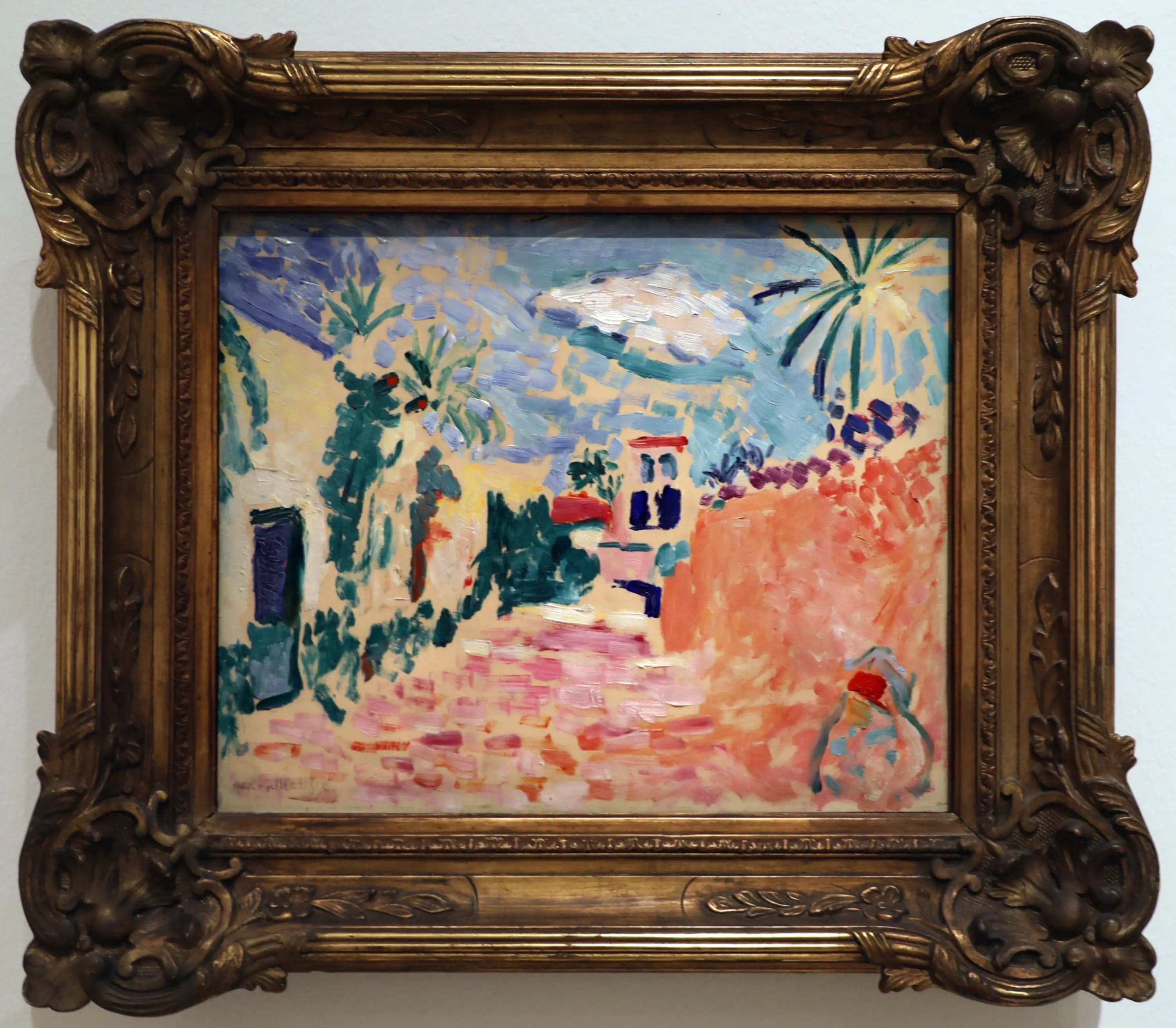
Biskra Street, Algeria
- Original dimensions
- 41 x 34 cm
- Museum
- Statens Museum for Kunst
- Year
- 1906
Scene depicted
The painting depicts a vibrant and colorful scene, where light envelops the clay buildings in warm hues, illuminating local life. Inhabitants, captured in their daily routines, bring an organic dynamic to the composition, making the atmosphere as palpable as it is enchanting. Every detail, from the lush vegetation to the caressing shadows, feeds the gaze with mystery.
Historical context
Created in 1906, the painting "Rue de Biskra, Algeria" is the product of the imagination of Henri Matisse , a pillar of Fauvism . This canvas is set against a historical backdrop of exploration, where Arab exoticism fascinates the West, while diving into the peak of the artistic avant-garde of its time. The painting is now preserved at the Statens Museum for Kunst in Copenhagen.
Place in the artist's career
"Rue de Biskra, Algeria" represents a significant milestone in Matisse's career, marking the affirmation of his unique style. When compared to other paintings such as "The Joy of Life" and "The Dance," it becomes evident that this is a period of transformation, where Matisse gradually abandons naturalism to embrace a bolder abstraction.
Anecdote
"Every brushstroke is an invitation to dream," Matisse reportedly said while reminiscing about his trip to Algeria. It was at the turn of a sunny alley, on a spring morning, that he encountered shapes and colors that would forever mark his art. This pictorial work reflects this encounter imbued with sweetness.