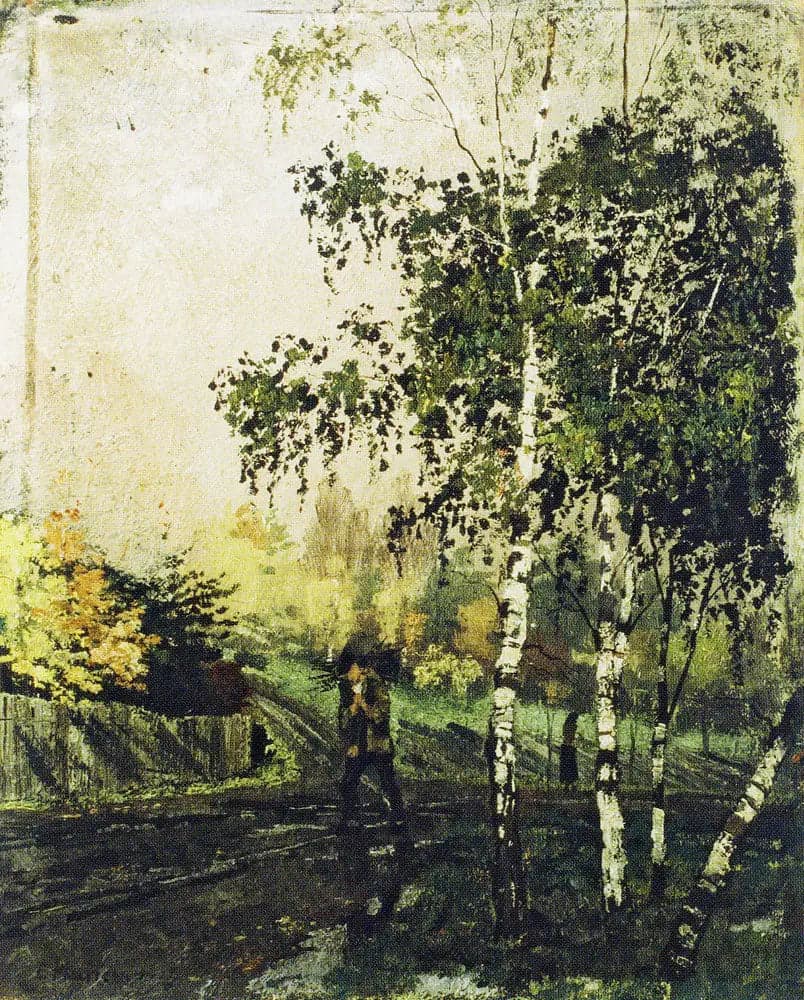
Birches and Men Carrying Branches
- Original dimensions
- 29 x 36 cm
- Museum
- Not specified
- Year
- 1882
Scene depicted
In the canvas, Munch depicts a scene full of life, where human figures interact with the surrounding nature. The majestic trees, particularly the birches, stand proudly while being intimately linked to the presence of men carrying branches. This dynamic reflects a dialogue between humanity and its environment, a symbolic interpretation of the bonds that unite man with nature and the challenges that arise from it.
Historical context
Created in Oslo, Norway, in 1882, this work is part of the Symbolist movement that precedes the modern era. The painting was made at a time when Nordic art was distinguished by its psychological and emotional themes. Although the painting is not currently displayed in a specific museum, it remains a fascinating part of artistic heritage and is the subject of private collections around the world.
Place in the artist's career
Birches and Men Carrying Branches represents a crucial step in Munch's career, illustrating his transition to more symbolic themes. In parallel, other works such as The Last Supper and The Scream demonstrate the evolution of his technique, particularly his ability to translate human emotions through bold compositions and vibrant colors, making this painting a milestone in his artistic journey.
Anecdote
“Nature is the soul of art.” - Edvard Munch . That morning, in a Norwegian forest, Edvard Munch felt a deep desire to capture the symbiosis between man and nature. The birches, gently floating under the breath of the wind, seemed to whisper ancient secrets. This emotion was the genesis of the masterpiece that fascinates us today: Birches and Men Carrying Branches.