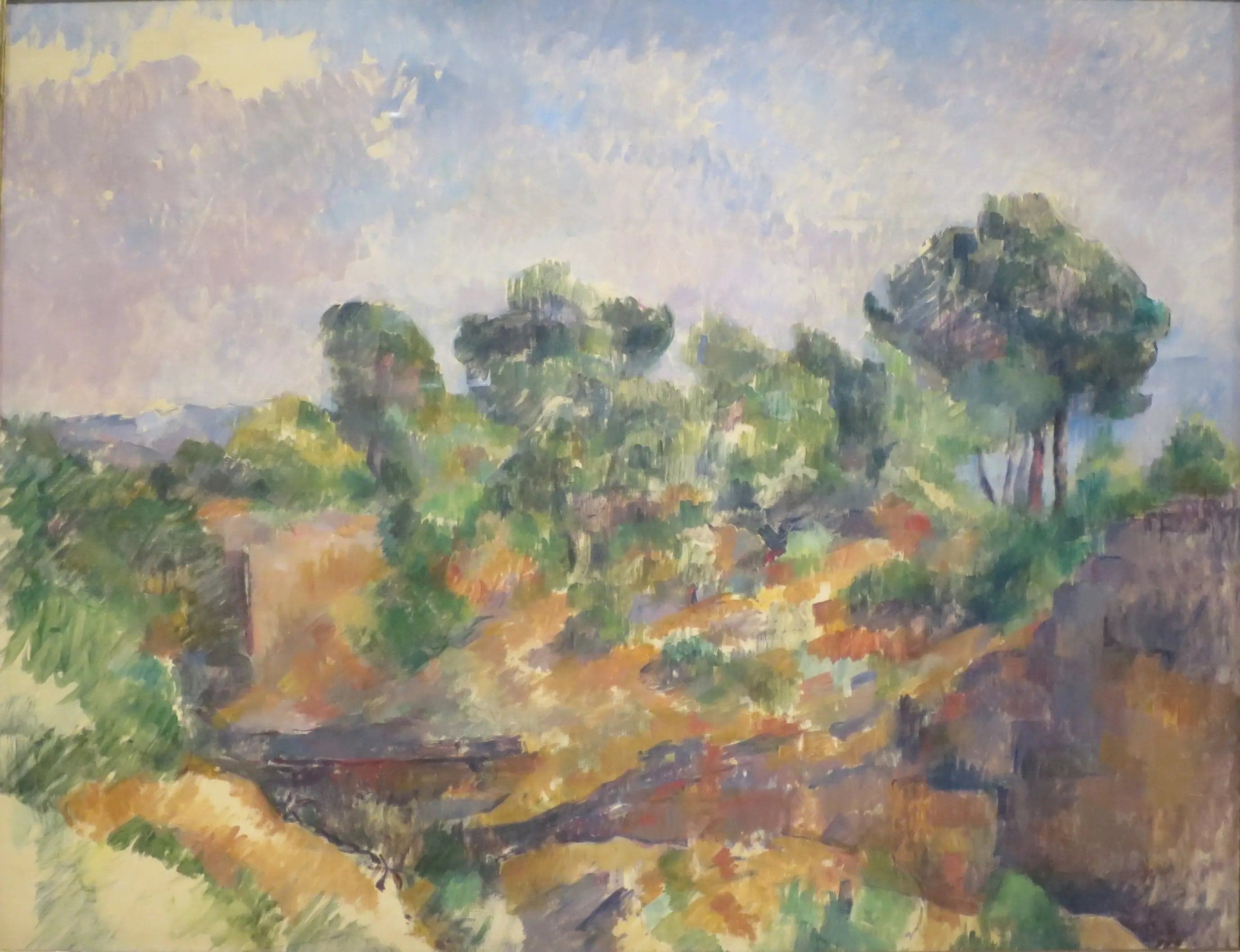
Bibémus
- Original dimensions
- 90 x 71 cm
- Museum
- Solomon R. Guggenheim Museum
- Year
- 1894
Scene depicted
The painting “Bibémus” depicts a landscape that is both wild and soothing, characteristic of Cézanne's works. The irregular shapes of the stones blend harmoniously into the landscape, echoing the raw beauty of the surrounding nature. The composition is filled with rich and nuanced colors, revealing the artist's passion for his immediate environment and his quest for harmony between man and nature.
Historical context
Created in 1894, this painting , emblematic of the Impressionist movement, immerses us in the artistic universe of the late 19th century, in Aix-en-Provence, a city rich in inspiring landscapes. This fascinating work is currently exhibited at the Solomon R. Guggenheim Museum , where its undeniable presence captivates visitors. Its imposing dimensions of 90 x 71 cm enhance the impact of its vibrant composition within the history of art.
Place in the artist's career
“Bibémus” represents a pivotal moment in Cézanne's career, reflecting his artistic maturation. It is situated between “The Large Bathers” and “Mont Sainte-Victoire,” demonstrating the evolution of his technique from form to color. This painting perfectly illustrates his transition to an abstraction that would leave an indelible mark on modern art.
Anecdote
“Nature is my only model,” said an inspired Cézanne in the beautiful light of southern France. It was on the morning of a spring day that the artist found his inspiration, on these hills of Bibémus, where the mixed sounds of birds and streams formed a gentle symphony, and where each color seemed to tell a story. This natural magic is reflected in the evocative power of the painting we admire today.