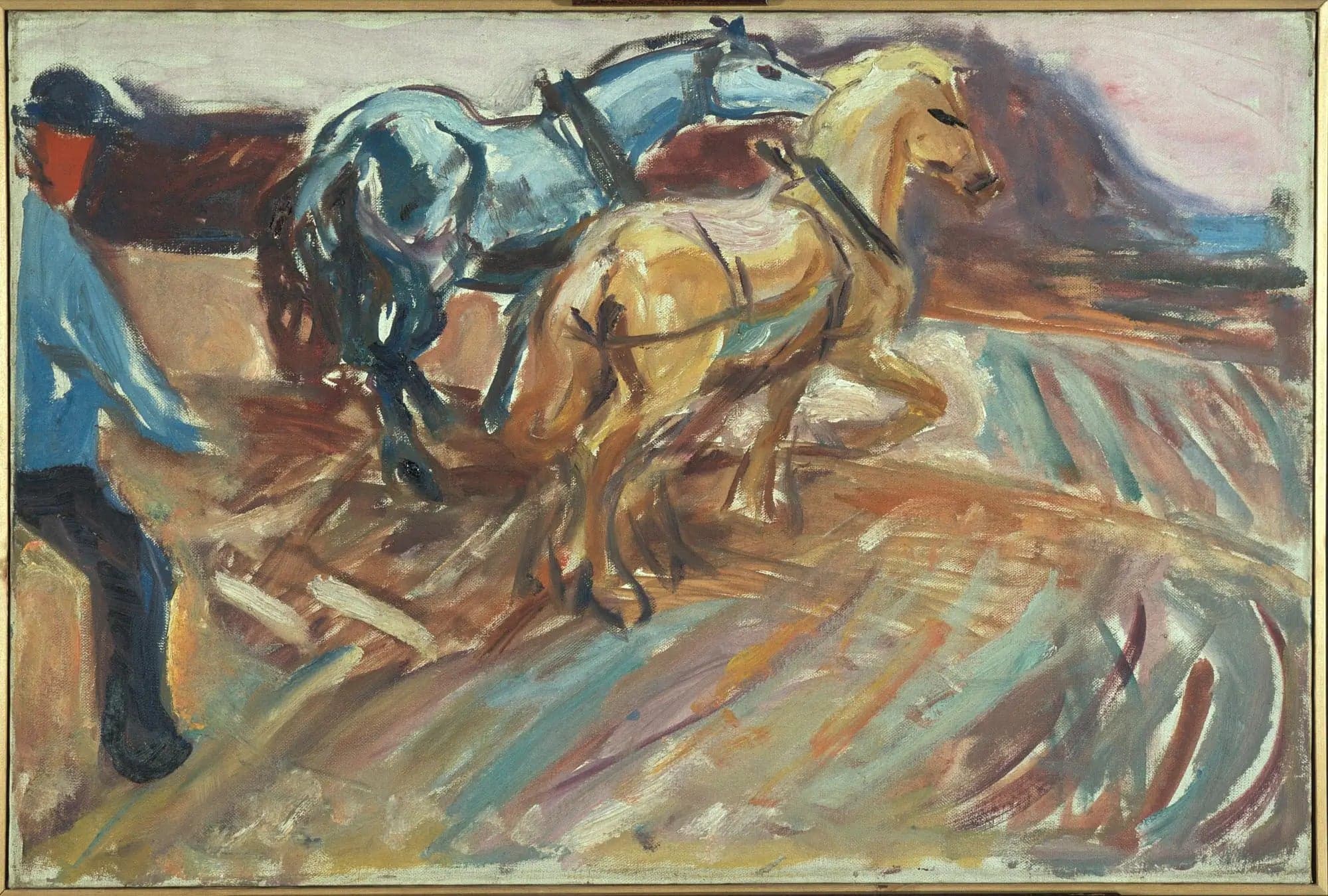
Behind the Plow
- Original dimensions
- 100.5 x 67.5 cm
- Museum
- Munch Museum
- Year
- 1917
Scene depicted
In this pictorial work, Munch captures a rural scene rich in meaning: a peasant stands behind the plow, a symbol of effort and connection to the land. The composition evokes a palpable intimacy with the natural elements and the spectacle of daily life. Beyond the object, it is a reflection on the bond between man and nature, a celebration of the efforts that shape our existence.
Historical context
This painting , created in the heart of 1917, is rooted in the rich artistic soil of Oslo, a city steeped in history and cultural emulation. As a member of the Symbolist movement, Behind the Plow reflects a troubled era, where the weight of human struggles meets the quest for personal introspection. The canvas currently resides in the Munch Museum, a sanctuary of the emotions and thoughts of this iconic artist.
Place in the artist's career
Behind the Plow places Edvard Munch in a pivotal period of his career. This painting, which fits into a stylistic continuity with works such as The Scream and The Madonna , bears witness to a technical and emotional evolution. It is both an affirmation of his artistic signature and an exploration of themes of solitude and labor.
Anecdote
“Nature whispers secrets, and it is in the silence of this whisper that I found my inspiration.” This quote resonates with the echoes of the canvas we admire today. Imagine Edvard, one morning of a budding spring, wandering among the fields, observing the labor of the peasants, a fleeting moment, but of unprecedented emotional depth.
Major exhibitions
Munch og Ekely: 1916-1944