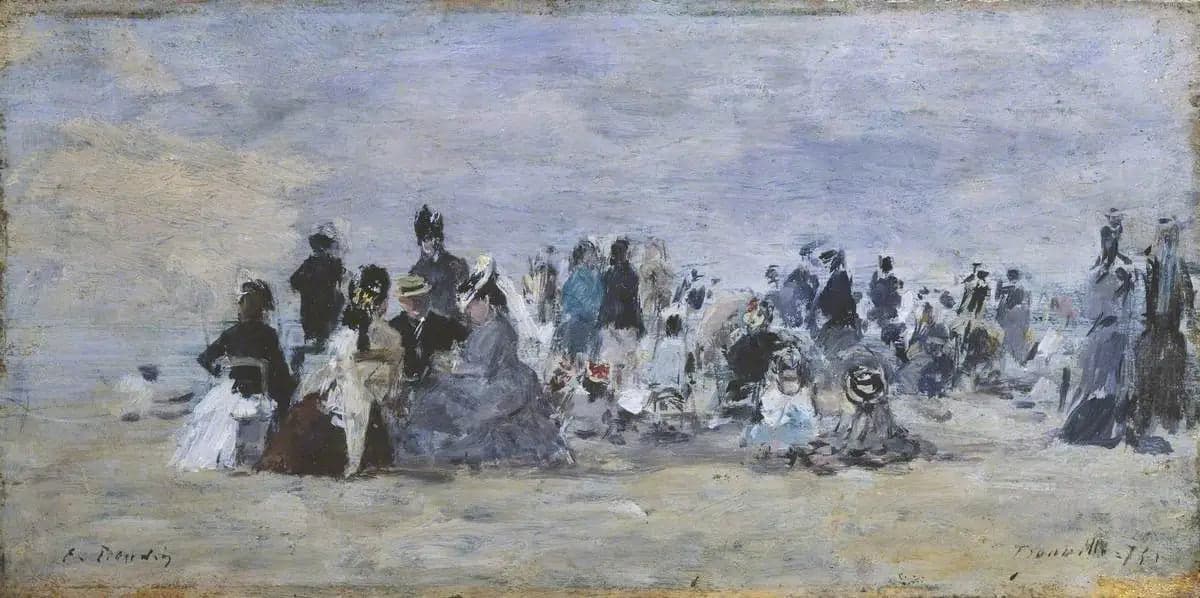
Beach of Trouville
- Original dimensions
- 58.1 x 35.6 cm
- Museum
- National Gallery
- Year
- 1894
Scene depicted
This canvas captures the ephemeral beauty of a sunny beach, populated by bathers and strollers. The sails of the boats, light and bright, unfurl on the sparkling water. The bay stretches majestically, inviting daydreams. The composition evokes the joy of a summer day, full of promises.
Historical context
Created in 1894, Plage de Trouville is part of the Impressionist era, a movement that carved its way through light and color. Trouville-sur-Mer, an iconic seaside resort in Normandy, becomes the stage for this painting where the sea merges with the sky. Currently housed at the National Gallery, this canvas measuring 58.1 x 35.6 cm bears witness to the artistic heritage of a place where time seems suspended.
Place in the artist's career
With Plage de Trouville , Boudin offers us an introspective look at his artistic evolution. This work is situated at a pivotal point in his career, between his promising beginnings and his increased recognition. Following canvases such as Le Débarcadère à Trouville and Les Bains de mer à Trouville , he explores bright and vibrant horizons, establishing the foundations of his unique style.
Anecdote
“The light caresses the canvas, and the moment becomes eternity.” This is how Eugène Boudin spoke of his art. He drew inspiration from the Norman landscapes during his morning walks, where the first rays of the sun play on the waves. This intense emotion finds its full measure in his masterpiece , Plage de Trouville , through vibrant tones and palpable liveliness.