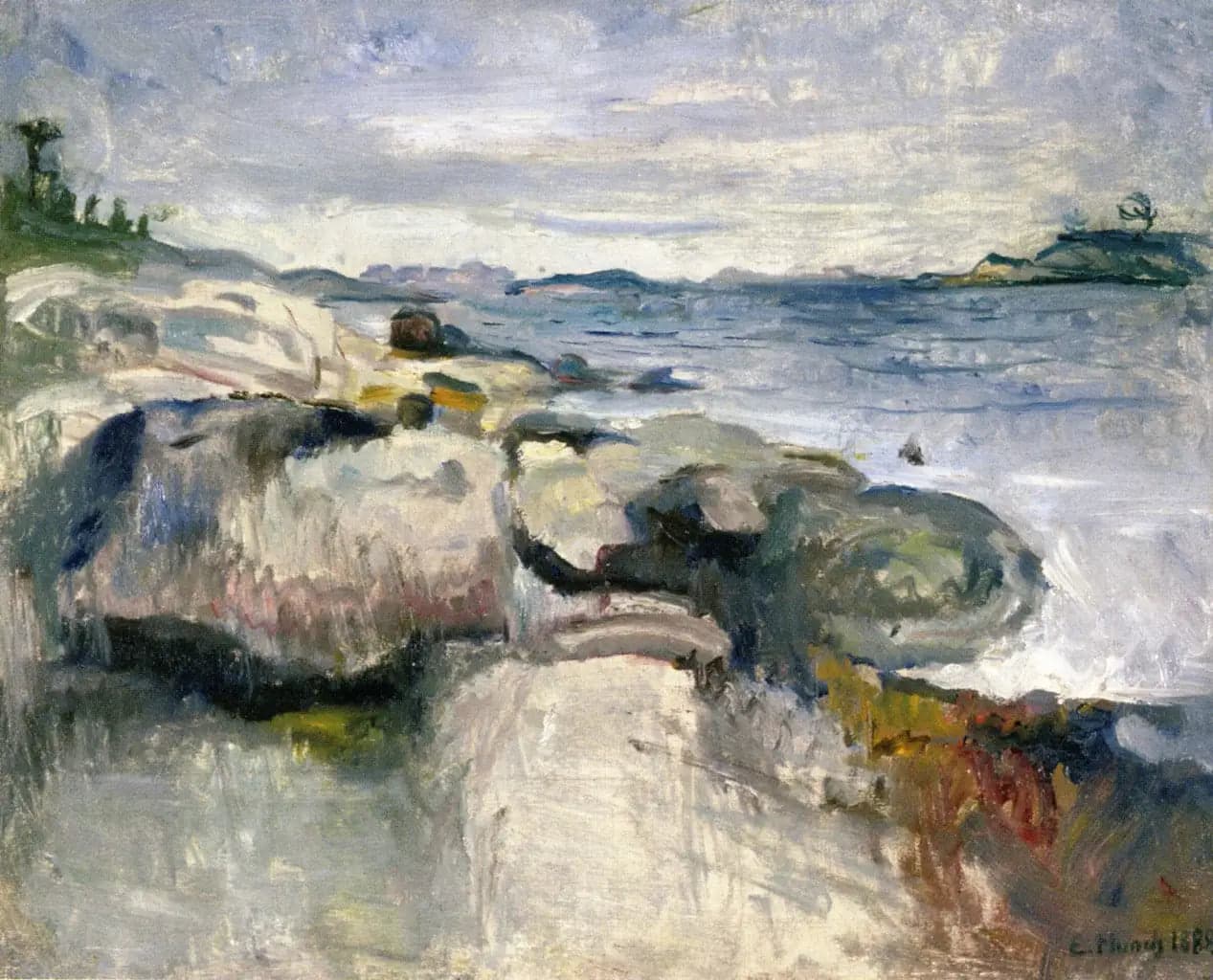
Beach
- Original dimensions
- 100.5 x 72.4 cm
- Museum
- Wadsworth Atheneum
- Year
- 1904
Scene depicted
The scene conveyed by the painting "Beach" invites the viewer to share a moment suspended between sea breeze and soft rays of sunshine. A composition that evokes a peaceful beach, where human figures seem to move in a delicate dance, absorbed in the harmony of natural elements. Every detail, every color draws the eye, awakening a sense of serenity while whispering buried secrets.
Historical context
Created in 1904, during a time marked by the emotional turmoil of the early 20th century and the emergence of expressionism , this painting rests at the heart of the Wadsworth Atheneum in Hartford, Connecticut. Munch, originally from Norway, captured the melancholy of everyday life through his paintings, including the painting "Beach," which evokes both apparent tranquility and deep introspection.
Place in the artist's career
"Beach" marks an important milestone in Munch's career, an artist in search of a unique voice. It parallels major works like "The Scream" and "The Madonna," illustrating his technical and emotional evolution, moving from a more realistic representation to a freer and more personal expression of his feelings, reinforcing his status as a pioneer of expressionism .
Anecdote
“Life is a painting of two shades: light and shadow.” These words from Edvard Munch resonate deeply in this work. This masterpiece , inspired during a walk by the sea, was painted while the artist contemplated the waves crashing on the shore, blending the cries of children and the breath of the wind with the distant call of nature.