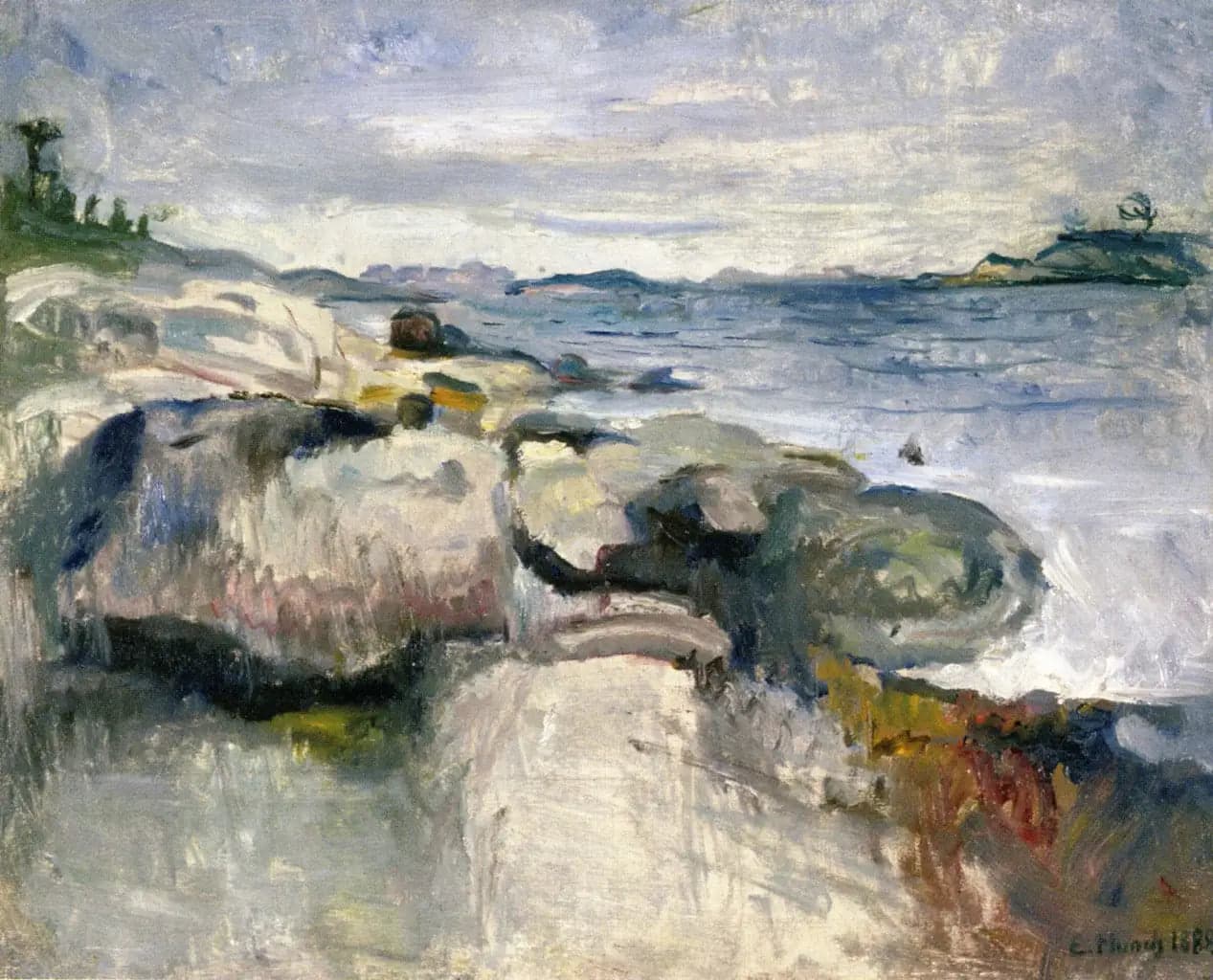
Beach
- Original dimensions
- 75.5 x 55 cm
- Museum
- Not specified
- Year
- 1889
Scene depicted
In Beach , Munch captures the lightness of the moment, where body and spirit meet at the edge of the ocean. The human figures blend with the tranquil wave, as if they were harmonious extensions of the environment. This painting is a pictorial expression of a sensory experience, cradled by the gentle sound of water and the salty smell of sea spray.
Historical context
Created in 1889, in an iconic Norwegian seaside setting, this painting is part of the symbolism movement, unique for its exploration of true emotions. The painting, still today imbued with deep meaning, reflects a time when nature and the human psyche began to meet on canvas. The exact location of this work remains vague, but its visual and emotional impact is undeniable.
Place in the artist's career
This painting is situated at a turning point in Munch's career, marking a transition towards a more innovative exploration of emotions. Alongside The Scream and The Dance of Life , Beach represents the gap between fleeting joy and existential anxiety, illustrating a technique that evolves towards mastery of symbolism and expressionism .
Anecdote
“The sea and its beaches, a whisper, an eloquent melody that merges my thoughts and feelings.” These words from Edvard Munch , revealing of his inspiration, evoke a summer morning at the beach, when the waves sang and the air was filled with iodine, creating a vibrant atmosphere, conducive to nourishing the soul and giving rise to masterpieces like Beach .