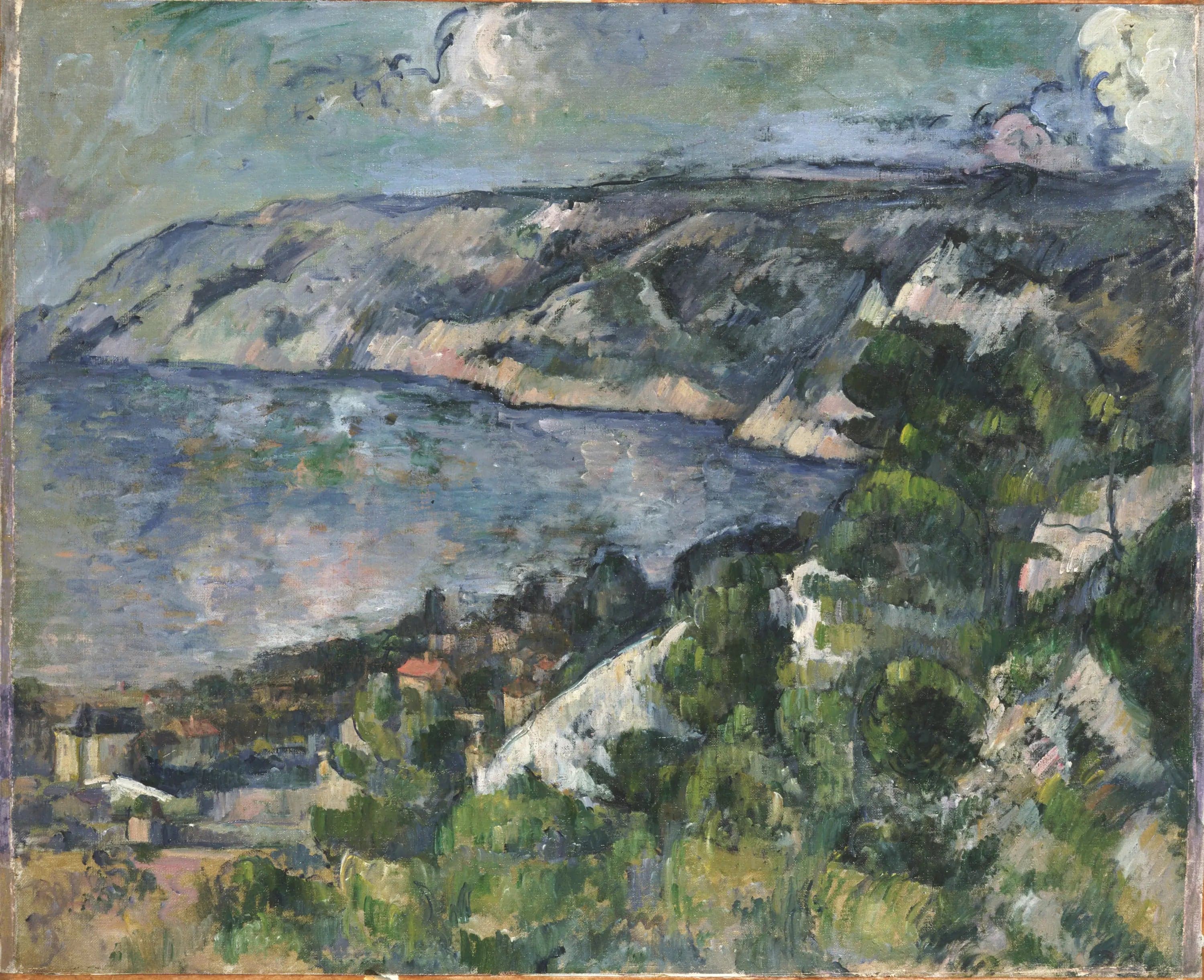
Bay of l'Estaque
- Original dimensions
- 74.3 x 60.3 cm
- Museum
- Philadelphia Museum of Art
- Year
- 1880
Scene depicted
This composition depicts the charm of the bay, where colorful boats gently sway in the turquoise water, under a sunny and vibrant sky. The caressing light illuminates the rocks and the surrounding landscape, while the shadows emphasize the tranquility and harmony of nature. In this pictorial work, Cézanne manages to envelop the viewer in an atmosphere of nostalgic peace.
Historical context
Created in 1880, this painting embodies its essence in the charming town of l'Estaque, located on the Mediterranean coast in the south of France. This painting is part of the Impressionist movement, which was in full swing, where light and colors become the protagonists of the canvas . Currently, this exceptional painting is preserved at the Philadelphia Museum of Art , an institution that values artistic heritage in a monumental collection.
Place in the artist's career
This painting represents a pivotal moment in Cézanne's career, marking his transition to a more modern expression. By comparing it with other famous works such as The Large Bathers and The Montagne Sainte-Victoire, we observe a fascinating evolution of technique and a growing maturity in the light and color that enrich his art.
Anecdote
“Nature is a painting in itself,” Cézanne might have said. One spring morning, as the sun's rays danced on the waves, he captured this vibrant sympathy for nature in a pure setting, while the scent of pines and the murmur of waves surrounded him. It is in this idyllic context that the painting Bay of l'Estaque was born.