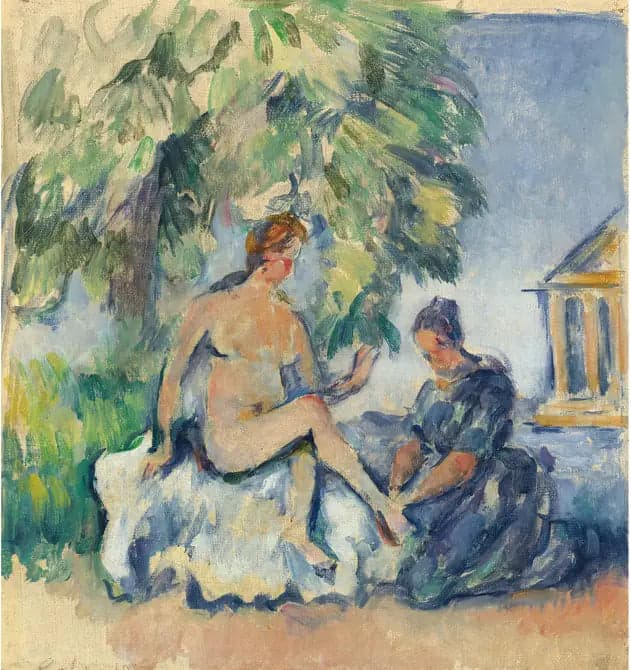
Bathsheba
- Original dimensions
- 25 x 29 cm
- Museum
- Granet Museum
- Year
- 1885
Scene depicted
The painting “Bathsheba” presents an intimate and evocative composition, where the central figure is the famous Bathsheba, diving into a fervent reinterpretation of a biblical story. Cézanne captures the moment of her introspection and embraces the tension between innocence and suffering. This pictorial work expresses a profound humanity through shadows and lights, engaging the viewer in silent contemplation.
Historical context
Created in 1885, this canvas emblematic of Paul Cézanne is set in the poetic framework of Aix-en-Provence, a city in the south of France bathed in light. It is an integral part of the post-impressionist movement, synonymous with innovation and the quest for artistic purity. The painting currently resides in the Granet Museum, where its legacy is preserved and admired.
Place in the artist's career
In 1885, “Bathsheba” marks a turning point in Cézanne's career. Emerging from a period of experimentation, this painting illustrates his transition to expressive maturity. Like “The Card Players” and “The House of Jas de Bouffan,” this work bears witness to a remarkable technical evolution where color and form become the characters of his pictorial narrative.
Anecdote
“Beauty is in simplicity, as in the soul of this Bathsheba.” This quote could summarize the very essence of the creation of this masterpiece . Imagine Cézanne, inspired by nature, walking through the fields at dawn, seeking to capture the light that illuminates the face of his muse, the woman at the heart of this painting .