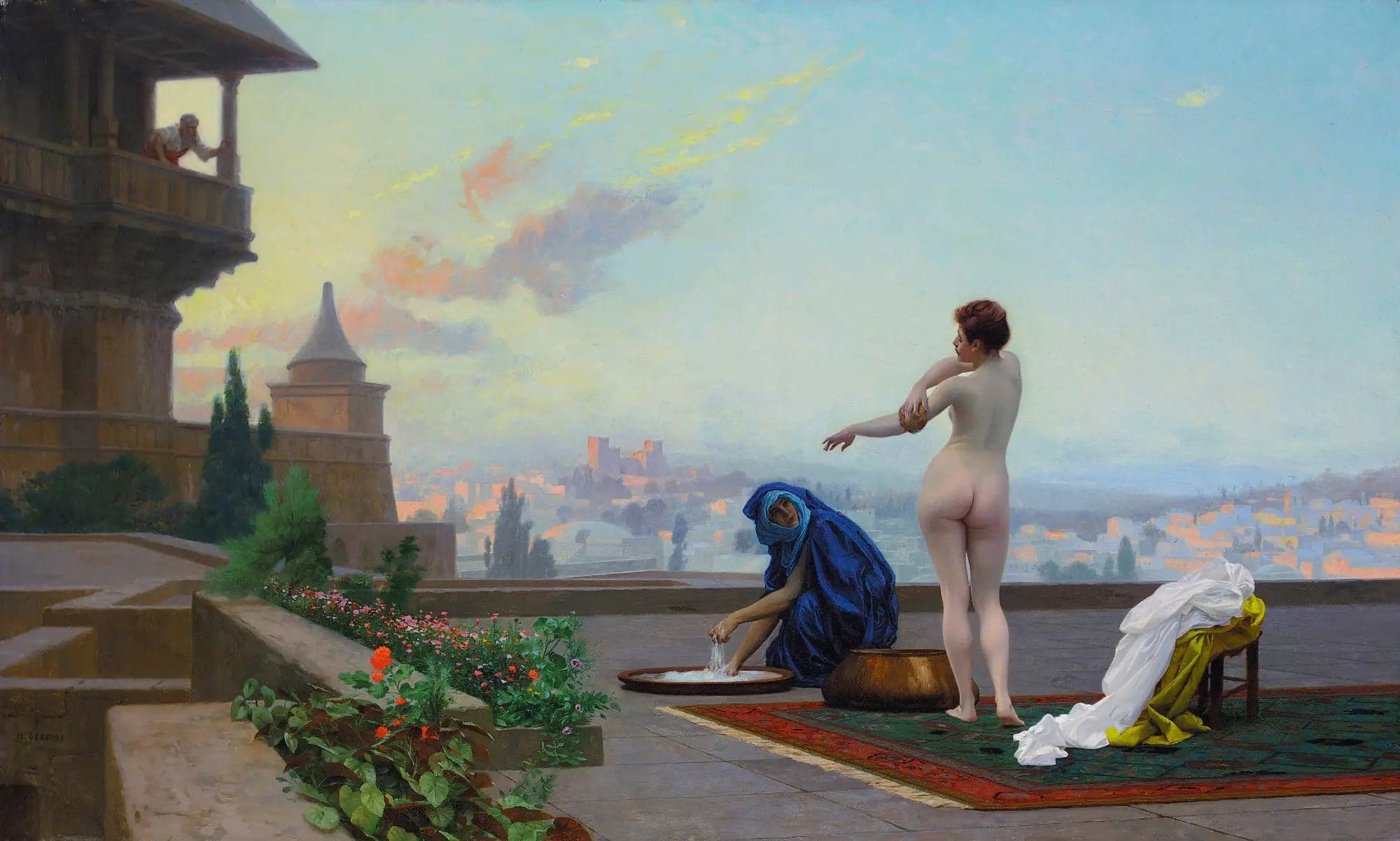
Bathsheba - Jean
- Original dimensions
- 100 x 60.5 cm
- Movement
- Orientalism
- Museum
- Not specified
- Year
- 1889
Scene depicted
This painting emblematic captures a moment of dramatic tension, where Bathsheba, a tragic biblical figure, finds herself at the heart of a forbidden love story. The canvas depicts the beauty and melancholy of her character, offering a poignant look at humanity in the face of desire and morality. The scene, bathed in light and shadows, evokes the complexities of passion and perdition.
Historical context
Created in 1889, this famous painting is the result of a time when orientalism fascinated European artists. Jean-Léon Gérôme , an emblematic painter of this movement, drew his inspiration from biblical narratives, offering an intimate and romantic view of Bathsheba. The painting, currently unspecified regarding the museum housing this pictorial work , is a remarkable testimony to the human and spiritual dimensions that the artist was able to convey.
Place in the artist's career
The painting "Bathsheba" marks a crucial milestone in Gérôme's career, illustrating both his distinctive style and his commitment to Zairian narratives. In parallel, his works such as "The Rooster Fight" and "The Slave Market" reveal his artistic evolution, moving from a naturalistic representation to a more evocative language, tied to Eastern culture.
Anecdote
Jean-Léon Gérôme once stated: "Beauty lies in the gaze of the soul." It was on a sunny morning, while observing silhouettes moving in the golden dunes, that he conceived his vision of Bathsheba. This composition resonates with the echo of this inspiration, awakening powerful emotions while immortalizing a timeless scene.