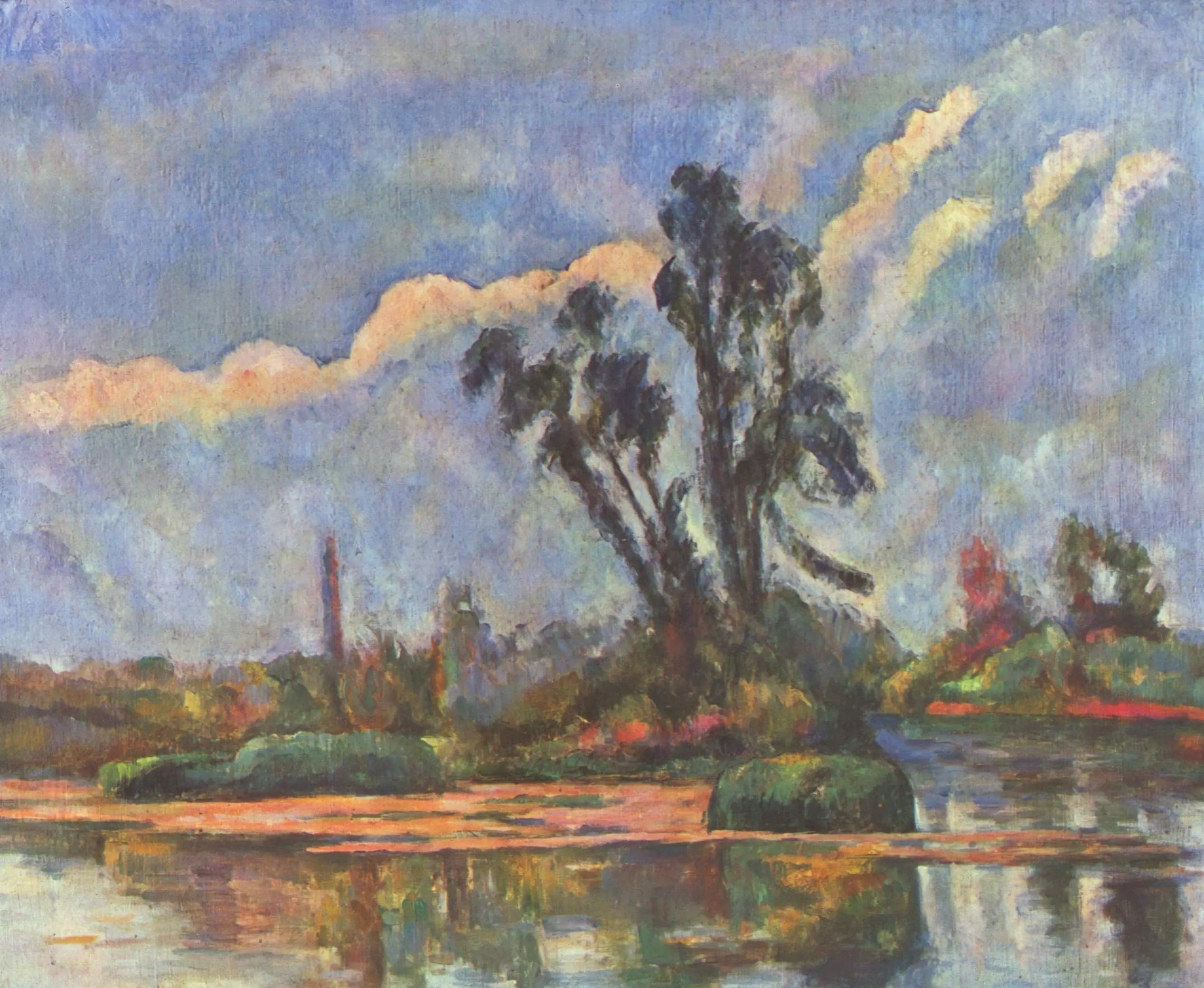
Banks of the Oise
- Original dimensions
- 60 x 49 cm
- Museum
- Not specified
- Year
- 1888
Scene depicted
In this composition full of life, Cézanne manages to capture the very essence of nature, combining the elements of earth and water in perfect balance. The artist depicts a serene landscape where the banks of the Oise blend with the reflections of a capricious sky, creating an atmosphere conducive to contemplation. It is a suspended moment where the viewer's gaze is invited to wander over the liquid surface, guided by the light sculpting the forms.
Historical context
Created in 1888, the painting titled Bords de l'Oise takes place in the tranquil setting of the Paris region, at the heart of a France undergoing artistic transformation. This iconic painting belongs to the Impressionist movement, while also foreshadowing the beginnings of Post-Impressionism , of which Cézanne will be one of the undisputed masters. Since its creation, this canvas has inspired various admirations without specifics on its current exhibition in museums.
Place in the artist's career
Bords de l'Oise represents a significant milestone in Cézanne's evolution, reflecting his growing mastery. Fitting into his maturity period, this work can be compared to other famous paintings such as Les Grandes Baigneuses and La Montagne Sainte-Victoire , revealing his relentless exploration of color, form, and light.
Anecdote
“Nature is an endless spectacle, and every painting I create is a symphony,” Cézanne might have said as he observed the slow flow of the Oise. One spring morning, when the sun's warmth brushed the banks, he surely took his easel, filled with enthusiasm, to immortalize this corner of serenity, delicately reproducing the light and shadow that danced on the water.