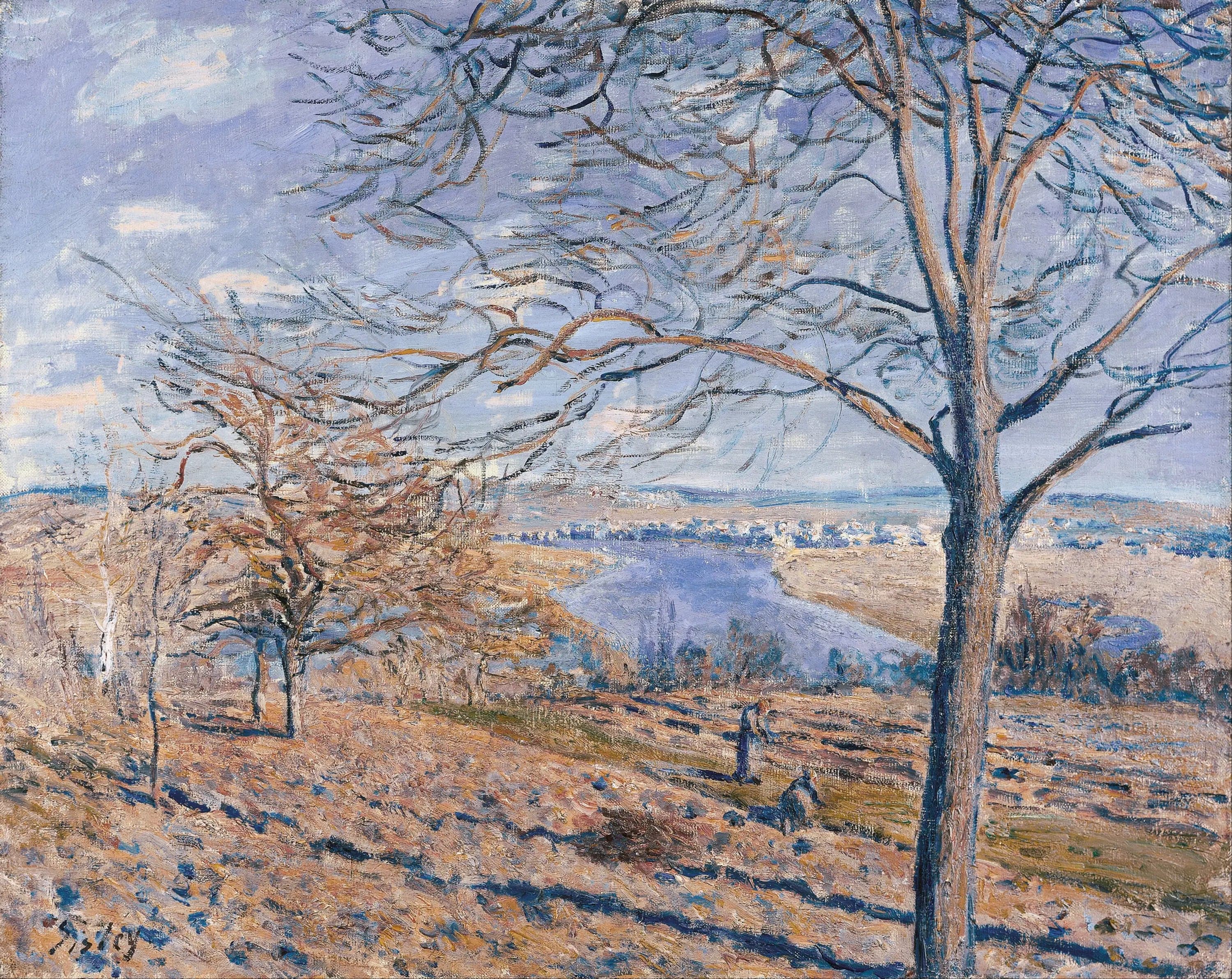
Bank of Loing, autumn effect
- Original dimensions
- 817 x 657 cm
- Museum
- Israel Museum
- Year
- 1881
Scene depicted
This painting captures an autumn scene where the softness of the golden light caresses the waters of the Loing, accentuating the reflections of the trees with flamboyant foliage. Through Sisley's masterful composition , the viewer is transported into a poetic serenity, where each brushstroke speaks of nature in transformation, the sounds of falling leaves, and the gentle murmurs of water.
Historical context
Created in 1881, this painting is emblematic of the incredible Impressionist movement, which emerged in the peaceful landscapes of Seine-et-Marne. Alfred Sisley , a master among painters, captured the ephemeral beauty of autumn through this canvas . Currently exhibited at the Israel Museum , this painting of imposing dimensions evokes a stroll along the Loing, where Sisley's art meets nature with striking harmony.
Place in the artist's career
Bord du Loing, effet d'automne is part of a fruitful period in Alfred Sisley's career, where he reached stylistic maturity. Compared to other masterpieces such as Le Pont de Moret sur le Loing and Les Voiliers à Argenteuil, this painting illustrates his technical evolution, capturing not only light but also the very essence of a fleeting moment.
Anecdote
“The morning light, when it dances on the surface of the water, has always inspired me.” Alfred Sisley is said to have expressed this while recalling the tranquil scenes of the Loing, where he found emotional depth for his painting . In that precise moment, a cloud of light and a scent of spring humidity fueled the creative magic that reveals itself in this pictorial work .