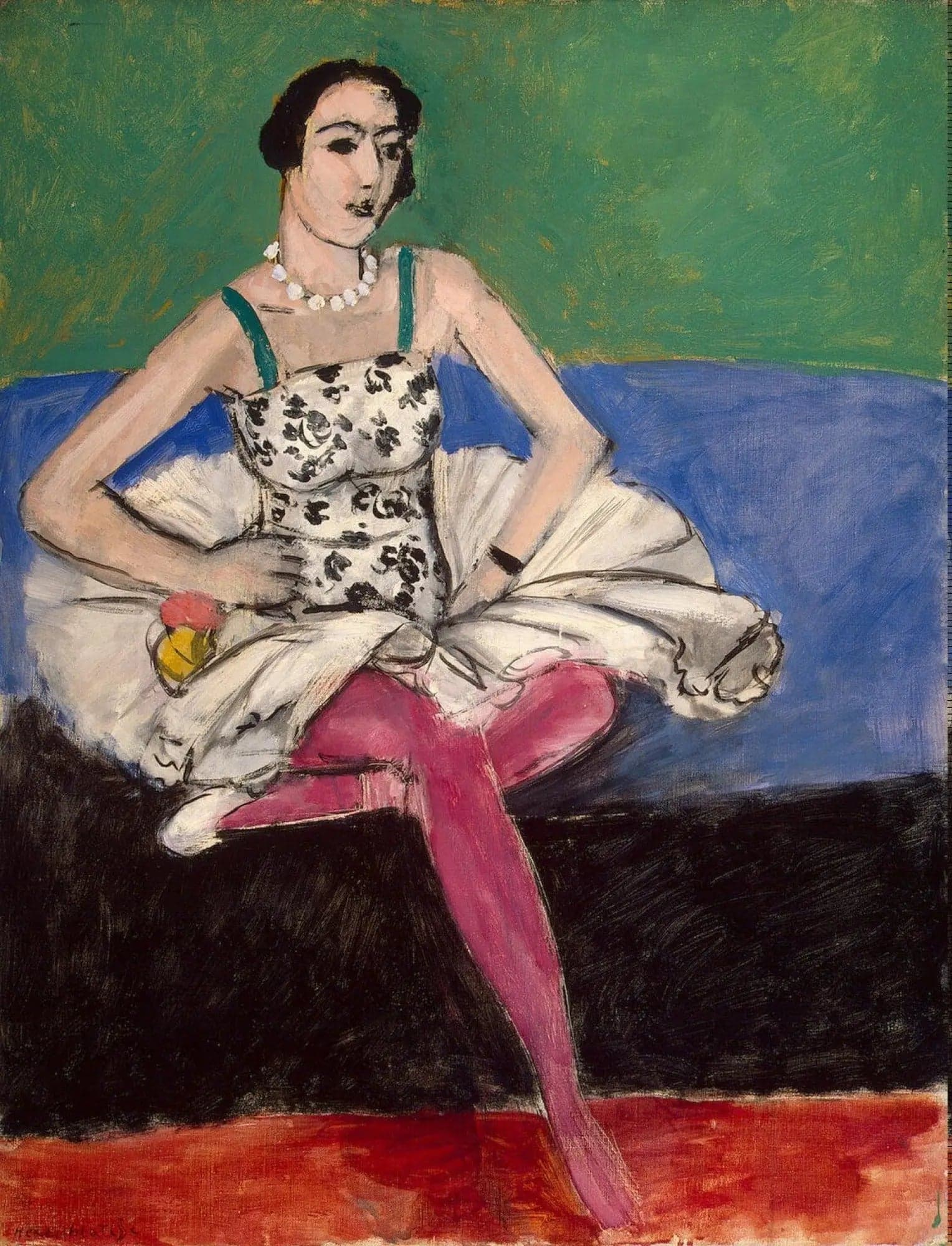
Ballerina
- Original dimensions
- 50 x 65 cm
- Museum
- Hermitage Museum
- Year
- 1927
Scene depicted
In this painting, Matisse captures the very essence of dance through the ballerina. The rhythm of her movements is materialized by vivid and colorful brushstrokes that evoke the sweet melody of a concert. This pictorial work transcends simple movement; it becomes a hymn to beauty and artistic expression.
Historical context
Created in 1927, this painting is emblematic of the Fauvist movement, which is distinguished by its bold palette and free spirit. The work emerged at a time when European art was in full effervescence. The painting is proudly preserved at the Hermitage Museum in Saint Petersburg, Russia, a showcase for this true masterpiece. With its dimensions of 50 x 65 cm, this canvas draws the eye and invites deep exploration.
Place in the artist's career
The Ballerina marks a decisive turning point in Matisse's career, signifying a period of maturity. Alongside works such as The Dance and The Joy of Life , it illustrates the stylistic evolution of the artist, at a time when he explores more fluid forms and vibrant colors.
Anecdote
“Beauty is found in every movement, like in the ballet of life,” said Matisse in front of his canvas. It was a spring morning, bathed in light, that he conceived this painting , inspired by the fluid movement of a ballerina. This ephemeral moment transforms into an evocative force, making Ballerina an embodiment of grace and lightness.