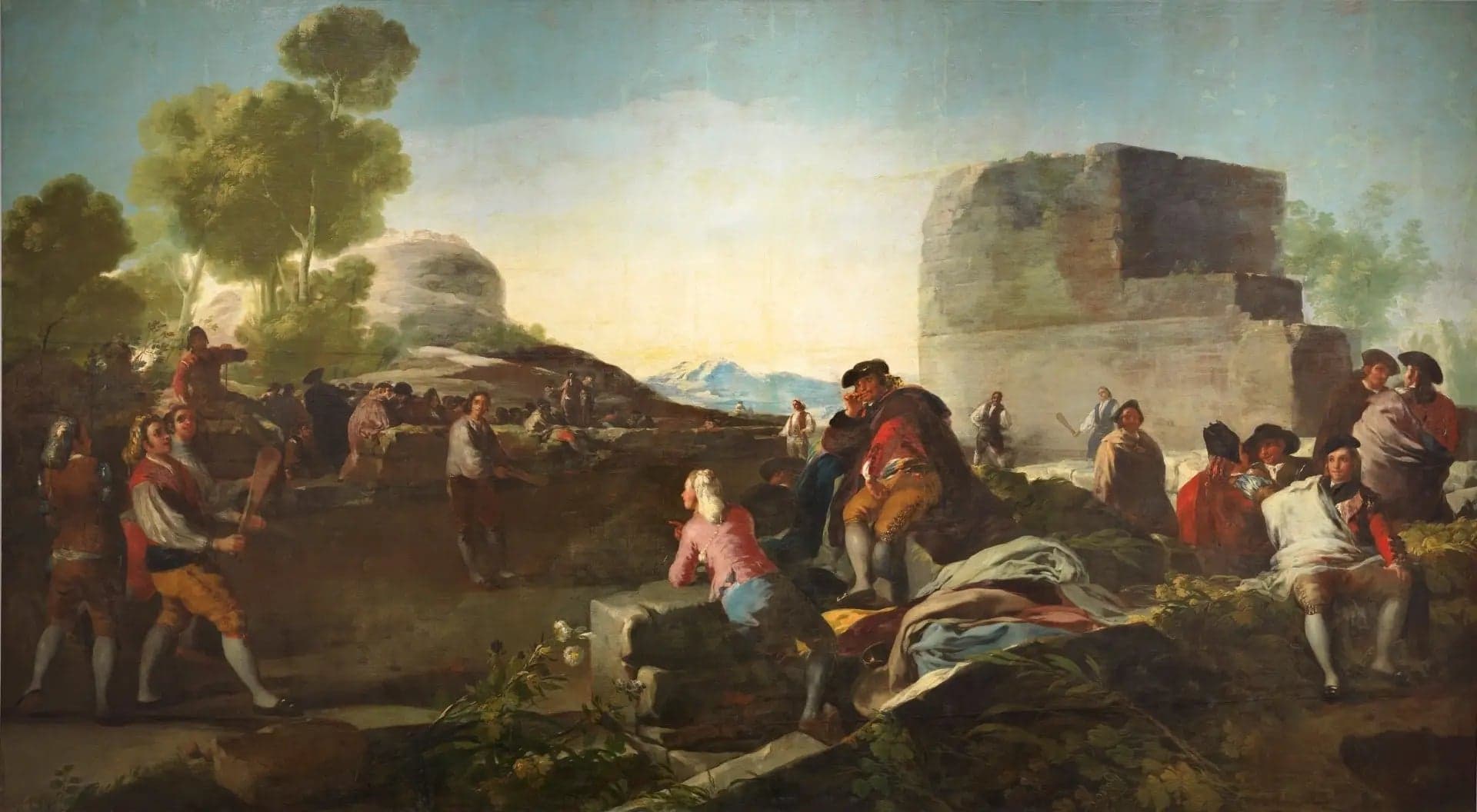
ball game with racket
- Original dimensions
- 470 x 261 cm
- Museum
- Prado Museum
- Year
- 1779
Scene depicted
The canvas illustrates a moment of simple pleasure: a shared eagerness for the game and camaraderie. The characters, captured in the animation of a ball match, vibrate the canvas with their expressiveness. Goya manages to convey all the passion emanating from this painting , where the excitement of the sport merges with the joy of living.
Historical context
Created in 1779 in Madrid, this painting emblematic of Francisco de Goya is rooted in the romantic movement that emerges and captivates the minds of the time. The canvas , now housed in the Prado Museum, reflects the cultural richness of late 18th century Spain, a period where artistic creativity intertwines with the desires for modernity of a nation in full evolution.
Place in the artist's career
This painting sits at a turning point in Goya's career, marking his maturation as an artist. Compared to other works such as “The Executions of May 3, 1808” and “The Naked Maja,” there is an evolution towards a depth of emotion and a more refined technique, where shadows and lights blend to create a palpable tension.
Anecdote
“Each racket stroke resonates like an echo of the simple joys of life,” Goya might have declared, inspired by the effervescence of a peaceful afternoon in a park. This statement highlights the moment he captured the liveliness and energy of the players, transforming a familiar scene into a masterpiece that continues to enchant art lovers.