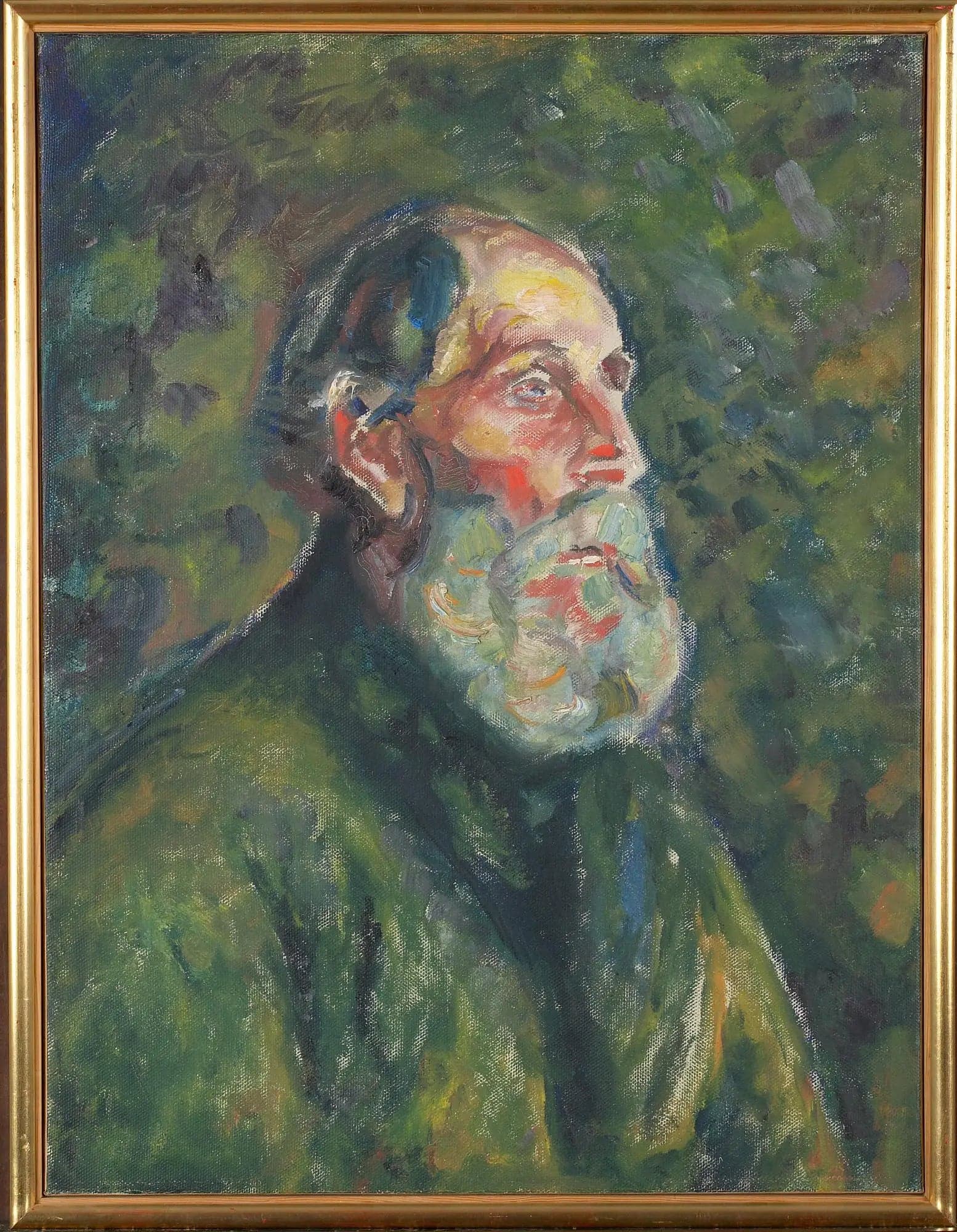
Børre Eriksen
- Original dimensions
- 94 x 87 cm
- Museum
- Munch Museum
- Year
- 1910
Scene depicted
The canvas "Børre Eriksen" depicts a poignant scene, reflecting the internal turmoil of the artist. Through blurred silhouettes and vibrant colors, the composition evokes conflict, love, and anxiety that resonate within every individual. This canvas is not just a visual representation; it is an invitation to explore the essence of the human soul.
Historical context
Created in 1910, the painting "Børre Eriksen" is part of the Norwegian artistic climate from the late 19th century to the early 20th century, a period marked by Expressionism . This canvas , currently housed in the Munch Museum in Oslo, is a poignant expression of human emotions. Through its dimensions of 94 x 87 cm, the work transports the viewer into an intense world, where the human soul is laid bare.
Place in the artist's career
"Børre Eriksen" is situated at a turning point in Edvard Munch's career, illustrating his stylistic evolution towards Expressionism . Alongside other canvases such as "The Scream" and "The Madonna," we can observe how Munch gradually refined his technique of representing loud emotion. This masterpiece is the result of a period of deep exploration of his own identity and sociocultural influences.
Anecdote
Edvard Munch once stated: "Painting is a poetry that is seen rather than read." This reflection resonates in the vibrant embodiment of emotion captured in "Børre Eriksen." Inspired during a walk in the park of his dreams, Munch captured the fragility of human relationships, crystallizing this fleeting moment of beauty and melancholy in his masterpiece .