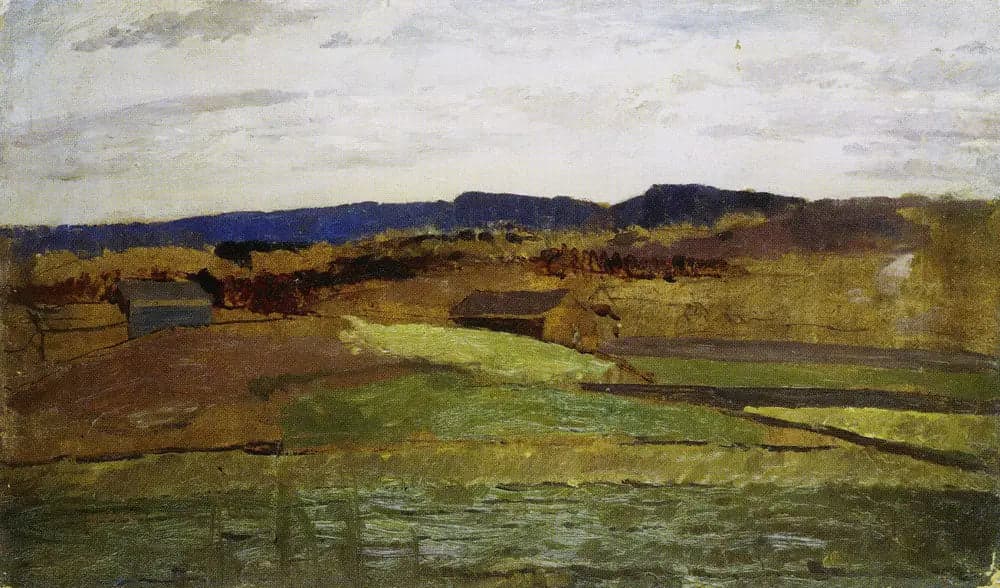
Autumn in Asker
- Original dimensions
- 62 x 37 cm
- Museum
- Not specified
- Year
- 1883
Scene depicted
The painting “Autumn in Asker” explores a peaceful scene of vibrant nature, where golden foliage in autumn reveals the intensity of human emotions. The trees, meticulously painted, seem to sing evocations of nostalgia, each brushstroke revealing the harmony between man and his environment. This canvas thus becomes a visual poem, captivating in its simplicity and depth.
Historical context
Created in 1883, this canvas comes to life in the village of Asker, Norway, a place filled with emotions and inspiring landscapes. Evolving within the expressionist movement, Autumn in Asker embodies the very essence of an era marked by the search for the human soul through colors and forms. This painting exists today in a private collection, reflecting the invaluable legacy of Edvard Munch .
Place in the artist's career
Autumn in Asker marks a turning point in the career of Edvard Munch , revealing his unique potential. Positioned between his iconic painting “The Scream” and the delicacy of “The Waltz,” this painting testifies to a stylistic evolution marked by an exploration of color and light, and an unceasing quest for emotional expression.
Anecdote
Edvard Munch once stated: “Painting is like a request from the soul, a cry that only light can understand.” This thought resonates at the heart of Autumn in Asker , a work inspired by the gentle whispers of an October morning, where nature, full of vibrant colors, recalls the melancholy of change.