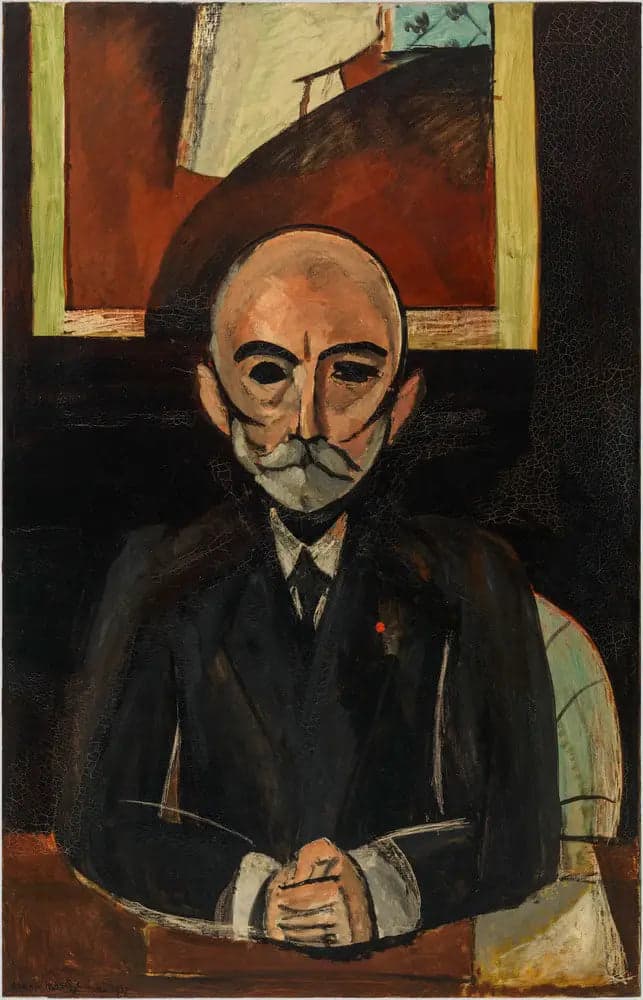
Auguste Pellerin II
- Original dimensions
- 96.2 x 150.2 cm
- Museum
- Centre national d'art et de culture Georges-Pompidou
- Year
- 1917
Scene depicted
The painting “Auguste Pellerin II” boldly illustrates Matisse's passion for color and form. In this painting , he immortalizes a rich and diverse cultural DNA with a composition that celebrates human relationships and interaction with the environment. The way he merges figures and surrounding elements creates a lively atmosphere, as if each color sings a particular melody.
Historical context
Created in 1917, this painting is emblematic of the vibrant context of Paris, then the cradle of artistic avant-gardes. Henri Matisse , a key figure of fauvism , captures in this canvas the dynamics of his time, while expressing a unique and colorful vision. The work, now preserved at the museum Georges-Pompidou, transcends time, captivating viewers with its depth and brilliance.
Place in the artist's career
This canvas , a flagship work of Matisse's mature period, is part of a series of works that testify to his stylistic evolution. Alongside other paintings such as “The Dance” and “The Joy of Life,” the painting “Auguste Pellerin II” marks a true pinnacle of his exploration of forms and colors.
Anecdote
“Color must be joy embodied in art,” Matisse might have declared one sunny spring morning in Paris. Inspired by the light flooding his studio, he produced this masterpiece , reflecting gradations of emotions and nuances of a vibrant world around him. This joy is felt in every brushstroke of the painting, a true ode to beauty.