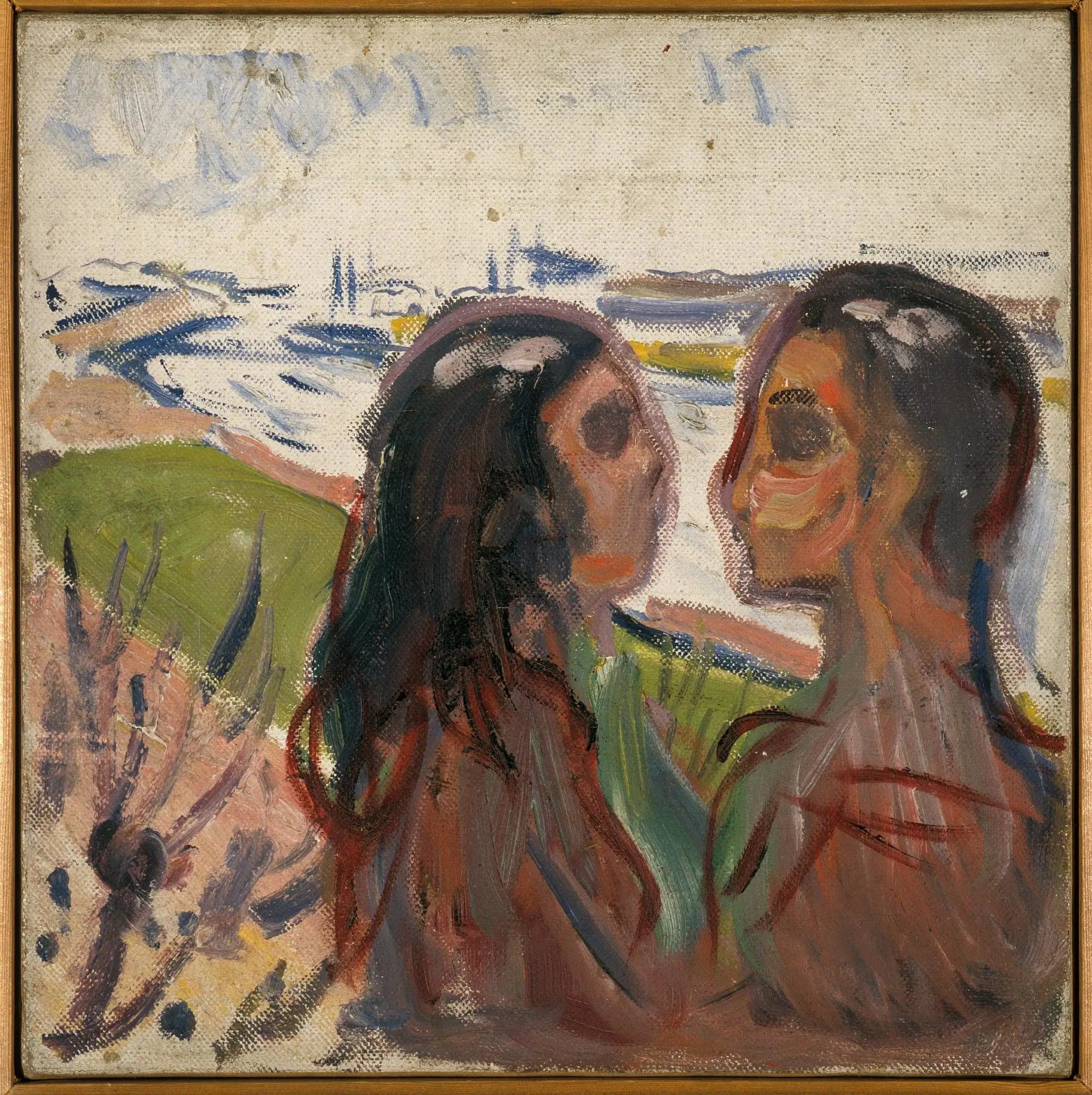
Attraction in the Landscape
- Original dimensions
- 34.5 x 35 cm
- Museum
- Munch Museum
- Year
- 1908
Scene depicted
As the work unfolds, a scene imbued with calm and mystery settles in. The ambiguous shapes of human figures blend into a swirling landscape, where shadow and light struggle to find their way. The viewer's attraction is inevitable, an invitation to contemplate the relationship between humanity and its natural environment, rich in meanings and intense emotions.
Historical context
Created in 1908 in Oslo, Norway, this painting is part of the expressionist movement, a period where emotions and sensations took precedence over traditional realism . The painting, currently housed in the Munch Museum, evokes not only the revolutionary work of the artist but also the spirit of an era where the depths of human psychology were explored with intensity. Its dimensions, though modest, hide a visceral world to explore.
Place in the artist's career
This painting marks a key milestone in Edvard Munch 's career, situated between his remarkable beginnings and his stylistic peak. Alongside "The Scream" and "Madonna," "Attraction dans le paysage" reflects an evolution in his use of color and forms, translating an increased emotional intensity, moving from anxiety to a quest for harmony.
Anecdote
"I do not paint what I see, I paint what I feel." This quote from Edvard Munch could perfectly summarize the very essence of this canvas . Imagine a spring morning, a landscape bathed in soft light. Munch, inspired by the nuances of nature, captures an emotion, an almost magnetic attraction. This painting then becomes a reflection of his own inner turmoil.
Major exhibitions
Munch og Warnemünde: 1907-1908