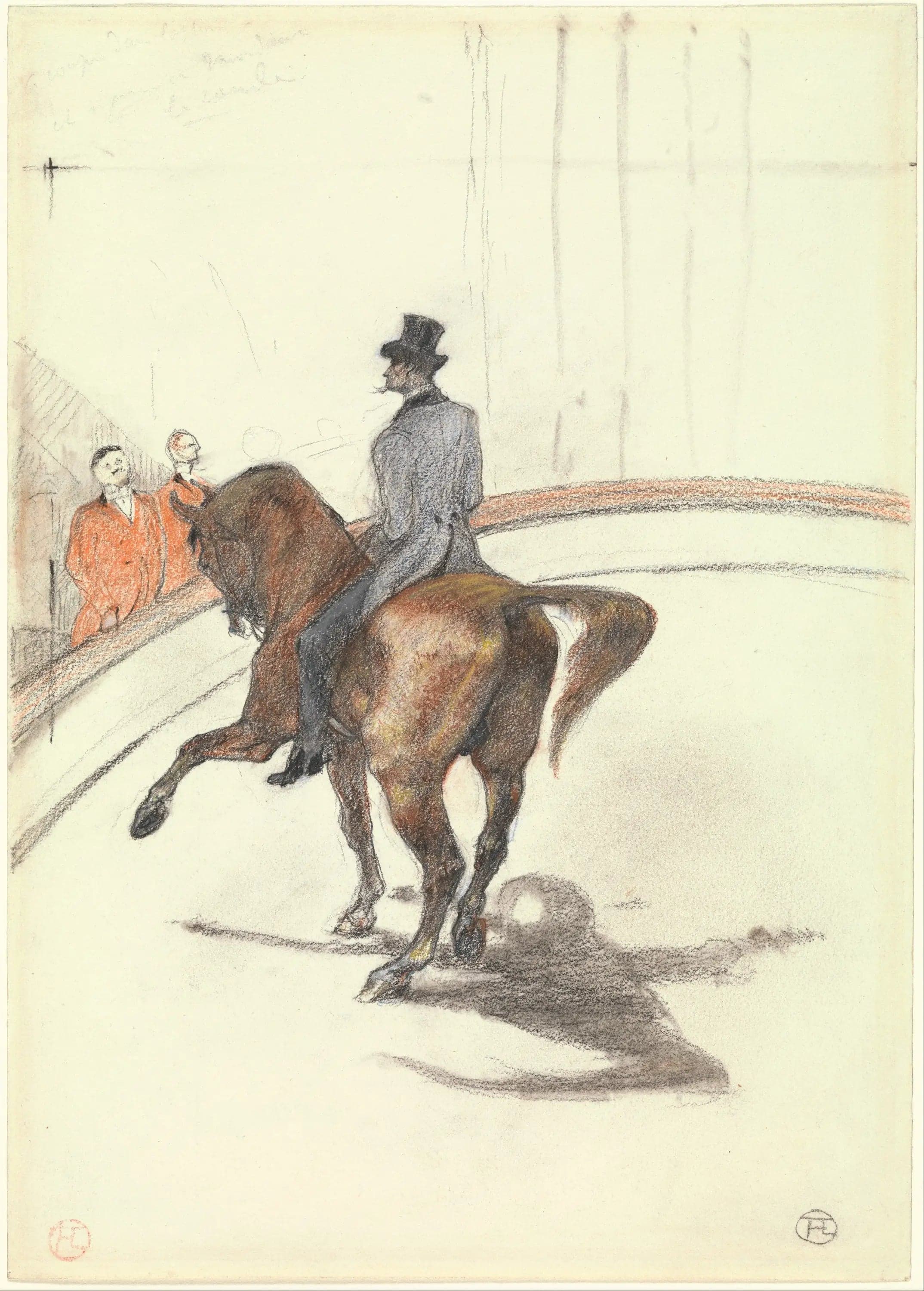
At the Circus: The Spanish Step - Henri de Toulouse
- Original dimensions
- 25 x 35 cm
- Museum
- Metropolitan Museum of Art
- Year
- 1899
Scene depicted
In this pictorial work , Toulouse-Lautrec offers us a snapshot of the Spanish Step, featuring dancers caught in a captivating choreography. The elegant figures intertwine on stage, while the energy of the circus fills the air. The lights sparkle, creating a play of shadows and light, which, combined with the applause of the audience, resonates with joy and wonder. From this composition emanates a festive atmosphere, transporting listeners and spectators into a world of colors and movements.
Historical context
Created in 1899, this painting is an emblematic testament to the artistic effervescence of Paris during the Belle Époque. In the heart of the City of Light, the canvas illustrates the Art Nouveau movement, characterized by its fluid lines and vibrant representation of popular culture. Today, it is carefully preserved within the famous Metropolitan Museum of Art , where it continues to inspire entire generations. Its delicate dimensions, 25 x 35 cm, give it a unique intimacy, inviting the viewer to lose themselves in its universe.
Place in the artist's career
At the Circus: The Spanish Step is part of a flourishing period in Toulouse-Lautrec's career, where he focuses on scenes of everyday life and performances. Compared to his earlier masterpieces like The Dance at the Moulin Rouge and Women at the Café, this painting denotes a maturation of his technique, a more subtle rendering of emotions and human interactions.
Anecdote
“Life must be lived, vibrant like the step of the dancer” could have said Toulouse-Lautrec, inspired by the captivating scene he reproduced on this canvas . On the morning of a circus performance, surrounded by laughter and whispers, he chose to capture not only the dance but the soul of a living art. This painting speaks to us of passion and dynamism, a breath that transports us directly into the atmosphere of a vibrant show.