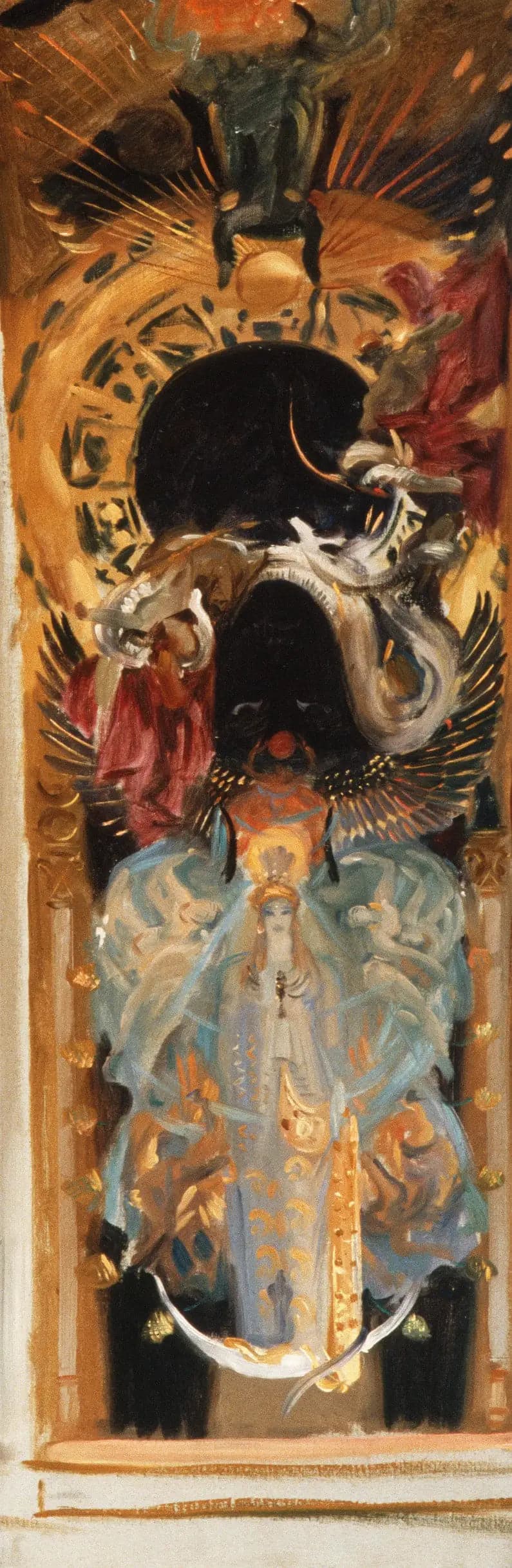
Astarte
- Original dimensions
- 30 x 91 cm
- Museum
- Isabella Stewart Gardner Museum
- Year
- 1893
Scene depicted
The painting illustrates a majestic female figure, imbued with mystery and elegance. Dressed in a gown that evokes both refinement and strength, she stands in an atmosphere that is both intimate and psychedelic, where floral patterns and vibrant colors blend with the softness of light. This work invites the viewer to dive into a world of sensations, a rich emotional tableau where past and present intertwine.
Historical context
Created in Boston in 1893, the painting "Astarté" embodies the bold and refined style of John Singer Sargent , a master of portraiture and vibrant compositions. An act of faith in pictorial expression, this canvas is part of the Impressionist movement while benefiting from a realistic technique, weaving between light and shadow an enchanting atmosphere. The masterpiece currently resides at the Isabella Stewart Gardner Museum, where it interacts with other artistic treasures and resonates within the walls of this iconic institution.
Place in the artist's career
"Astarté" represents a turning point in Sargent's career, marking a period of stylistic maturity. Alongside his famous painting "Carnation, Lily, Lily, Rose" and the iconic portrait of "Madame X," this painting reveals the technical evolution and personal introspection of the artist, who captures light in a fervent and expressive manner, transforming each canvas into a poignant universe.
Anecdote
“Each painting is a silent conversation, a whisper of the soul,” Sargent might have said about his inspiring painting . On a bright morning, while wandering through the bustling streets, he encountered a figure that reminded him of ancient goddesses and infused him with the labyrinthine essence of the divine. It was this fleeting encounter that breathed life into "Astarté," revealing the deep emotion that permeates this pictorial work.