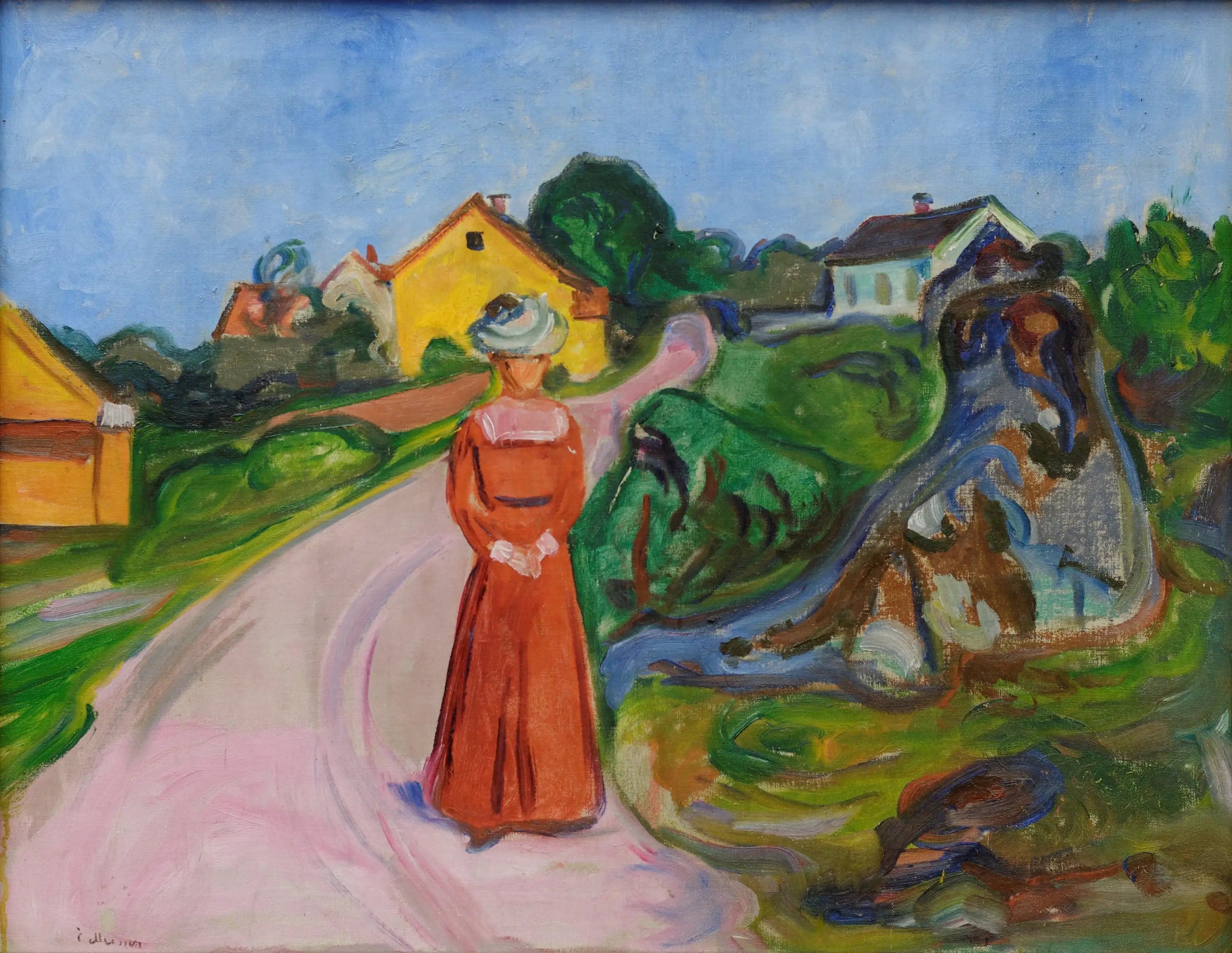
Åsgårdstrand Street and Woman in a Red Dress
- Original dimensions
- 75.5 x 59.7 cm
- Museum
- Neue Pinakothek
- Year
- 1902
Scene depicted
The painting “rue d'Åsgårdstrand et Femme en robe rouge” depicts a woman in a scarlet dress moving gracefully through a rural street. Borrowing elements from Munch's hometown, this painting captures natural light, creating an atmosphere that is both intimate and dreamy. The gentle melody of the wind caressing the air and the subtle scent of flowers evoke an atmosphere where the everyday meets the wonderful.
Historical context
Created in 1902, this masterpiece of painting is set in the picturesque backdrop of Åsgårdstrand, Norway, where the famous artist Edvard Munch drew his inspiration. The period of creation of this work is part of the Symbolist movement, an artistic trend that captures the deepest emotions of the human soul. Today, this painting is displayed at the Neue Pinakothek , offering the public a glimpse into Munch's unique vision. With its dimensions of 75.5 x 59.7 cm, this canvas tells a vibrant story of light and color.
Place in the artist's career
This work is situated at a turning point in Munch's career, where he begins to intensely explore the psychology of characters. Far from the darker paintings of his later phase, such as “The Scream,” the “rue d'Åsgårdstrand et Femme en robe rouge” also intersects with similar themes present in “The Madonna” and “The Home,” while conveying a new light on beauty and solitude.
Anecdote
“Colors are the pains and pleasures of life,” said Munch. This quote resonates particularly during the creation of this painting , perhaps made on a sunny summer morning, where a woman dressed in a red dress catches the eye at the turn of a quiet street. Each brushstroke evokes the passion and mysteries of human existence, forever connecting the viewer to the raw emotion of the composition .