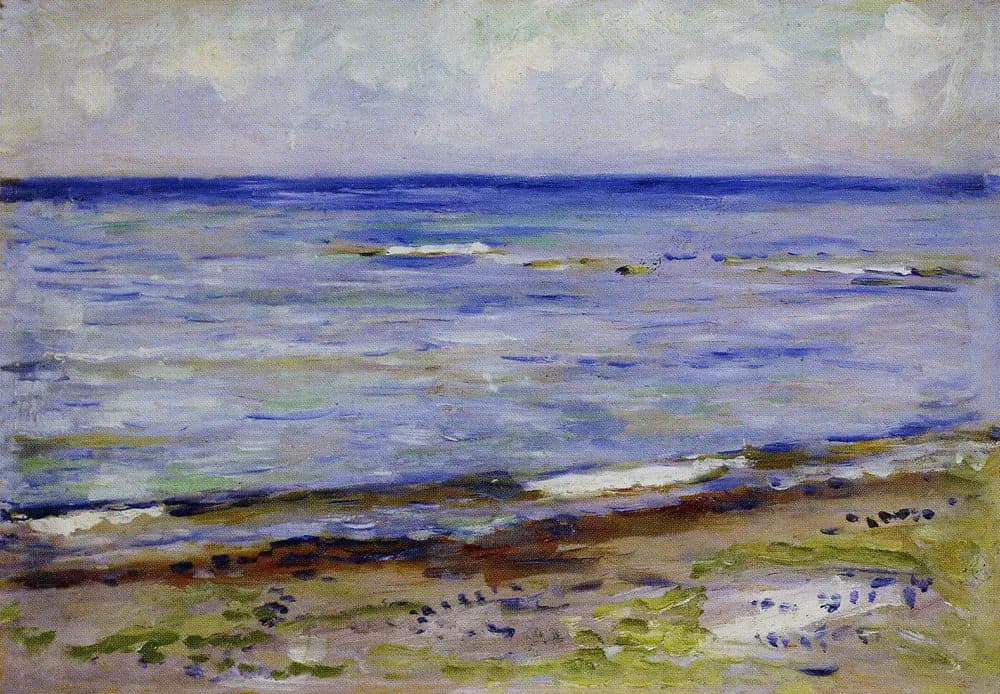
Åsgårdstrand
- Original dimensions
- 35.5 x 25 cm
- Museum
- Not specified
- Year
- 1889
Scene depicted
The painting “Åsgårdstrand” transports us to a tranquil beach, where the sea mingles with the horizon, suggesting a dialogue between nature and the human soul. This painting, with its simple composition, breathes a soft and nostalgic atmosphere, recalling moments of calm and introspection, revealing Munch's contemplative spirit, always turned towards the mystery of existence.
Historical context
Created in 1889, in the heart of the peaceful seaside town of Åsgårdstrand, this painting is an iconic testament to the expressionist movement, to which Edvard Munch belonged. This painting, now homeless within major museum institutions, displays a unique aesthetic that resonates with the deepest human emotions. Measuring 35.5 x 25 cm, it belongs to a period when Munch's brush began to unleash an unprecedented emotional intensity.
Place in the artist's career
This painting marks a significant advancement in Munch's career. Replacing an earlier period of realism , this work symbolizes the beginning of his quest to capture the intangible. Compared to “The Madonna” and “The Scream,” we see how his style evolves from a clearer representation to breathtaking emotional abstraction.
Anecdote
“Colors must speak, like emotions.” Munch often spoke of the inspiration that struck him in Åsgårdstrand, on a sunny morning, where the sweet scent of spring flowers floated in the air, revealing all the fragile beauty of life. This sensory connection gave birth to the painting that leads the viewer to deep contemplation, making Åsgårdstrand much more than just a landscape.