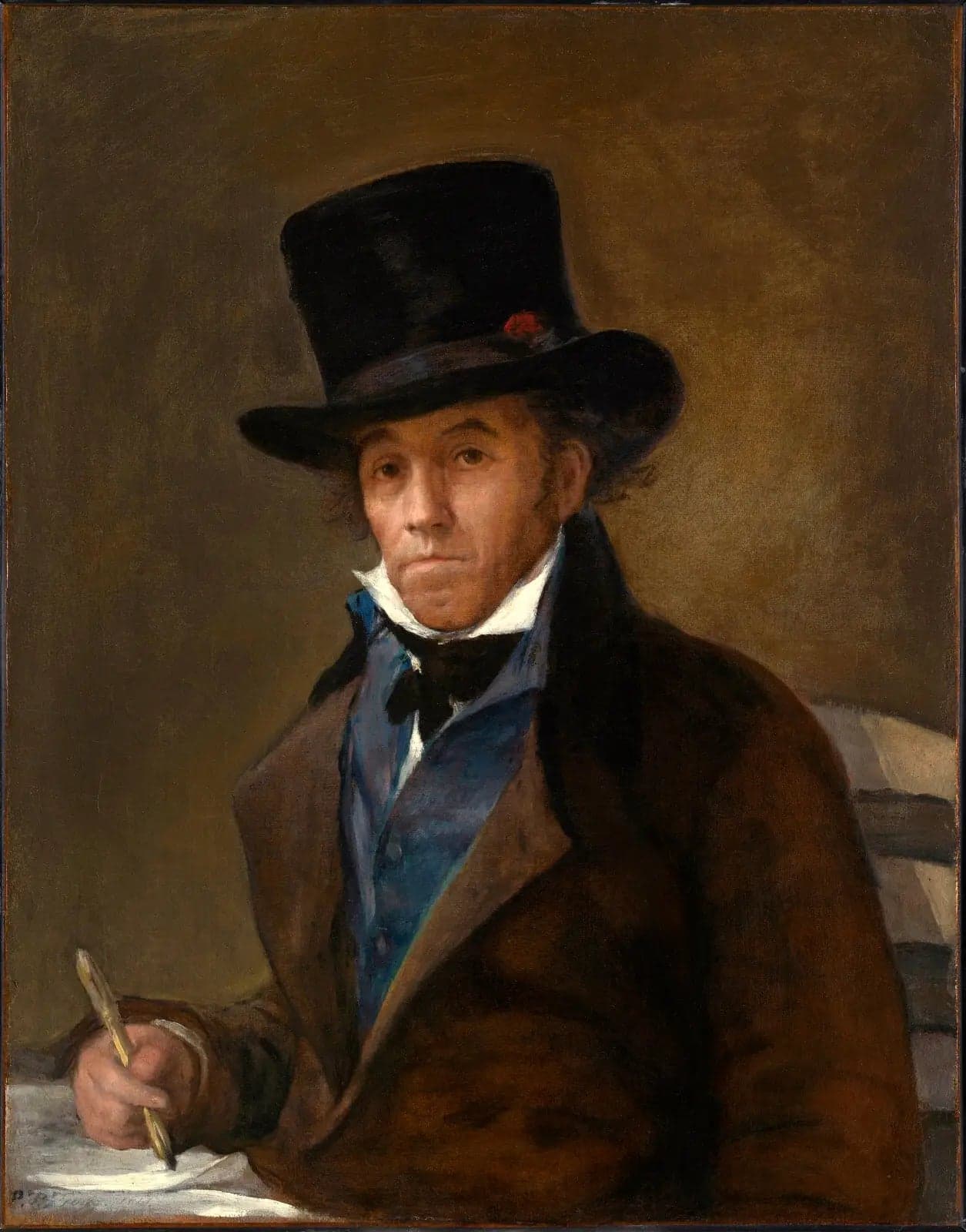
Asensio Julia
- Original dimensions
- 57 x 73 cm
- Museum
- Clark Art Institute
- Year
- 1814
Scene depicted
“Asensio Julia” represents a figure whose mysterious expression captivates. Through this painting , Goya immortalizes a fleeting emotion, exploring identity and memory within Spanish history. Every detail of the face seems to carry the weight of memories.
Historical context
Created in 1814, in the heart of Spain, this painting is part of the romantic movement that redefined the artistic codes of the time. The current painting is exhibited at the Clark Art Institute, a renowned collection in Williamstown, Massachusetts.
Place in the artist's career
This painting is part of Goya's mature period, marking a stylistic evolution towards deeper introspection. In parallel, “Las Meninas” by Velázquez and “The Third of May 1808” illustrate this quest for truth and emotional expression.
Anecdote
“Each face is a page of the history of the soul.” The soft light of a spring morning inspired Goya in the alleys of Madrid, revealing the depth of gazes. This quote resonates with the evocative power of the painting “Asensio Julia,” capturing the human essence in its gaze.