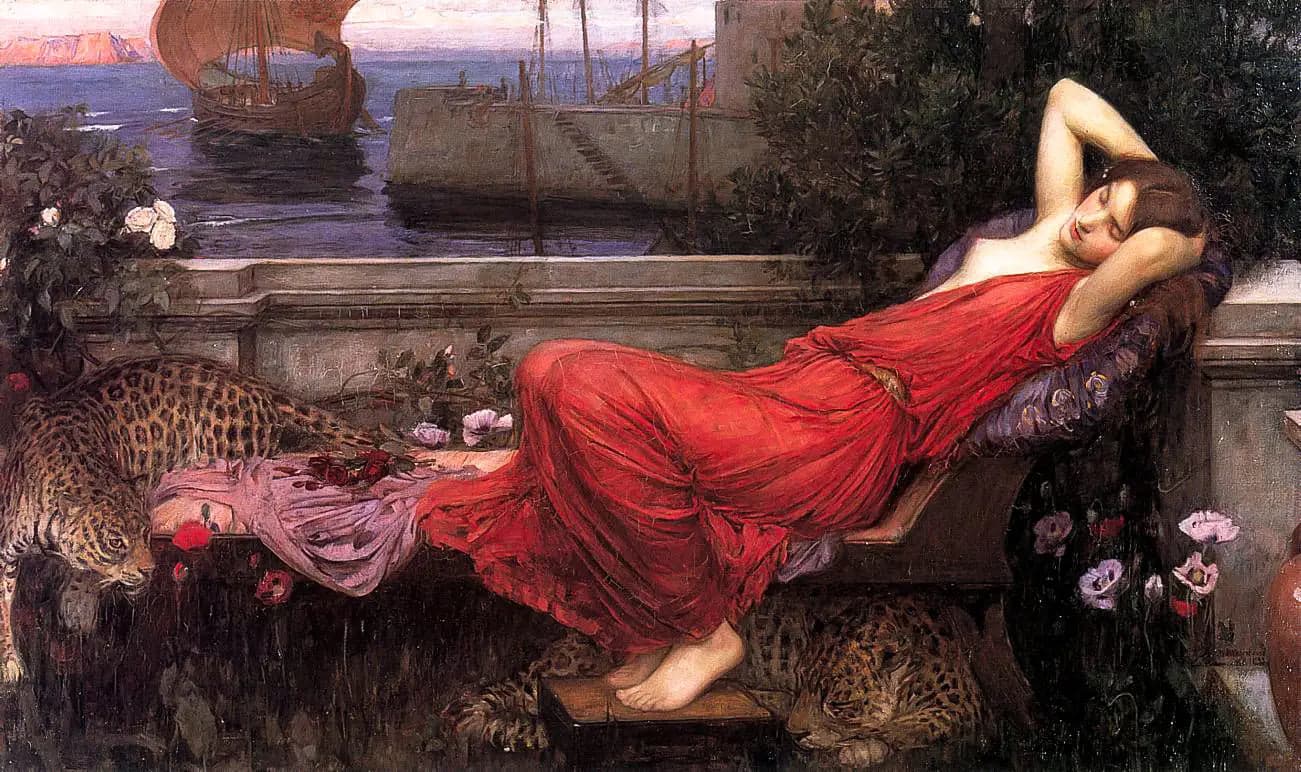
Ariadne
Scene depicted
In this painting , Waterhouse reinvents the myth of Ariadne, this tragic figure of Greek mythology, abandoned on the island of Naxos by Theseus. The scene depicts Ariadne, hair blowing in the wind, with a look that is both sorrowful and full of hope, contemplating the horizon where mystery and imminent departure intertwine. It is an invitation to a deep emotional introspection, capturing the essence of solitude and waiting.
Historical context
Created in 1898, this painting is the result of the brush of John William Waterhouse , master of the Pre-Raphaelite movement. Made in London, this pictorial work is part of a period where the rediscovery of mythological themes captivated artists. Today, this canvas is exhibited at the Penguin Gallery in London, measuring 144 by 48 centimeters.
Place in the artist's career
This painting represents the pinnacle of Waterhouse's career, illustrating his mature style, between dream and reality. When compared to works such as Flora and The Nymph and the Satyr , one notices an evolution in the use of light and themes, making Ariadne a masterpiece in its own right, where composition and the softness of colors delicately blend.
Anecdote
John William Waterhouse once shared: "True beauty lies in the ephemeral moment, where the soul of nature reveals itself." It is this essence that guided him during the first brush strokes to create Ariadne . Imagine him, sitting in his studio bathed in the golden light of a spring morning, inspired by the beauty of ancient myths and the magic that surrounds him.