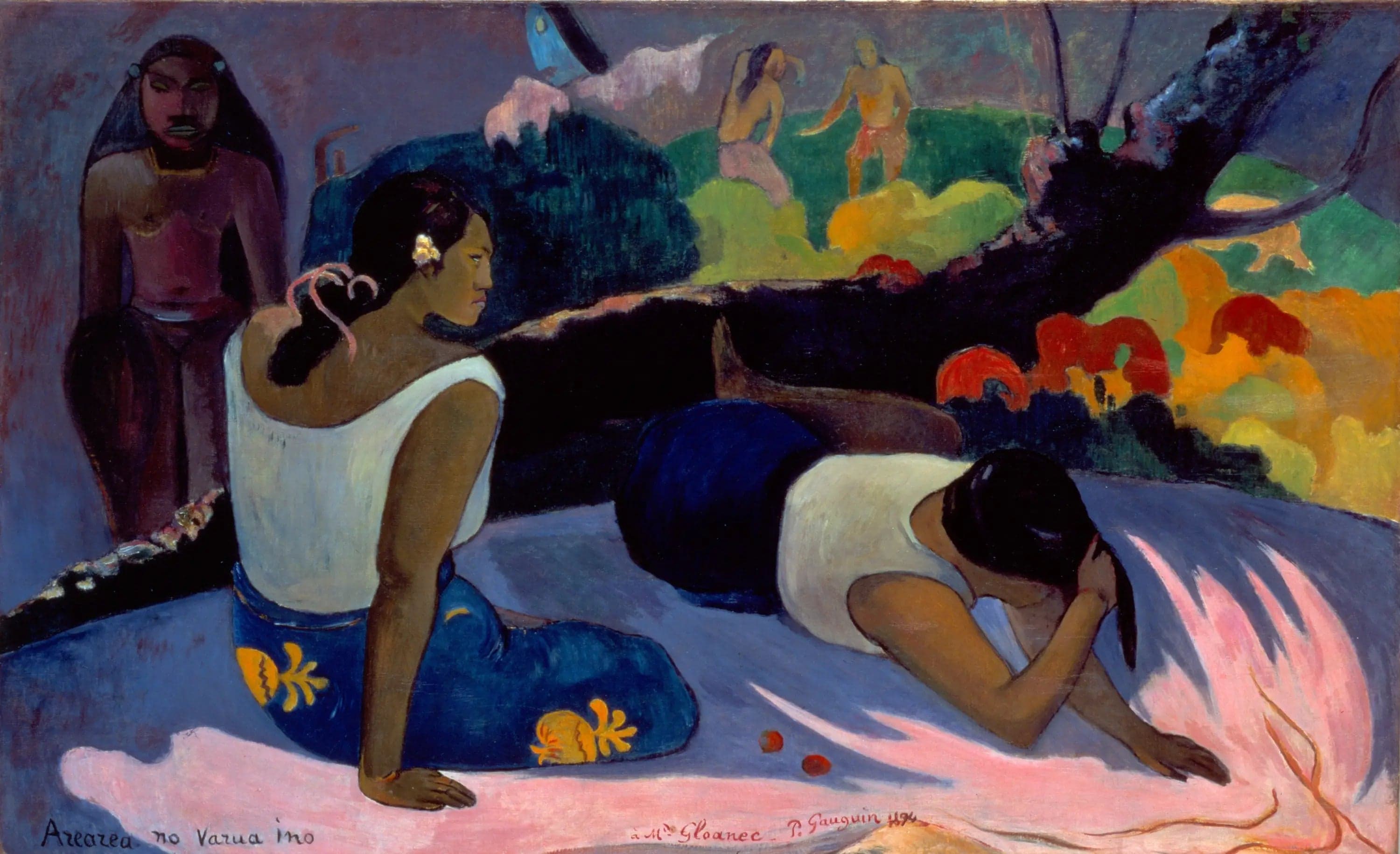
Arearea no varua ino
- Original dimensions
- 98 x 60 cm
- Museum
- Ny Carlsberg Glyptotek
- Year
- 1894
Scene depicted
The painting “Arearea no varua ino” reveals a scene imbued with joy and celebration. The female figures, adorned in colorful attire, evoke Polynesian culture, while the vibrant hues of the landscape blend with the harmony of the characters. This pictorial work by Gauguin, through its intrigue and details, invites contemplation and escape into another world.
Historical context
Created in 1894 by the master post-impressionist Paul Gauguin , this painting is set in the enchanting backdrop of Tahiti, an island where the artist drew his inspiration. The canvas , currently displayed at the Ny Carlsberg Glyptotek , showcases its generous dimensions of 98 x 60 cm, encapsulating a moment of singular grace from a revolutionary artistic movement.
Place in the artist's career
Arearea no varua ino represents a turning point in Gauguin's career, symbolizing his quest for new artistic horizons. Compared to works such as Vision after the sermon and The Yellow Christ , this canvas illustrates not only the technical evolution of the artist but also his insatiable quest for emotional authenticity.
Anecdote
“I have never stopped searching for the color and light that vibrate within me.” Such were Gauguin's words, reminiscing about the tropical regions where the magic of creation mingles with floral scents and birdsong. In Arearea no varua ino , he captures a precious moment, a beautiful escape from the everyday. He brings to life a vibrant scene, both peaceful and lively.