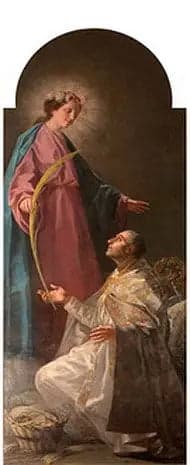
Apparition of the Virgin to Saint Julian
- Original dimensions
- 250 x 90 cm
- Museum
- Not specified
- Year
- 1790
Scene depicted
At the heart of this fascinating composition , Goya depicts the poignant meeting between the Virgin and Saint Julian, a suspended moment where the divine touches the profane. The scene, imbued with spirituality, transports us to a universe where the heavens seem to merge with the earth, revealing an almost palpable light. The figures are rendered with such delicacy that each brushstroke tells a profound story of devotion and wonder.
Historical context
Created at the end of the 18th century, this pictorial work is a precious reflection of the social and spiritual transformations of the time in Spain. Francisco de Goya , an emblematic figure of Spanish romanticism , created this painting in a context where faith and reason clashed, all during a vibrant artistic period in Madrid. Currently, the canvas remains in a private collection, its majestic dimensions spanning 250 x 90 cm, providing each gaze with a space of wonder.
Place in the artist's career
This painting , at the turning point of Goya's career, symbolizes a marked artistic maturation. In parallel, other works like “Las Meninas” and “The 3rd of May 1808” illustrate his evolution, from promising beginnings to the peak of a bold style. “Apparition de la Vierge à saint Julien” stands as a milestone between tradition and innovation, revealing a growing mastery of pictorial emotion.
Anecdote
“The light of the soul reflects on the canvas, as the Virgin illuminates this saint with her divine presence.” These words, inspired by Goya's deep spirituality, testify to the moment he allowed himself to be immersed in the magic of a sunny morning, a serene street in Madrid, his muse, the air filled with divine promises. This painting , like a breath of authenticity, captures the very essence of a mystical encounter.