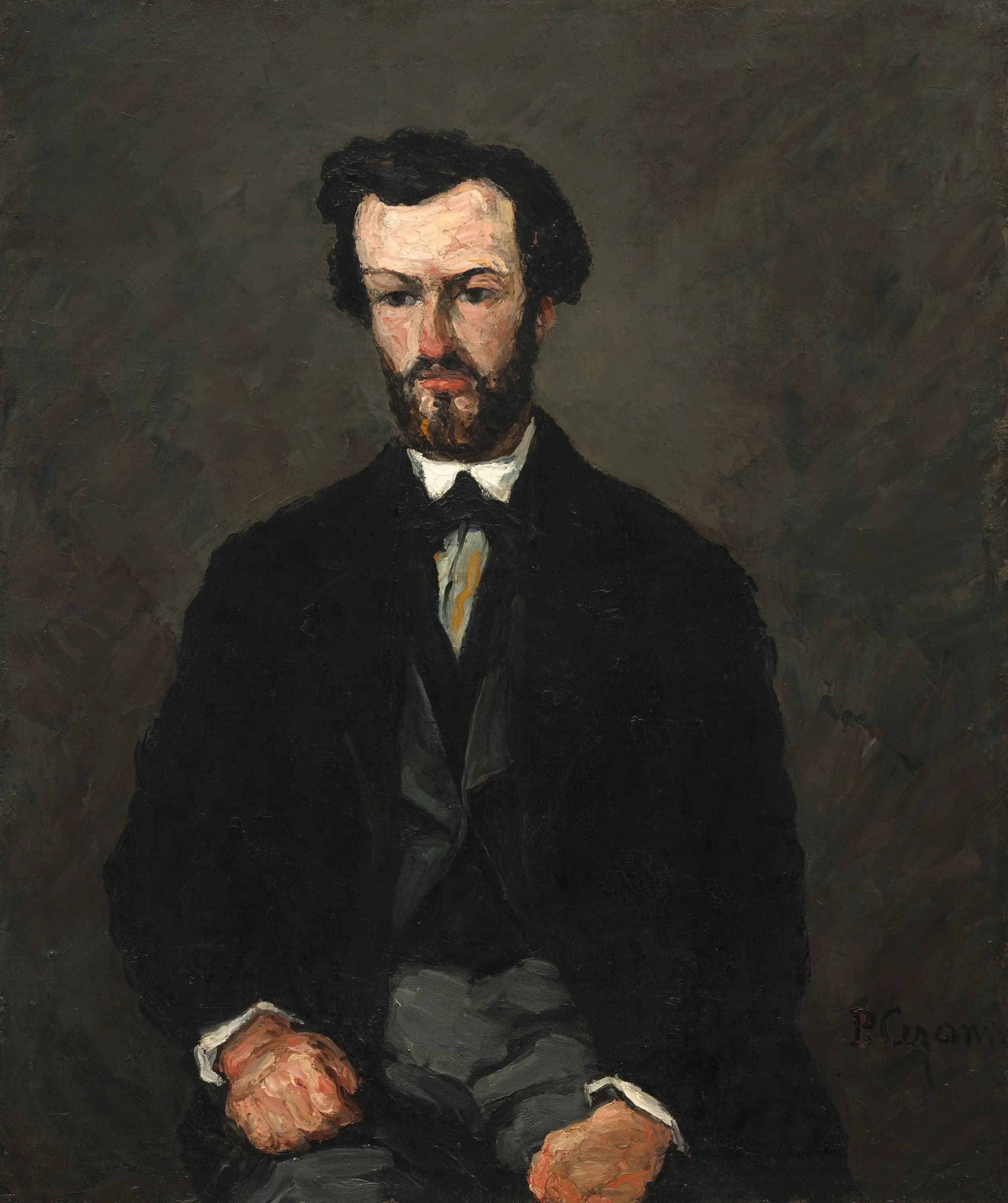
Antony Valabrègue
- Original dimensions
- 98.4 x 116.3 cm
- Museum
- National Gallery of Art
- Year
- 1866
Scene depicted
The painting “Antony Valabrègue” depicts the portrait of a dear friend of the artist in an intimate setting. Cézanne captures the penetrating gaze and tranquil aura of this character. The light and shadow dance delicately on Antony's face, creating an atmosphere conducive to contemplation and reflection.
Historical context
Created in 1866, this painting comes to life in Aix-en-Provence, in the heart of French Provence. The painting, emblematic of the Impressionist movement, reflects the artistic upheavals of the time. Currently exhibited at the National Gallery of Art , this masterpiece, measuring 98.4 x 116.3 cm, captures a time when light and color took precedence over rigid forms.
Place in the artist's career
This painting marks an important milestone in Cézanne's career, refocusing his style towards a blend of realism and impressionism . Alongside other works such as “The Card Players” and “The Montagne Sainte-Victoire,” “Antony Valabrègue” highlights the artist's technical evolution and his exploration of volumes and forms.
Anecdote
“The secret of painting lies in the harmony of colors and forms.” In a quiet corner of his studio, on a colorful spring morning, Cézanne observes his friend Antony Valabrègue, his face illuminated by the soft, golden light of the sun. This moment of intense introspection will be the spark that gives birth to the magnificent composition of this painting.
Major exhibitions
Paris 1863 – 1874: Revolution in Art