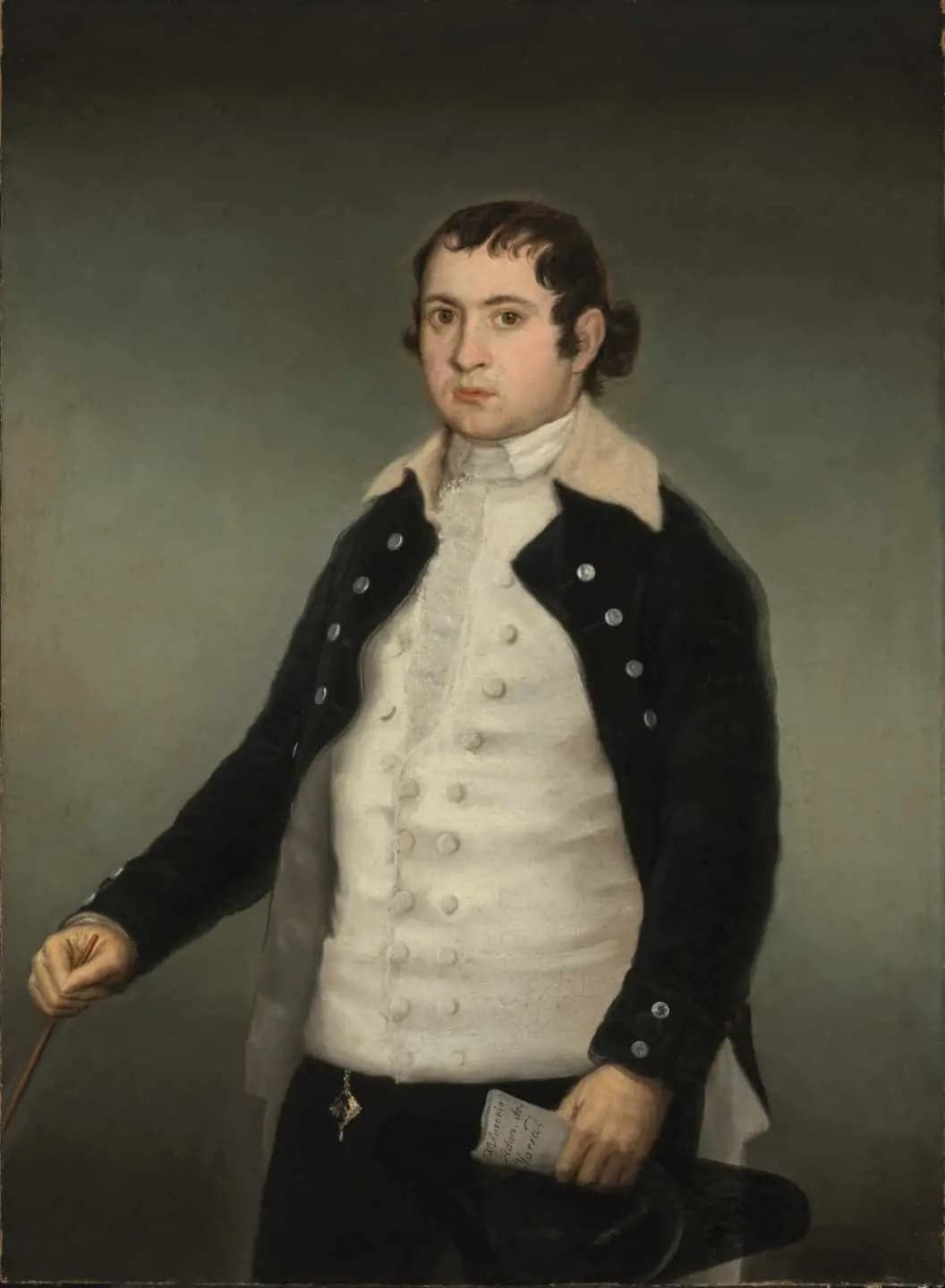
Antonio Adán de Yarza
- Original dimensions
- 83.6 x 114.4 cm
- Museum
- Not specified
- Year
- 1787
Scene depicted
The painting “Antonio Adán de Yarza” illustrates an intimate scene, frozen in time. The central character, depicted with great meticulousness, exudes a captivating intensity. His gaze, deep and melancholic, questions the viewer about his story. Goya captures the elusive nature of the human spirit, a recurring theme in his work.
Historical context
Created in 1787, this remarkable painting emerges from the era of the Spanish Golden Age, a time rich in artistic innovations. The famous artist Francisco de Goya , in Madrid, establishes himself in a movement that will foreshadow romanticism . This pictorial work, of impressive size, invites observers to dive into a universe where reality and artistic representation intertwine, and bears witness to Goya's unique style.
Place in the artist's career
This masterpiece fits into a stylistic turning point for Goya, marking the beginnings of his international fame. Alongside pieces like “The sleep of reason produces monsters” and “The Naked Maja,” the painting of Antonio Adán de Yarza reveals an evolution in the exploration of human emotional complexities.
Anecdote
Goya once said: “Art is the mirror of the soul.” On a sunny afternoon, he captures the very essence of Antonio Adán de Yarza, a funny yet intense moment. The painting vibrates with energy, revealing not only the features of a man but also the aspirations and emotions that inhabit him.