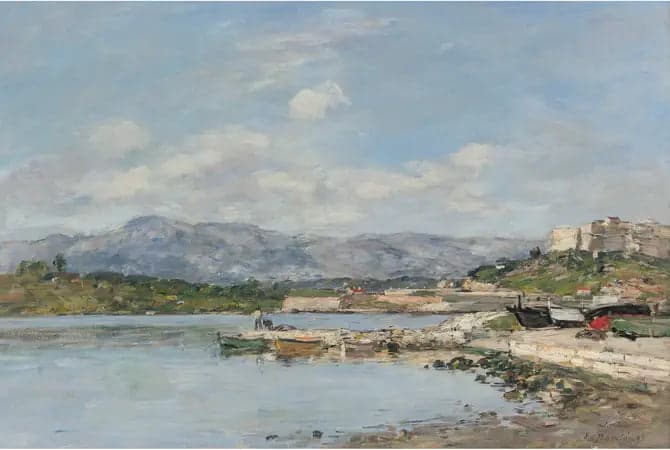
ANTIBES, THE FORT CARRÉ
- Original dimensions
- 74.3 x 50.2 cm
- Museum
- Not specified
- Year
- 1893
Scene depicted
The painting “ANTIBES, THE FORT CARRÉ” reveals a vibrant scene of coastal life. One discovers the majestic fort, standing proudly above the waves, while the soft light of the setting sun reflects on the water. Boudin, with rare sensitivity, immortalizes the calm and serenity that reign over this maritime scene, transporting the viewer to the heart of a moment suspended in time.
Historical context
Created in 1893 in the picturesque town of Antibes, this painting emblematic of impressionism testifies to the brilliance of the artistic movement of the time. In an environment bathed in light and colors, Boudin captures the essence of a fort steeped in history and life, offering a window into the maritime past of the Provence-Alpes-Côte d'Azur region. This masterpiece , today unspecified for its host museum, is a pictorial work whose dimensions accentuate its presence.
Place in the artist's career
“ANTIBES, THE FORT CARRÉ” represents a pinnacle of Boudin's career, at the crossroads of influences and techniques. Remarkable as a pictorial expression of his style, this painting is part of a period of maturity where the expert in light and color encounters a new understanding of space. Compared to other paintings such as “La Plage de Trouville” or “Le Débarquement de Concarneau,” the work illustrates his evolution towards a brighter and more ethereal abstraction.
Anecdote
“The light on the water is a melody that only nature can compose.” This reflection of Boudin resonates in every brushstroke of his painting . It was during a boat ride, one spring morning, that the artist was struck by the shimmering reflections on the surface of the crystalline sea. This painting is the echo of that pure emotion, capturing a fleeting essence that time cannot erase.