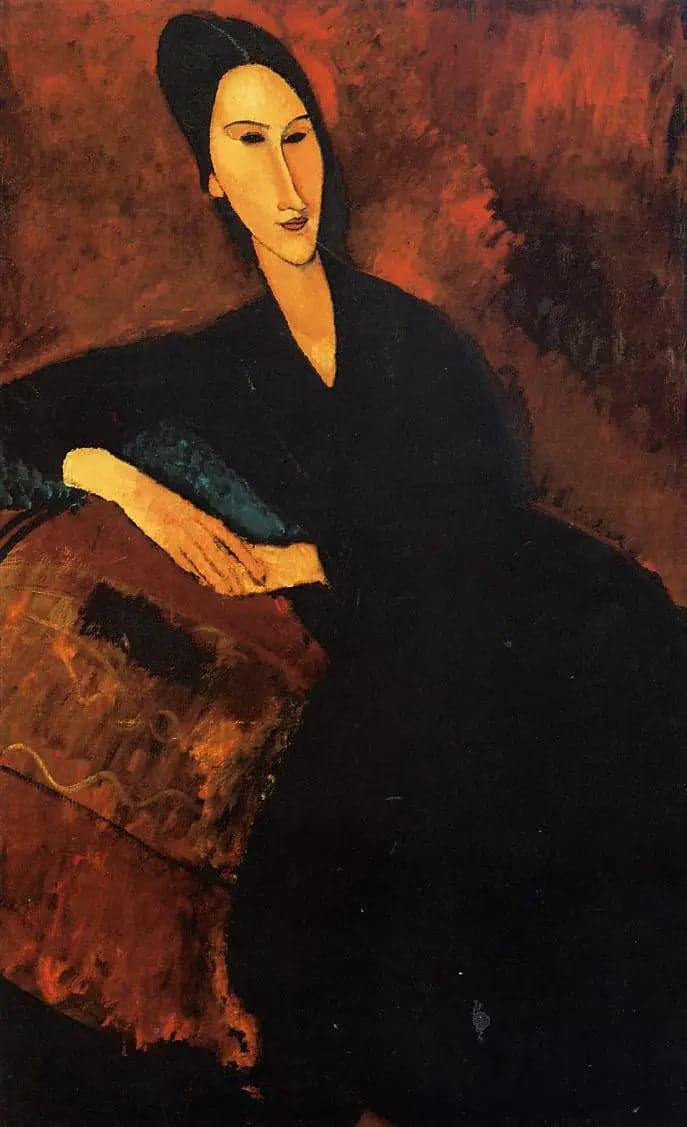
Anna Zborowska
- Original dimensions
- 81.3 x 130.2 cm
- Museum
- Museum of Modern Art
- Year
- 1917
Scene depicted
In this canvas , the feminine silhouette of Anna is surrounded by an aura of mystery and delicacy. Modigliani, with unmatched mastery, manages to blend the intimacy of his model with psychological depth. The composition is both simple and deeply emotive, combining elegance and melancholy. Anna appears as an ethereal muse, transcending time and creating a timeless connection with the observer.
Historical context
Created in 1917 in Paris, the painting "Anna Zborowska" is part of the golden period of the expressionist movement. A meeting place for the avant-gardes, this city was the cradle of an innovative artistic approach where Modigliani, master of portrait and nude, managed to capture the very essence of his models with unparalleled emotional depth. The canvas is currently exhibited at the Museum of Modern Art in New York, a bastion of modernity.
Place in the artist's career
This painting represents a pivotal moment in Modigliani's career, illustrating his unique style, at the crossroads of expressionism and idealized forms. Alongside works like "Reclining Nude" and "Portrait of Béatrice," "Anna Zborowska" reveals the technical evolution of the artist, balancing between abstraction and representation. This canvas bears witness to a period of great creativity and emotion.
Anecdote
“Every face tells a story, and I want to paint the soul that words cannot reveal.” This inspiring quote from Modigliani perfectly evokes the moment he first observed Anna Zborowska, capturing her thoughtful gaze one sunny morning, in the tranquility of a Parisian studio. This fleeting moment is the spark that brought to life the intense emotion of his masterpiece .