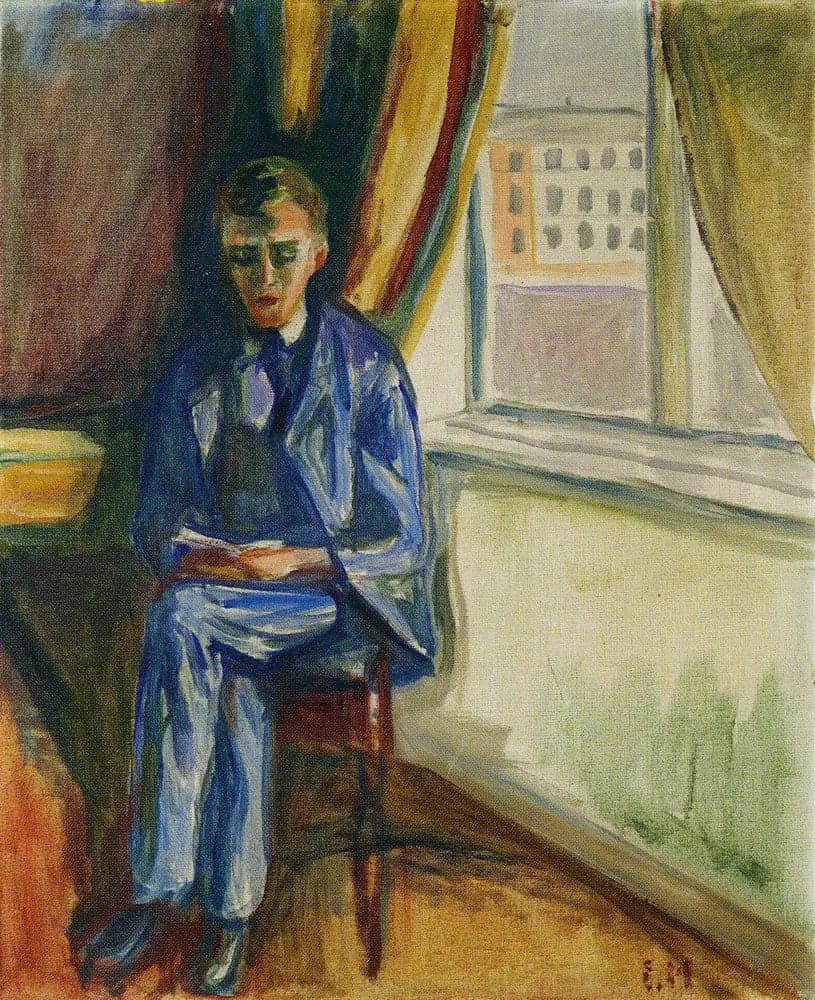
Andreas Lisant
- Original dimensions
- 29 x 36 cm
- Museum
- Not specified
- Year
- 1882
Scene depicted
The painting "Andreas Lisant" reveals a poignant scene, where melancholy intertwines with tranquil beauty. Through the introspective gaze of the central character, Munch captures the essence of human isolation, allowing a rich inner landscape of feelings to emerge, a true reflection of the universal torments of each individual. The delicate features and subtle nuances speak of a suspended moment, where time seems to stand still.
Historical context
Created in 1882, the painting "Andreas Lisant" is set against the vibrant backdrop of late 19th century Norway, a period steeped in the symbolist movement. Edvard Munch , a central figure of this artistic current, managed to capture the emotional tensions of his time. Although the canvas is not currently displayed in a known museum, it brilliantly evokes the spiritual struggles inherent to human existence, measuring 29 x 36 cm and enhancing our interpretation of reality.
Place in the artist's career
“Andreas Lisant” marks a significant turning point in Munch's career. Drawn at the beginning of his creative period, this painting testifies to his exploration of themes of solitude and anxiety. Through two other paintings , “The Scream” and “The Madonna,” we observe the evolution of his style, as well as the deepening of his emotions, marking a powerful rise in his artistic mastery.
Anecdote
“Each painting is a reflection of my soul, a silent scream in the tumult of the world.” This sentiment, shared by Munch one spring morning, perfectly illustrates the inspiration behind “Andreas Lisant.” In a peaceful alley, a face encountered brought this composition to life, filled with light and complex emotions, inviting the viewer to dive into its universe.