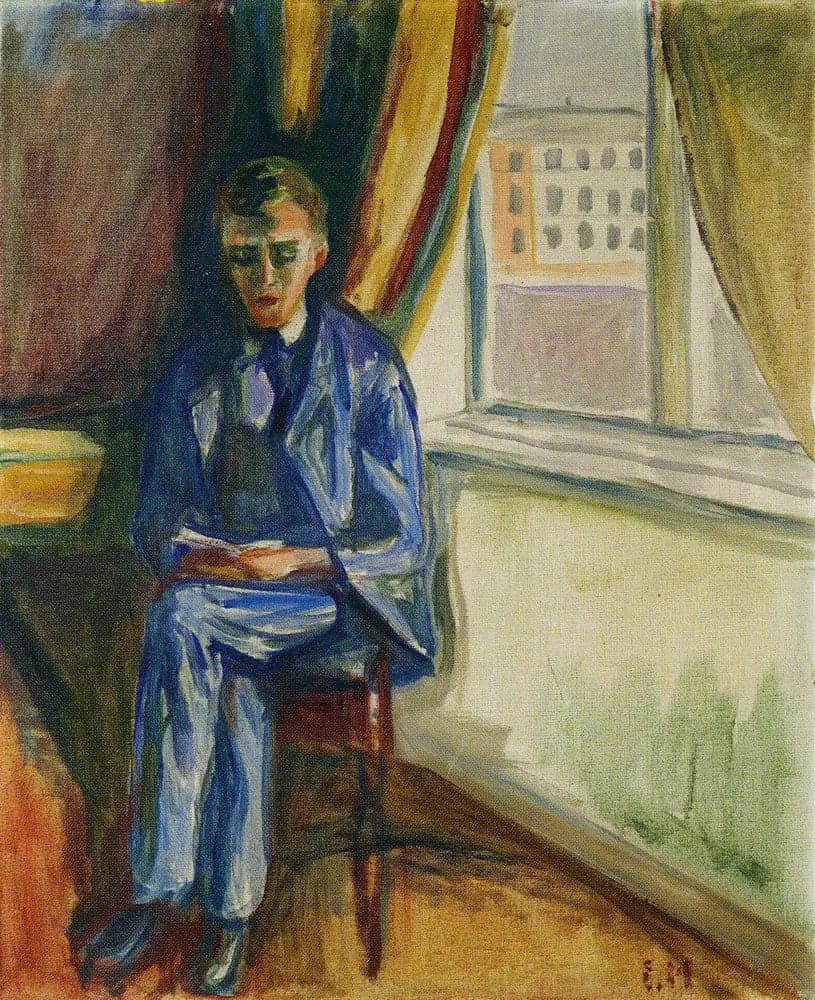
Andreas Lisant
- Original dimensions
- 313 x 258 cm
- Museum
- Not specified
- Year
- 1883
Scene depicted
This painting narrates a scene imbued with psychological depth, captivating the viewer in a moment of introspection. Munch, armed with his palette and brushes, immortalizes a solitary figure immersed in thought, evoking the isolation and existential quest that inhabit our own reality.
Historical context
Created in 1883, in the vibrant city of Oslo, this painting belongs to the Symbolist movement and is set in a period where Edvard Munch , influenced by the anxiety of human existence, transcends his emotions onto canvas. Although the current location of this painting is not specified, its identity remains engraved in the artistic heritage, spread across a majestic canvas of 313 x 258 cm.
Place in the artist's career
Andreas Lisant positions itself as a pivotal step in Munch's career, revealing his transition from a promising young artist to a creator of masterpieces. In parallel, his other works like “The Scream” and “The Madonna” weave a narrative thread on the evolution of his technique and exploration of human emotions.
Anecdote
“Art is a cry of the soul, a call to those who know how to listen,” Munch might have said while reminiscing about that stormy morning when inspiration manifested through the sufferings and torments of humanity. This quote, laden with emotion, resonates like a shadow over the expressive power of his masterpiece.