Andreas Lisant
- Original dimensions
- 48 x 57 cm
- Museum
- Not specified
- Year
- 1882
Scene depicted
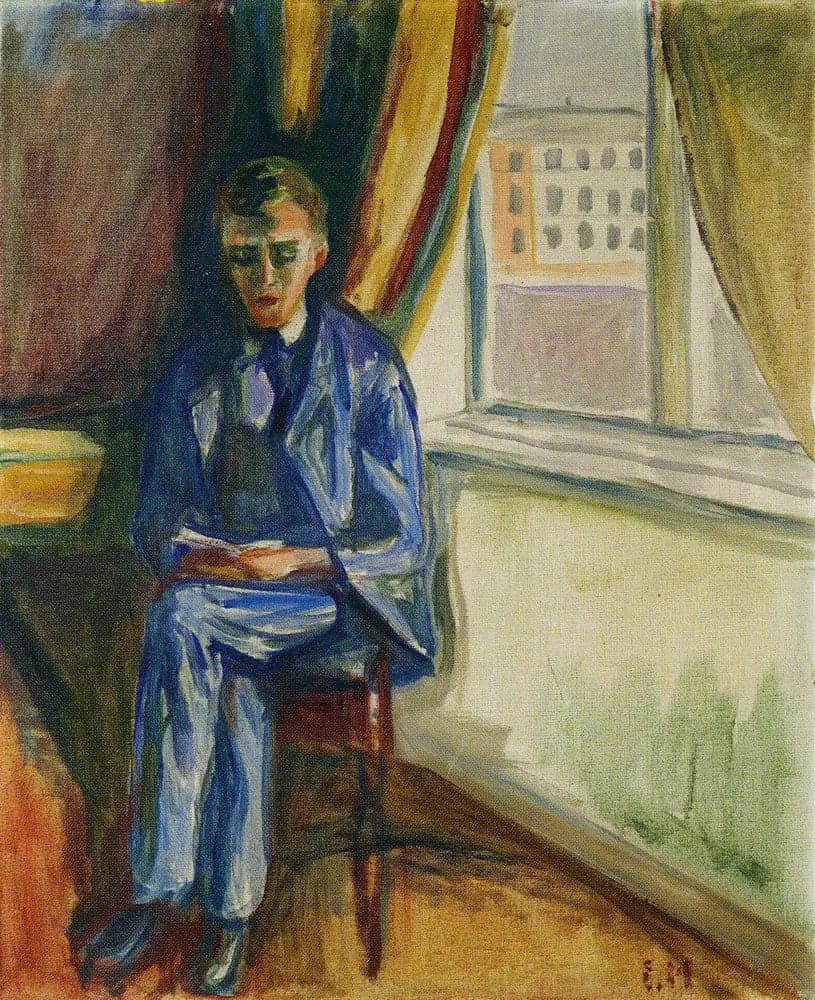
"Andreas Lisant" captures an enigmatic moment imbued with melancholy. The painting depicts a man, lost in his reflections, surrounded by an intriguing atmosphere, where the landscape seems to vibrate with an inner life. The features of the man, drawn with delicate finesse, reinforce the impression of introspection and isolation, as well as a palpable spiritual quest.
Historical context
Created in 1882, the painting "Andreas Lisant" by Edvard Munch is part of the expressionist movement. It is rooted in a period of artistic upheaval, where artists seek to transcend reality through emotion. This canvas , invisible to the public eye today, invites one to discover the nuances of a troubled era, revealing the unbridled creativity of the Norwegian artist who begins to emerge on the international scene.
Place in the artist's career
"Andreas Lisant" represents a significant milestone in Munch's career, falling at the edges of his artistic maturation period. His technique evolves, just as his approach to human emotions does. In parallel, this canvas can be compared to "The Scream" and "The Madonna," where the artist delves even deeper into the furrows of human anxiety and passion, thus weaving a canvas rich in meanings.
Anecdote
"Every canvas is a cry of the soul," said the artist. This painting was born on the shores of a lake, in the midst of spring, where Munch crossed the gaze of a man lost in thought. The emotion inspired by this fleeting encounter is palpable in every brushstroke, revealing the heightened sensitivity at the heart of the composition .