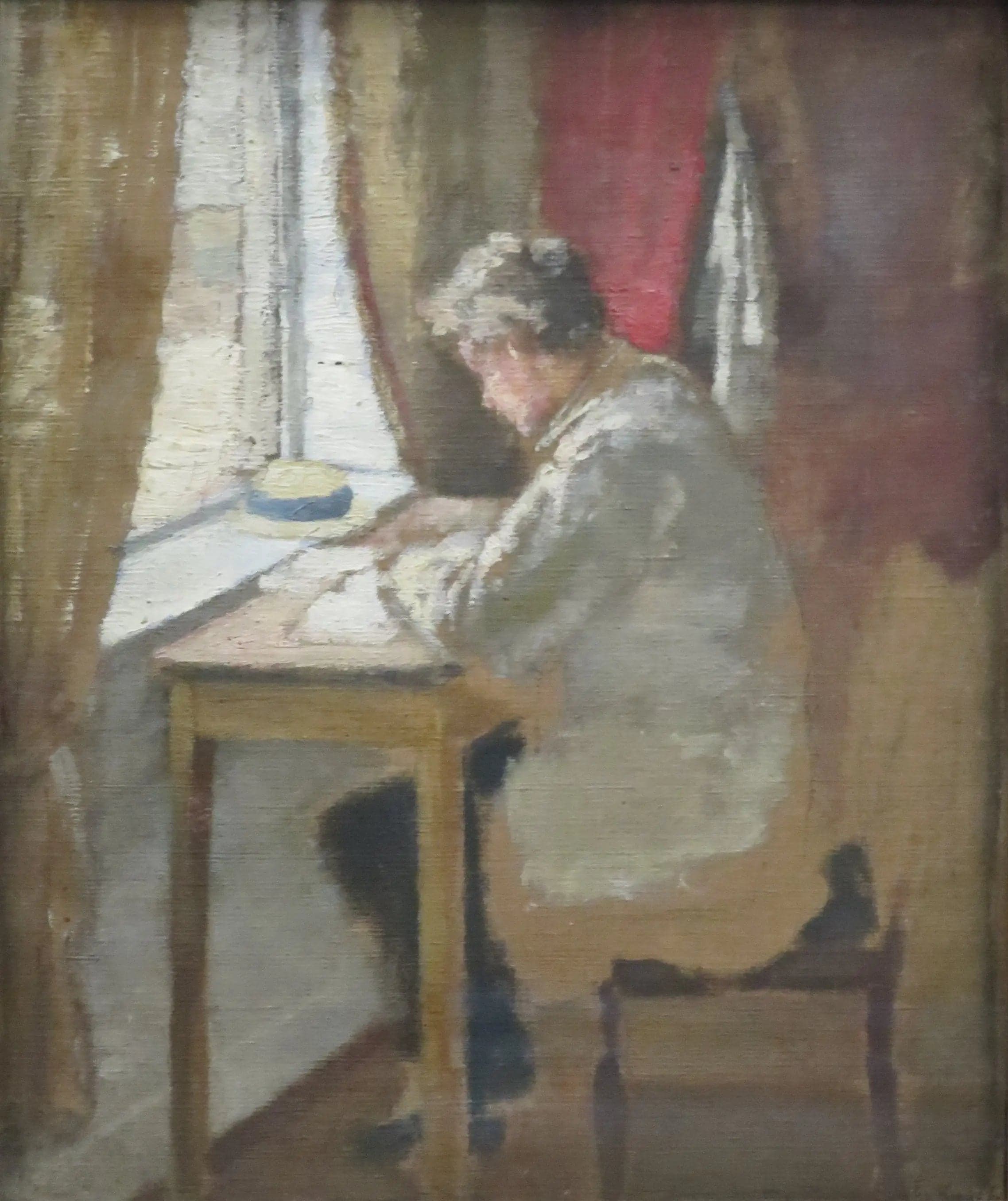
Andreas by the Window
- Original dimensions
- 41.5 x 50 cm
- Museum
- Bergen Art Museum
- Year
- 1883
Scene depicted
In Andreas près de la fenêtre , Munch captures a moment of suspended existence. The character sitting close to the light, with a thoughtful air, seems to be in dialogue with the outside world. The play of shadow and light in the composition evokes the contradictory emotions that each viewer may feel; a fragmented memory, a desire for contemplation. This canvas is more than just a scene: it is a dialogue between the inside and the outside, between solitude and society.
Historical context
Created in 1883 in Bergen, this painting is emblematic of the early expressionist movement, reviving the nuances of inner life and human feelings. At this time, Munch explores universal themes of anxiety and solitude, making this canvas a prophetic work that still resonates today. The painting is currently housed in the Bergen Art Museum, a place rich in history that preserves the wealth of Norwegian artistic heritage.
Place in the artist's career
Andreas près de la fenêtre is situated at a pivotal moment in Munch's career, revealing his innovative approach and distinctive style. It is during this period that he develops a rich pictorial language, as also shown in his major works such as The Scream and The Madonna , reflecting an evolution that combines raw emotion and technical mastery.
Anecdote
"Art does not reproduce the visible; it makes visible." This quote resonates strongly when discussing the genesis of Andreas près de la fenêtre . Imagine Munch, one spring morning, facing this silent scene; the gentle whisper of the wind flirting with the curtains, the light filtering through the windows, offering an ephemeral respite between intimacy and the outside. This painting then becomes an open window to the soul.