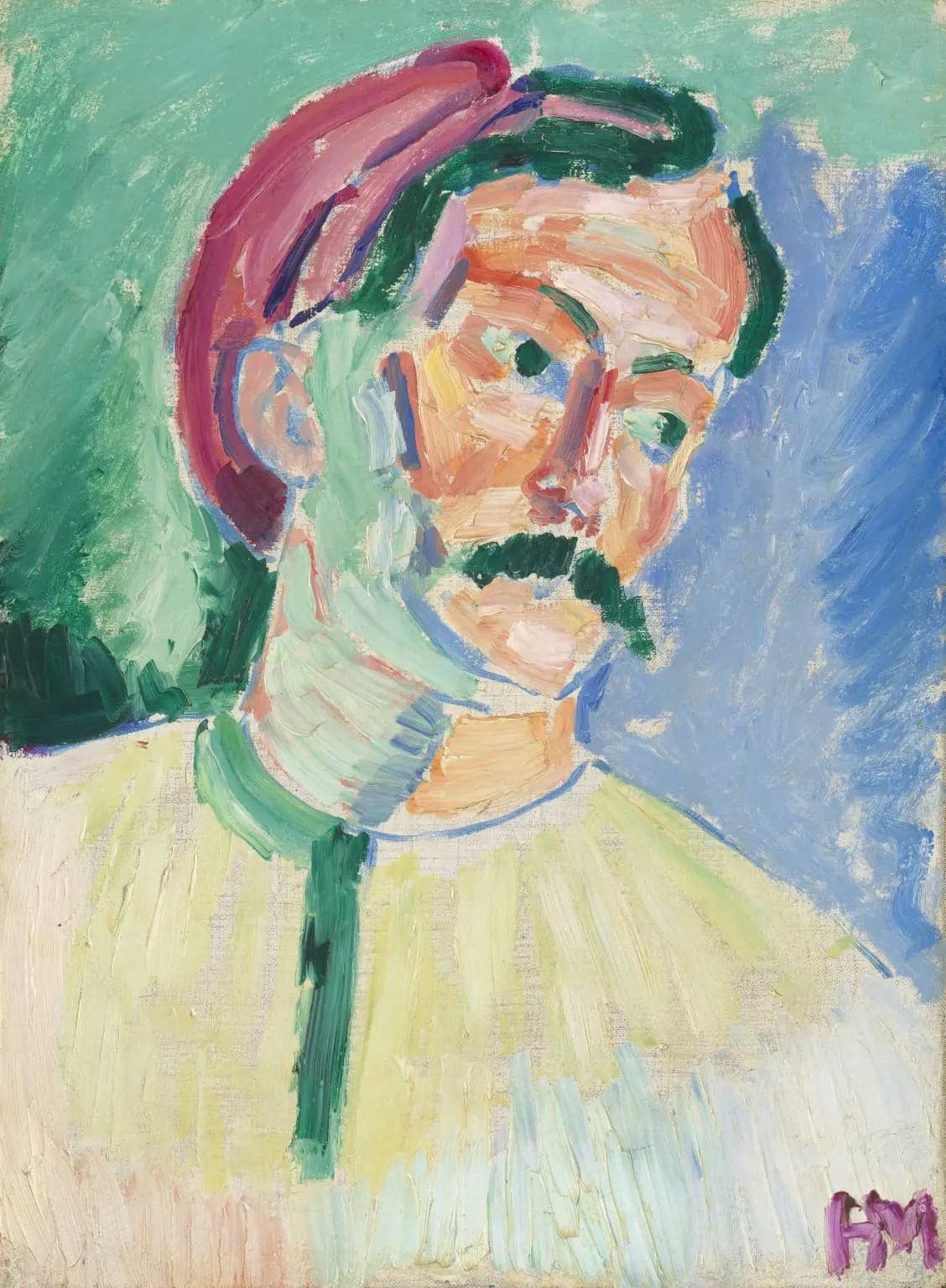
André Derain
- Original dimensions
- 28.9 x 39.4 cm
- Movement
- fauvism
- Museum
- Tate Modern
- Year
- 1905
Scene depicted
The canvas “André Derain - Henri Matisse ” depicts a colorful harmony, where vibrant shades illustrate the landscapes of Provence. The simple and triumphant forms of nature blend with the emotions of an artist in search of escape and expression. This composition bears witness to the raw beauty of life, transformed through the prism of personal perception.
Historical context
Created in the midst of the fauvism movement, this painting is emblematic and was made in Collioure, this charming town in the south of France, where the brilliant light inspired many artists. The year 1905 represents an artistic turning point, where color and emotion take precedence over academic drawing. The canvas is now exhibited at the prestigious Tate Modern in London, celebrating the revolutionary vision of the artist.
Place in the artist's career
This masterpiece stands as a crucial milestone in Matisse's career, representing both a phase of intense creativity and an affirmation of his bold style. When compared to his subsequent works, such as “The Dance” and “The Joy of Life,” one perceives a marked evolution towards even bolder compositions and a deeper exploration of color.
Anecdote
Henri Matisse once stated: “Art is a revelation.” This canvas was his way of unveiling the vibrant beauty of a sunny morning, through the picturesque streets of Collioure. Each brushstroke still resonates with this dazzling light, transforming an everyday scene into a palpable emotion that awakens the senses.