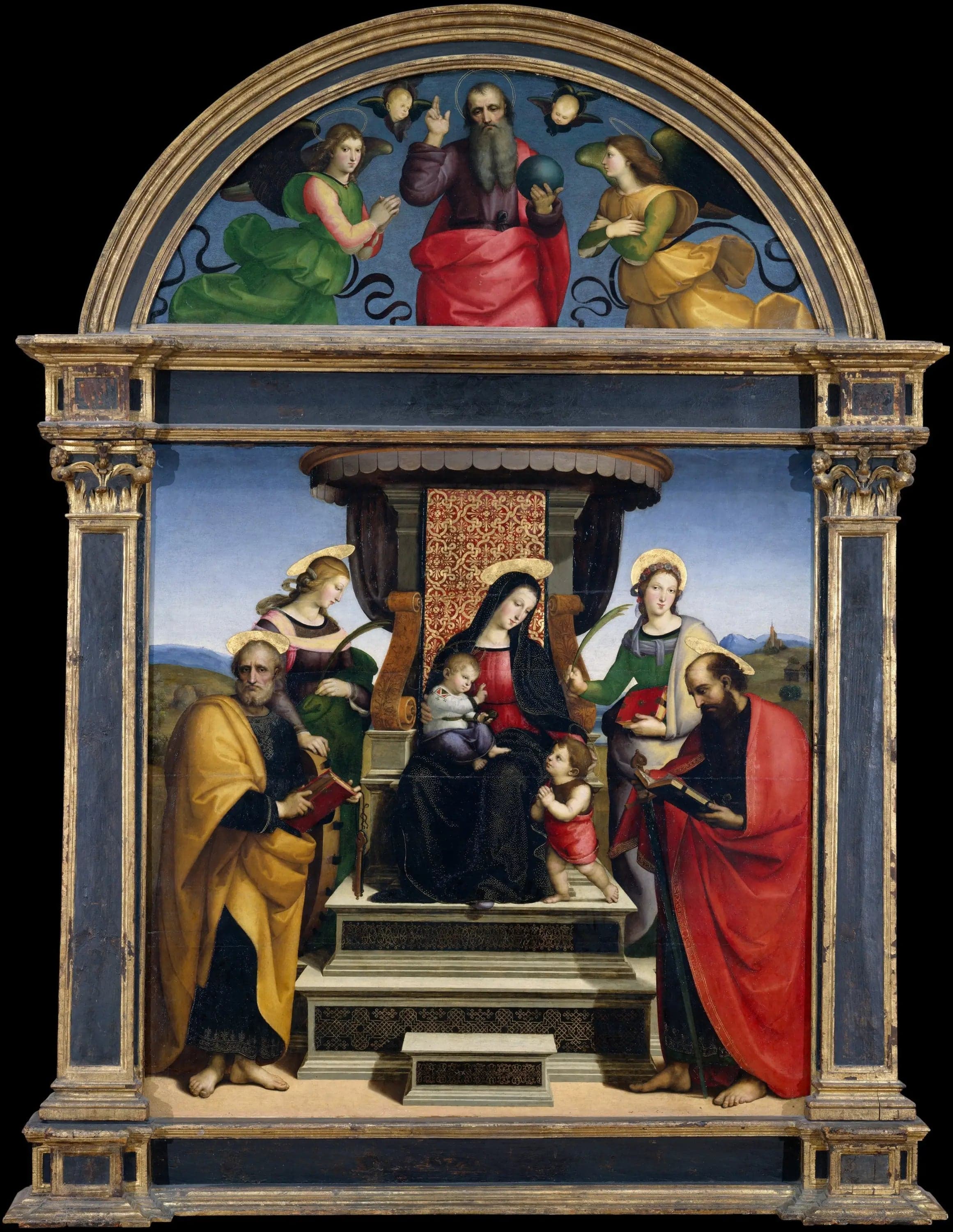
Altarpiece with Columns
- Original dimensions
- 171.5 x 64.8 cm
- Museum
- Metropolitan Museum of Art
- Year
- 1504
Scene depicted
“Retable à colonnes” illustrates a complex composition where the harmony of holy figures and majestic columns evokes a deep spiritual connection. This painting invites the observer to contemplate both the divine architecture and the depth of human emotions, a delicate balance that makes this canvas timeless.
Historical context
Created in 1504, the painting “Retable à colonnes” is a revealing example of the artistic movement of the Renaissance , which radiated in Rome. At that time, the eternal city was a vibrant cultural crossroads, where art and spirituality converged. This masterpiece is now located at the Metropolitan Museum of Art , testifying to the invaluable legacy that Raphael left to humanity, capturing the very essence of his time through this majestic painting .
Place in the artist's career
This painting is part of a pivotal period in Raphael's career, marking a turn towards prodigious stylistic maturity. Among other masterpieces, such as “The School of Athens” and “The Sistine Madonna,” “Retable à colonnes” testifies to his evolution, from the boldness of youth to the confidence of a recognized master.
Anecdote
Raphael once declared: “The nobility of the soul is reflected in the light one gives to the painting .” The inspiration behind “Retable à colonnes” came to him on a gentle spring morning, where the rays of the sun filtered through the flowering trees of the Roman gardens, illuminating his creative spirit. This fleeting moment marked the beginning of a pictorial work that transcends time, like an echo of the beauties of nature.