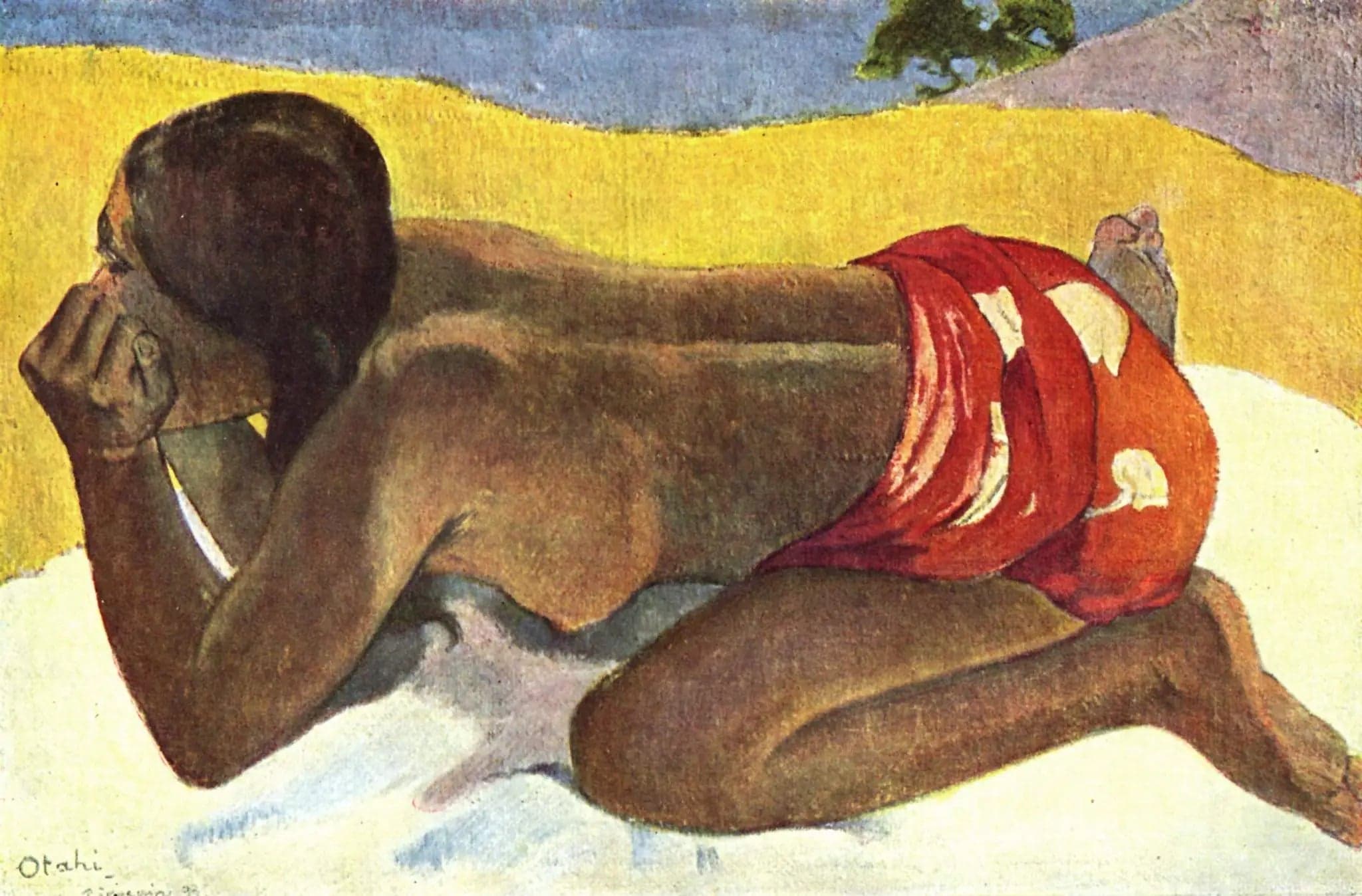
Alone
- Original dimensions
- 73 x 50 cm
- Museum
- Not specified
- Year
- 1893
Scene depicted
In the painting Seule , Gauguin depicts the silhouette of an isolated woman, enveloped in wild nature. The composition evokes deep introspection. The vibrant colors and simplified forms sing a melody of solitude, illustrating a quest for identity in a changing world. The canvas then becomes an invitation to reflect on our place in relation to nature.
Historical context
Created in 1893, the painting Seule finds its roots in Pont-Aven, an iconic commune in Brittany, France. This painting is at the heart of the post impressionist movement, a time when artists explore emotional and subjective perspectives through color and form. The work, currently not listed in a famous museum, immerses us in the rich cultural context of the late 19th century, a period of artistic renewal.
Place in the artist's career
Seule represents a turning point in Gauguin's career. This painting is positioned between two other significant works: Le Christ jaune and Vision après le sermon . While the former reveals a pronounced spirituality, the latter offers a bold reinterpretation of biblical scenes. In Seule , Gauguin begins to refine his unique style, linking emotion and color in a way that will be his own.
Anecdote
“I seek the soul of things.” Thus speaks Gauguin, reflecting his desire to explore deep and emotional subjects. On a misty morning in Pont-Aven, observing the solitude of a woman by a river, he captures the melancholy of a silent existence, powerfully expressed in his masterpiece Seule .