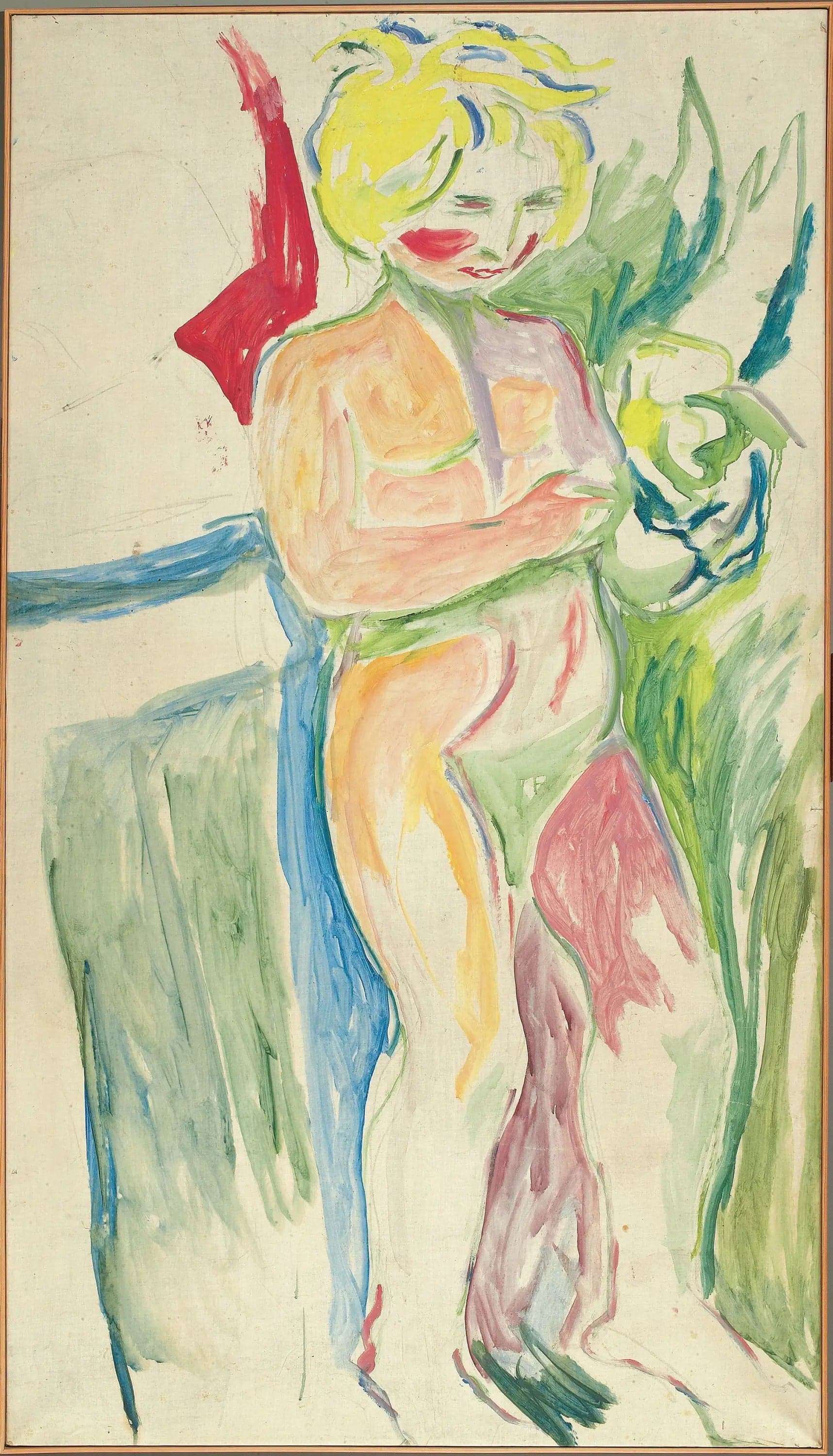
Alma Mater: standing child
- Original dimensions
- 96 x 168 cm
- Museum
- Munch Museum
- Year
- 1914
Scene depicted
The painting “Alma Mater : enfant debout - Edvard Munch ” depicts a touching scene where a child stands, embodying innocence and potential. The pictorial work exudes an atmosphere of protection and connection with Mother Earth, reflecting universal themes of life and growth. Through this composition, Munch explores the link between the individual and their environment, a recurring theme in his work.
Historical context
Created in 1914, the canvas Alma Mater : enfant debout is an emblematic work that lies at the heart of the expressionist movement. Made in the city of Oslo, this painting reflects the artistic emergences and cultural upheavals of its time. Currently exhibited at the Munch Museum, this painting measuring 96 by 168 centimeters captures the very essence of artistic creation at the beginning of the 20th century.
Place in the artist's career
Alma Mater : enfant debout is situated at a turning point in Munch's career, as he approaches his stylistic peak. Renowned for his ability to convey pain and joy, this canvas fits perfectly alongside two other magnificent paintings : “The Scream” and “The Madonna,” connecting deep emotions to a bold aesthetic. This journey reflects his technical and emotional evolution.
Anecdote
“Life feeds on experiences and memories,” said Munch while contemplating the world around him. It was on a foggy morning in Oslo that the artist saw the idea for this masterpiece emerge, inspired by the innocent gaze of a child encountered in an alley. This face, both joyful and melancholic, infused a new strength into the painting , making Alma Mater a true ode to childhood.